
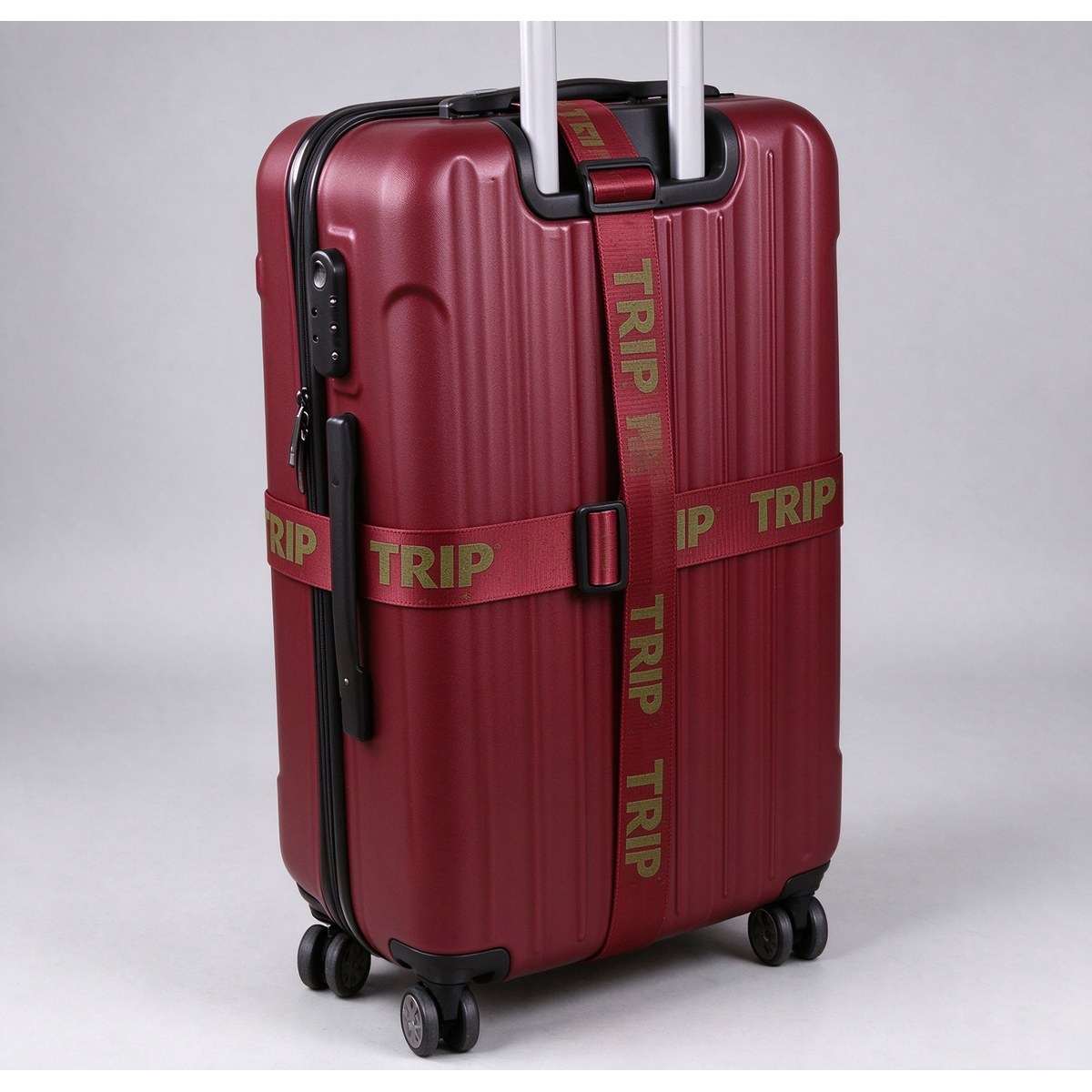
How to Choose a High-end Luggage Case: Materials, Hardware, and Quality Checks
Choosing a high-end luggage case is a decision taken against four requirements at once: the shell has to survive handling it does not control, the hardware has to carry the loaded weight through a single attachment point, the trim has to look correct after a hundred airport miles, and the interior has to protect what it holds. Those four pull in different directions, which is why the category has a recognizable hierarchy of materials rather than a single best answer. A case that leads on shell stiffness usually gives up weight; one that leads on weight usually gives up corner protection.
For a brand, a manufacturer or a sourcing team, the comparison is therefore not one shell against another. Two cases can share a shell material, a size and a wheel arrangement, and differ in whether the handle returns to position after a year, whether the webbing at the top grip frays at the stitch line, and whether the zip pulls straight at the corner. What separates them is the trim, the attachment and the stitch density — three variables that decide the perceived quality long before the shell does.
This guide sets out how shell, lining and trim materials compare, what the hardware and wheel assemblies have to withstand, where webbing and handles fail, the construction details worth inspecting on a sample, and the checks that catch a weak case before a bulk order rather than after the first season of travel.
High-end Luggage Case Materials: Shell, Lining, and Trim
Three material groups make up a case, and each is bought for a different reason. The shell is bought for impact and weight. The lining is bought for appearance and for how it behaves when the case is packed tight. The trim — webbing, binding, piping and reinforcement — is bought for abrasion and for how it ages in the places a hand and a conveyor touch.
| Material group | Typical options | Bought for | Weak point |
|---|---|---|---|
| Shell | Polycarbonate, polypropylene, aluminum, ballistic nylon | Impact resistance at a given weight | Scuffing and corner deformation |
| Lining | Polyester taffeta, nylon, recycled polyester | Appearance and packability | Seam slip at the base |
| Webbing trim | Nylon, polyester, bio-based polyamide | Abrasion at the handle and zip pull | Fraying at the stitch line |
| Binding and piping | Woven tape, leather, TPU | Edge protection and shape | Delamination at the corner |
| Hardware | Zinc alloy, aluminum, acetal | Load transfer and cycle life | Gate and pivot wear |
The trim is the group most often treated as a commodity and it is the group that decides perceived quality. A polycarbonate shell that survives a drop will still read as cheap if the top handle webbing frays within a season, because that is the part the owner touches every time the case is lifted.
High-end Luggage Case Hardware and Wheels
Hardware carries the entire loaded weight through a small number of attachment points, so it is specified by load and by cycle life rather than by appearance. Three assemblies account for most of the failures in service.
Wheels and Wheel Housings
A spinner wheel assembly has to survive being dragged sideways, dropped from a curb and loaded well beyond the case’s rated weight. The housing matters as much as the wheel: a housing that flexes allows the axle to wear its seat, and the wheel then wobbles before the tread wears out. Replaceable assemblies are worth specifying on a high-end product, because a wheel is the part most likely to fail first and the only one that can be renewed cheaply.
Handles and Telescopic Tubes
A telescopic handle is a tube pair with a locking mechanism, and the specification is about play rather than strength. A handle that rattles at full extension reads as worn even when it is new. Tube wall thickness, the number of stops and the material of the lock are the three values to write into the brief.
Zips and Pullers
A coil zip on a case is loaded in a way a garment zip never is, because the packed case pushes outward along the whole length. The specification is the slider rather than the tape: a metal slider on a coil tape, sized one above the nominal, is the difference between a case that closes loaded and one that needs two hands.
High-end Luggage Case Webbing, Handles, and Straps
The webbing on a case does three jobs: it forms the top and side grips, it reinforces the zip line on some constructions, and it provides the anchor for a shoulder strap or a luggage tag. Each job loads the band differently, and each fails at a different point.
Grip Webbing
A top grip is a folded band, usually 25–38 mm, sewn through the shell or through a reinforcement plate at both ends. The load is concentrated at the two stitch zones, which is why a woven selvedge or a folded edge under the stitch matters more than the tensile figure. A grip that fails usually tears the shell around the stitch rather than breaking the band.
Zip-Line Reinforcement and Binding
Where webbing runs along the zip, it protects the tape from abrasion at the corners and stiffens the opening. It should be a lower-elongation band than a grip, because a reinforcement that stretches does not reinforce. Polyester is the usual choice here for that reason.
Shoulder Straps and Add-On Straps
A detachable strap loads a single ring or loop, so the hardware and the attachment decide the outcome. A 25 mm polyester or nylon band with a metal ring and a box-X stitch is the reference; a plastic clip on the same band is the cost reduction that shows up in returns. The high-end luggage case trim range is specified by load path for that reason.
High-end Luggage Case Construction: Stitching, Corners, and Zips
Construction is where a case either reads as expensive or does not, and it is visible on a sample in a way that material specifications are not. Four details account for most of the difference.
- Stitch density and margin. A trim sewn at 8–10 stitches per inch with a 10 mm margin holds; the same trim at 5 stitches per inch with a 4 mm margin tears out. The margin matters more than the density.
- Corner treatment. Every case is dropped on a corner. A reinforced corner with a separate cap or a double layer of binding survives; a single layer of piping deforms and then delaminates.
- Zip end treatment. The two ends of a zip take the highest stress when the case is packed. A zip that runs into a fabric tunnel without a reinforcement will separate at the end, and the repair is a new zip rather than a new stitch.
- Interior seam finish. A bound or taped seam holds a packed case; a raw seam with a single row lets go at the base, where the load is highest.
None of those four can be assessed from a photograph, and all four can be assessed in ten minutes with a sample on a table. That is the argument for approving a case as an assembly rather than approving a shell and a trim separately.
High-end Luggage Case Interior Layout and Packing Fit
The interior is where a good case is either useful or irritating, and it is decided by three details rather than by lining quality. None of them appears on a specification sheet, and all of them appear in a review.
- Compression and packing volume. A case that measures 55 cm outside does not offer 55 cm inside. Wall thickness, the wheel housing and the handle tubes consume depth, and a brand that quotes external dimensions as capacity will be corrected by the first customer who packs it.
- Divider and strap attachment. Interior straps are anchored to the shell or to a lining panel. An anchor sewn only to the lining will pull out when the case is overpacked, and the repair requires opening the lining seam.
- Access while upright. A front-access panel or a top-opening lid changes how the case is used in a hotel room. It also adds a zip and a seam to the shell, which is a construction decision rather than a lining one.
The interior strap is a webbing specification in disguise. A 20–25 mm low-elongation band, anchored through a reinforcement tab rather than through the lining alone, holds a packed case without stretching; a narrow elastic band does not. Where the strap is elastic, the specification should state the extension at a stated load, because an elastic band that has gone slack in a year is the most common interior complaint.
High-end Luggage Case Quality Checks Before a Bulk Order
The checks below are ordered by what they catch earliest in the product’s life. Each can be run on a single sample without equipment beyond a weight and a tape measure.
- Load the case and lift it by the top grip for an hour. A grip that has not moved is sewn correctly. A grip with a visible pull at the stitch line will fail in the first year.
- Drop it on a corner from waist height, loaded. Inspect the corner and the shell around the grip anchors. Deformation is expected; delamination and cracking are not.
- Roll it loaded across a rough surface for 50 meters. Listen for a wheel that has begun to wobble and check the housing for play. This catches an axle seat that will fail.
- Pack it to capacity and close it one-handed. A zip that needs two hands at full capacity will be forced by the owner, and forcing is what breaks sliders.
- Measure the trim after the drop and the roll. A webbing grip that has grown visibly has stretched under load, which means the band and the load path are mismatched.
Record the results against the sample number. A case approved on appearance alone cannot be re-ordered, because nothing in the approval describes what was approved. The same principle governs the custom spec bags built on the same trim line.
High-end Luggage Case Specification Checklist
A brief that carries these six lines can be quoted without a round of questions and repeated without drift. Each corresponds to one of the failure points above.
- Shell material and thickness. Polymer type, wall thickness and the impact test it was approved against.
- Trim webbing. Fiber, width, edge construction and whether the grip is a single fold or a double fold with interlining.
- Hardware. Wheel assembly with replaceability stated, handle tube wall thickness and number of stops, zip slider type and size.
- Stitch specification. Stitches per inch, margin from the edge, and the thread type.
- Reinforcement locations. Corners, grip anchors, zip ends and the base seam, each named rather than implied.
- Colorfastness and abrasion. Rub fastness on the trim and an abrasion figure for the grip band, both on named methods.
Where the case is being developed rather than selected, the trim, the hardware and the stitch specification are quoted together through the OEM and ODM program, because a grip specified without its anchor is half a specification.
FAQ: High-end Luggage Case
What material is best for a high-end luggage case shell?
Polycarbonate for impact resistance at low weight, polypropylene for a more flexible shell that recovers from deformation, aluminum for rigidity and appearance at higher weight, and ballistic nylon for abrasion resistance on soft-sided cases. The trade is always between weight, stiffness and how the surface ages.
Why does the webbing on a luggage handle fray?
Almost always at the stitch line rather than in the middle of the band. The stitch perforates the edge and the grip concentrates load at two points, so a sealed slit edge or a narrow stitch margin fails first. A woven selvedge and a 10 mm margin remove most of the problem.
Are replaceable wheels worth specifying?
Yes on a high-end case. The wheel assembly is the part most likely to fail first and the only part that can be renewed without rebuilding the case. A housing that flexes will wear the axle seat even if the wheel itself is sound.
How many stitches per inch should luggage trim use?
8–10 stitches per inch is the working range for webbing trim, with a margin of about 10 mm from the edge. Density below that weakens the seam; margin below that tears the band regardless of density.
How should a luggage case sample be approved?
As a loaded assembly: lift it by the grip for an hour, drop it on a corner, roll it loaded across a rough surface, and close it one-handed at full capacity. Approve the trim, hardware and stitching together rather than as separate components.
Why Buyers Source High-end Luggage Case Trim from Xinxiangrui
A high-end luggage case is judged by its shell and paid for by its trim. The grip, the binding, the zip-line reinforcement and the strap are the parts a hand touches and a conveyor abrades, and each is decided by a fiber, an edge and a stitch margin that can be written into a brief.
Xinxiangrui Webbing has woven webbing in Dongguan since 2011, supplying trim for luggage, bags and cases in nylon, polyester and bio-based grades, with tensile, abrasion and colorfastness tested in-house. Trim is quoted against the load path and the anchor rather than by width alone, and OEM and ODM work is quoted from the six-line checklist above. The high-end luggage case range covers grip, binding and reinforcement constructions.