
Features
Why Choose Xinxiangrui Webbing?
Source Factory
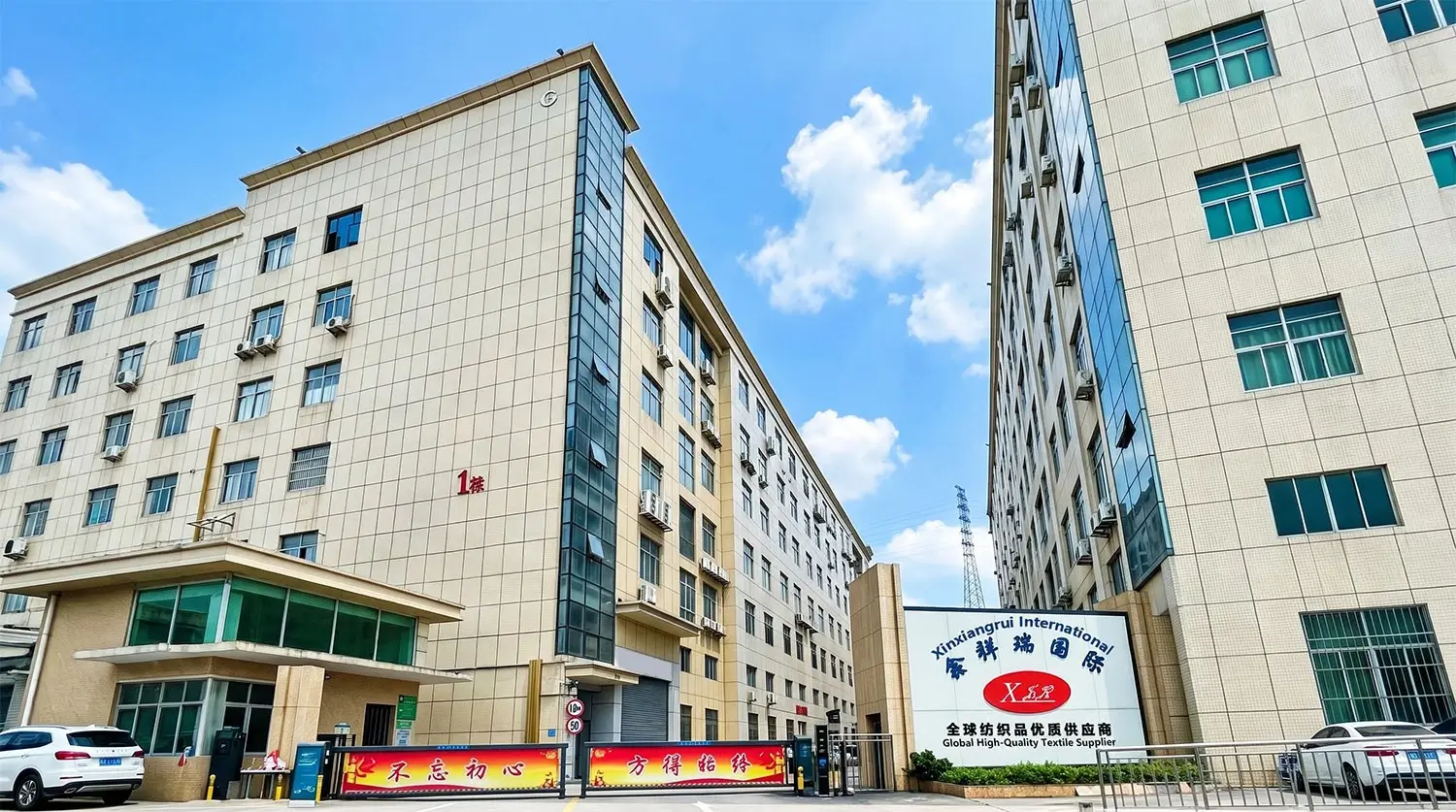
Direct wholesale production from our own plant in Dongguan, not a trading desk. Weaving, dyeing, printing, hardware assembly and packing all run in house, with no middleman margin in the price.
Full Customization
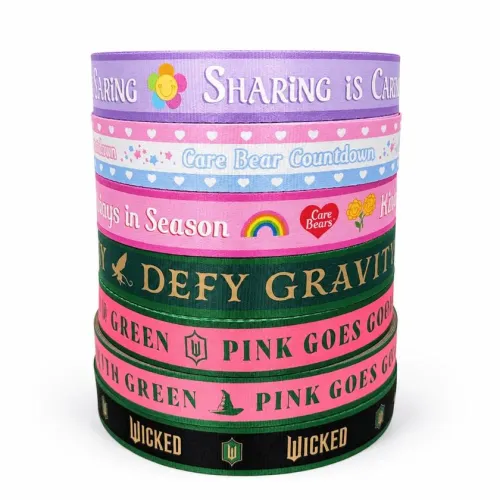
OEM and ODM work starts from your drawing: width, weave, colour, hardware and retail packaging. We match Pantone, send a physical sample before bulk, and keep every change on one work order.
Strict QA & ISO Standards
Every batch is checked for width, thickness, break strength and colour fastness before it ships, and the plant runs to ISO 9001 and ISO 14001. Test reports for your batch travel with the goods.
Proven Track Record
Fifteen years of narrow fabric since 2011, 200+ active partners and shipments to 50+ markets. Long-run programmes are what this factory is built for, which is why most customers reorder.
We Have The Best Solutions for Your Business
Xinxiangrui has made narrow fabric in Dongguan, China since 2011. Our 8,000 m² plant weaves, dyes, prints, cuts and sews under one roof, supplying 200+ active partners in 50+ markets. We produce polyester, nylon, cotton, elastic, reflective and bio-based webbing, ribbon, lanyards, pet leashes, bags and luggage components, from yarn and reflective tape to finished straps and handles.
Because every step stays in one plant, a widening range does not cost tolerance. Our laboratory tests to 2000N+ break strength, 50,000+ Martindale cycles and 1,000+ hours of UV exposure, and every batch carries its own figures rather than a catalogue sample. We work to OEKO-TEX, CPSIA, REACH, RoHS, ISO 9001, ISO 14001 and GRS. Send us your spec sheet and target quantity, and we will recommend the construction that fits.
Polyester Webbing: What the Fibre Promises
Four properties carry almost every application, and it is worth knowing which one a product is actually relying on.
| Property | What it means in a product | Where it is decisive | Where it is not |
|---|---|---|---|
| Low elongation | The band holds its length under load | Lashing, framing, tensioned straps | Anything shock-loaded |
| Low moisture regain | Wet strength is close to dry strength; dries fast | Outdoor gear, marine, pet goods | Nothing relevant |
| UV resistance | Strength holds better in sunlight than polyamide | Anything left outside for years | An indoor trim, where it is simply not tested |
| Thermal stability | Heat setting fixes width; hot cutting seals cleanly | Narrow bands, sealed ends, printed faces | Very high temperature contact, which belongs to a different polymer |
The number this fibre reaches naturally: a 25 mm polyester band clears 2000N in a standard construction, and it reaches that figure without stretching on the way. That is the practical meaning of low elongation: the band does not absorb a shock, it transmits it, which is correct for a strap that must hold a shape and wrong for one that must catch a falling weight.
Three Weave Variables That Decide the Band
Warp count
The number of warp ends across the width sets how much material is available to carry load and how dense the face looks. Two bands at the same width and weight can be built from many fine ends or fewer coarse ones, and the first is smoother, denser and stronger at the selvedge. Warp count is the reason a sample that matches on weight can still feel wrong in a hand.
Pick density
Picks are the weft insertions per unit of length, and they control the hand and the surface. A tight pick gives a firm, papery band that holds shape and resists abrasion; a loose one gives a softer band that bends easily and frays sooner at a cut edge. Pick density is also what a heat setting is stabilising, so the two decisions belong together.
Edge formation
A woven selvedge is formed by the weft turning back, which makes it rounded, slightly thicker and resistant to fraying. A cut edge is faster and cheaper and produces a raw profile that abrades under a thumb. On a strap the selvedge carries the abrasion, and choosing a cut edge to save a step moves the failure to the part a hand touches.
Dyeing, Heat Setting and a Season Outside
Polyester is dyed under pressure, because the fibre is dense and the dye has to be driven into it. That is why a polyester shade is stable and why it is difficult to correct: the colour is inside the filament rather than sitting on it. Carrier dyeing at lower pressure exists and produces a lighter shade with a slightly different hand, and a programme that specifies a colour without specifying the route can receive either.
Heat setting follows dyeing and does two things at once: it stabilises the width and it fixes the hand. A band that is not set will curl at the edges and move in a sewing room; a band that is over-set becomes stiff and loses some of its abrasion resistance. The window is narrow, which is why the setting temperature is a specification rather than a machine operator's preference.
Outdoors, polyester holds its strength far better than polyamide, but it still changes. The surface powders slowly under ultraviolet light, and a deeply dyed band fades in the order a dyer would predict: reds and blues move first, blacks and greys last. A light-fastness figure read after accelerated exposure is worth having for any product that will live on a boat, a fence or a trailer, because the change is slow enough to be invisible month to month and obvious over two years.
A note on tolerance, because it is the clause most often left as a single figure. A woven band is quoted at a nominal width, and the actual width varies within a range that has to be stated, because the band has to pass through something at the end of the line: a buckle, a slot, a ring or a stitched channel. A band at the top of its tolerance will not thread a slot cut to the nominal dimension, and a band at the bottom will slide and rotate inside it. Stating the width with the direction that matters, whether the product needs the upper or the lower end of the range, prevents a whole category of assembly problems that are otherwise blamed on the fitting.
Six Lines a Polyester Brief Should Carry
- The width, thickness and weight per metre — three numbers, because any one alone leaves the construction under-specified.
- The weave pattern — plain, twill or rib, since the surface and the hand follow from it.
- The strength at the working width — stated at the load the product sees, not only at break.
- The colour and dye route — with the shade reference and the fastness target for the conditions it will meet.
- The edge type — woven selvedge, hot cut or sealed, because it changes both the look and the abrasion behaviour.
- The put-up and packing — length per roll, core size and whether rolls are labelled, which decides handling before use.
Four Checks Before a Bulk Order
- Measure the width at three points along a metre. Variation along the length is more common than variation between rolls and is invisible on a short sample.
- Pull to the working load and measure the extension. A polyester band should barely move; if it does, the weave is looser than the sample suggested.
- Fold it and press it. A heat-set band recovers; an unset one keeps the crease, and the crease is where a coating or a print will fail first.
- Cut and seal an end. A clean bead that does not fray is the sign of a correct setting; a stringy or burnt end is the sign of one carried over from another programme.
The polyester webbing range shares its looms with the nylon webbing line, which is the honest way to choose between the two: same width, same weave, and the difference in give appears in a hand within seconds. The figures for each lot, including width tolerance, strength and light exposure, sit in the test record rather than in a general claim about the fibre.
Two Mistakes That Cost a Season
A specification copied from nylon
A brief written for polyamide and reused for polyester carries an elongation assumption that is no longer true and a UV assumption that is now pessimistic. The band that arrives meets every stated figure and behaves differently in use, which is the most expensive kind of compliance. Whenever the polymer changes, the elongation and exposure clauses change with it.
An edge chosen to save a step
Moving from a woven selvedge to a cut edge reduces a process and is invisible in a photograph. On a strap that is handled daily the difference appears within weeks, because a cut profile abrades and the wear starts exactly where a hand or a fitting touches. If the edge has to change, the cut end should be sealed and the change written into the specification.
Polyester webbing is bought for stability: it holds a length, resists water and survives sun. Specify the weave variables that produce that stability, name the dye route and the edge, and test at the load the product actually sees. The fibre is the easy part; the construction is where the product is decided.
Why Xinxiangrui for Polyester Webbing
Stability is set by the loom and confirmed by the heat-setting chamber, and polyester webbing produced here passes through both in the same Dongguan plant, so a width that moves in a sewing room is a routing question rather than a supplier dispute. The site has run narrow fabric since 2011 and retains a length from every approved lot. Tell us the width, the load and the sun it must survive, and a matched band comes back to you.
Featured Products
Collection about Xinxiangrui Webbing

User Reviews
What users say about Xinxiangrui Webbing
Frequently Asked Question
Do you have any question?
Because it barely moves. Polyester absorbs almost no water, stretches very little before breaking, resists ultraviolet light better and holds a dimension under sustained load. It is the default for straps that must stay the length they were cut, and a poor choice for anything that must absorb a shock.
The band does not absorb energy, it transmits it. A 25 mm polyester band clears 2000N without stretching on the way, which is correct for a strap holding a shape and wrong for one catching a falling weight. The number is the same as nylon; the behaviour on the way to it is not.
The warp count across the width, the pick density along the length, and the edge formation. Warp count sets how much material carries the load, pick density sets the hand and the surface, and the edge decides whether the part a hand touches abrades or not.
Because the band has to pass through something at the end of the line: a buckle, a slot, a ring or a stitched channel. A band at the top of its tolerance will not thread a slot cut to nominal, and a band at the bottom will slide and rotate inside it. State which end of the range the product needs.