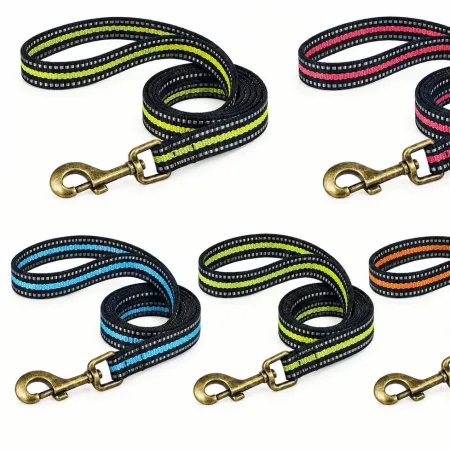
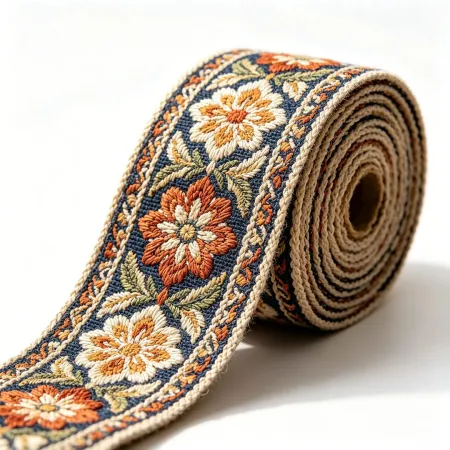
Source Factory
Direct wholesale production from our own plant in Dongguan, not a trading desk. Weaving, dyeing, printing, hardware assembly and packing all run in house, with no middleman margin in the price.
Full Customization
OEM and ODM work starts from your drawing: width, weave, colour, hardware and retail packaging. We match Pantone, send a physical sample before bulk, and keep every change on one work order.
Strict QA & ISO Standards
Every batch is checked for width, thickness, break strength and colour fastness before it ships, and the plant runs to ISO 9001 and ISO 14001. Test reports for your batch travel with the goods.
Proven Track Record
Fifteen years of narrow fabric since 2011, 200+ active partners and shipments to 50+ markets. Long-run programmes are what this factory is built for, which is why most customers reorder.
Cotton Canvas Tote Bag: Weight, Shrinkage and Hand Feel
A cotton canvas tote bag is bought for how it feels and returned for how it changed. The same words appear on every tech pack — cotton canvas, natural, 12 oz — and yet two bags that answer to that description can differ by fifteen percent in weight, by five percent in shrinkage, and by everything in the hand.
Cotton canvas is a construction, not a material grade. This guide separates the three variables that actually change a bag — yarn count, weave and finish — and shows where each one shows up after the first wash rather than on the sample table.
What "Cotton Canvas" Means Inside a Cotton Canvas Tote Bag
Canvas is defined by weight and weave rather than by fibre, so a cotton canvas can be many different cloths. Four variables account for almost all of the difference a buyer can feel.
- Yarn count — a 10s yarn is coarse and gives a rustic surface; a 16s or 20s yarn is finer and gives a smoother, denser cloth at the same weight. Two 12 oz canvases with different yarn counts are different products.
- Weave — plain weave is the default: firm, flat and stable. A twill drapes more and shows a diagonal, which reads softer and hides marks better on a light-coloured bag.
- Weight in oz/yd² — the number most buyers specify and the one least consistently delivered, because the same nominal weight can be woven at different densities with the same yarn.
- Finish — natural greige, bleached, or dyed. Natural carries the cotton's own colour and a faint smell of the fibre; bleached is uniformly pale and slightly weaker; dyed adds a shade-matching step that has to be repeated on every reorder.
The table links each variable to a working range and to what a buyer notices when it is left open.
| Variable | Working range | What the buyer notices |
|---|---|---|
| Yarn count | 10s to 20s singles | A coarse surface reads as durable but scratches; a fine one reads as premium |
| Weave | Plain, or 2/1 and 3/1 twill | Twill hangs and folds; plain holds a boxy shape |
| Weight | 8 to 14 oz/yd² | A bag that stands up when empty, or one that folds into a sleeve |
| Finish | Greige, bleached, or dyed to a reference | A natural shade that shifts between lots, or a flat consistent colour |
| Shrinkage | 3 to 8 percent untreated | A bag that arrives shorter than the one in the catalogue |
| Pre-shrunk | 1 to 2 percent after washing | A bag that keeps its dimensions and can be reordered against the same drawing |
Three Things Cotton Does That Other Fabrics Do Not
Cotton canvas is the classic tote material because of three behaviours that are also three risks.
It shrinks, and it shrinks unevenly
Untreated cotton canvas can move three to eight percent in the first wash, and the two directions rarely move by the same amount. On a bag that is a closed shape, that difference has to go somewhere: seams pucker, the base bows, and the handle drop shortens measurably. Pre-shrinking, or cutting oversize against a measured shrink allowance, is the only way to keep a reorder on the original drawing.
It softens and creases where it is carried
A new cotton tote is stiff and a used one is soft, which is either the point of the material or a defect depending on the brief. The creases form along the fold the bag takes when it is set down, and they form faster on a plain weave than on a twill. If the design depends on a crisp silhouette, that has to be engineered with interfacing rather than assumed from the fabric.
Natural shade varies by crop
Greige cotton is not a colour, it is a range. The shade depends on the crop, the growing region and the ginning, so a natural tote ordered in spring and reordered in autumn will be visibly different unless a shade is agreed in advance and held with a physical chip. This is the single most common surprise on a natural canvas programme.
Decide on pre-shrinking before the pattern is graded
Pre-shrunk canvas costs more per metre and removes a whole category of complaint. Unshrunk canvas is cheaper and requires a shrink allowance that has to be verified on every lot. Either answer is defensible; what is not defensible is choosing one and specifying the other, which is what happens when the decision is left to whoever writes the purchase order.
Four Numbers Worth Writing Down
These four figures describe a cotton canvas closely enough that two mills quoting against them will quote comparable cloth.
- Weight with a tolerance band — for example 12 oz/yd² plus or minus five percent, expressed also in g/m² because half the industry quotes the other unit. Without a band, a 12 oz order can arrive at 10.8 oz.
- Ends and picks per inch — the density behind the weight. Two cloths at 12 oz can differ here by twenty percent, and density is what resists abrasion at the base corners.
- Shrinkage in warp and weft separately — a single figure hides the asymmetry that causes puckering. Ask for both directions after a stated wash cycle.
- Shade reference for natural — a physical chip rather than a description, agreed once and retained by both sides, because "natural" alone will not survive a season change.
Six Questions Before the Fabric Is Ordered
Each question here has a visible answer, either on a swatch or on a washed sample.
- Is the weight measured or nominal? — ask for the measured figure on the lot, not the nominal figure on the label. The two differ more often than buyers expect.
- Is it pre-shrunk? — and if not, what allowance has been applied to the pattern? A bag cut oversize without a measured allowance is a guess.
- Plain or twill? — look at the surface at an angle. A twill has a diagonal that catches light; a plain weave is uniform in both directions.
- Greige, bleached or dyed? — greige carries the fibre's own colour and needs a chip; bleached will yellow under some storage conditions; dyed needs a fastness result.
- Which cotton, and is there a certificate? — conventional, organic or recycled each come with a different document, and the document has to name the article rather than the supplier.
- Does the handle come from the same cloth or a separate strap? — a cotton canvas tote usually reads better with a woven strap, and the two should be specified together so their shades can be matched.
Cloth and Strap From One Textile Operation
A cotton tote needs two textiles that have to agree: the body canvas and the handle strap. Sourcing them separately is where shade and hand begin to diverge.
- One dye standard across both — a strap dyed to a Pantone and a canvas dyed to a different reference will read differently under shop lighting even when both are nominally correct.
- One shrinkage decision — if the strap is pre-shrunk and the body is not, the handle will pull the bag out of shape after the first wash rather than simply shortening with it.
- One test report — abrasion and tensile results on the same document, tied to the same production week, instead of two files from two suppliers that cannot be reconciled.
Cotton totes belong to the custom spec bag range and the handle strap comes from the cotton webbing line, with the heavy retail version shown in the twill cotton tote handle strap. A finished natural-canvas bag is the brown cotton canvas shoulder tote.
FAQ: Cotton Canvas Tote Bag
What weight is a standard cotton canvas tote?
Most retail totes use 10 to 12 oz/yd², roughly 340 to 400 g/m². Below 8 oz the bag is a promotional giveaway; above 14 oz it becomes a work bag and stops folding.
How much does cotton canvas shrink?
Three to eight percent untreated, depending on the yarn and the weave, and usually not equally in both directions. Pre-shrunk canvas moves one to two percent, which is why it is preferred for a bag that will be washed.
Is plain weave better than twill for a tote?
Plain weave holds a crisp, boxy shape and resists distortion; twill drapes, hides marks and feels softer. For a structured retail bag, plain; for a slouchy everyday bag, twill.
Why is the second order a different shade of natural?
Because greige cotton varies with the crop. A natural tote should have a physical shade chip agreed and retained, and a note in the order that the chip governs rather than the word natural.
Can a cotton tote be machine washed?
Yes, and it will shrink and soften. If the bag is meant to be washed, specify pre-shrunk canvas and a colourfast dye, and test one washed bag before approving the run rather than after.
A cotton canvas tote bag is specified by four numbers — weight with a tolerance, ends and picks, shrinkage in both directions, and a shade chip — and everything else follows from them. Cotton is forgiving to look at and unforgiving to reorder, which is why the details that matter are the ones that can be written down and measured after a wash rather than admired on a swatch.
Why Xinxiangrui for Cotton Canvas Tote Bag
At Xinxiangrui's 8,000+ m² site in Dongguan, the cotton canvas tote bag and its handle strap leave the same building, so the two textiles are dyed to one standard and pre-shrunk by one decision. The strap is woven on site to 2000N+ break strength, cloth is inspected before cutting, and a washed sample is measured against the drawing before a run is released. Send us the drawing, the width and the target market — we reply with a construction.