
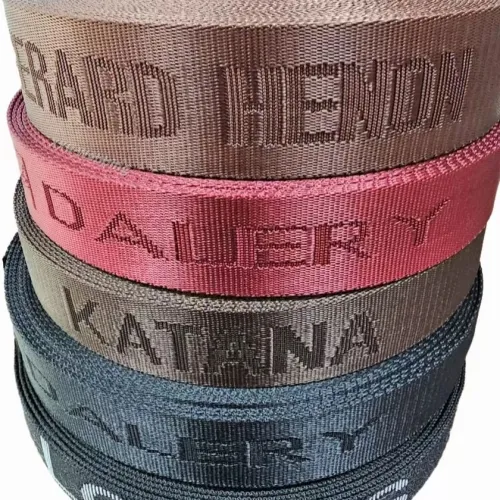
Features
Why Choose Xinxiangrui Webbing?
Source Factory
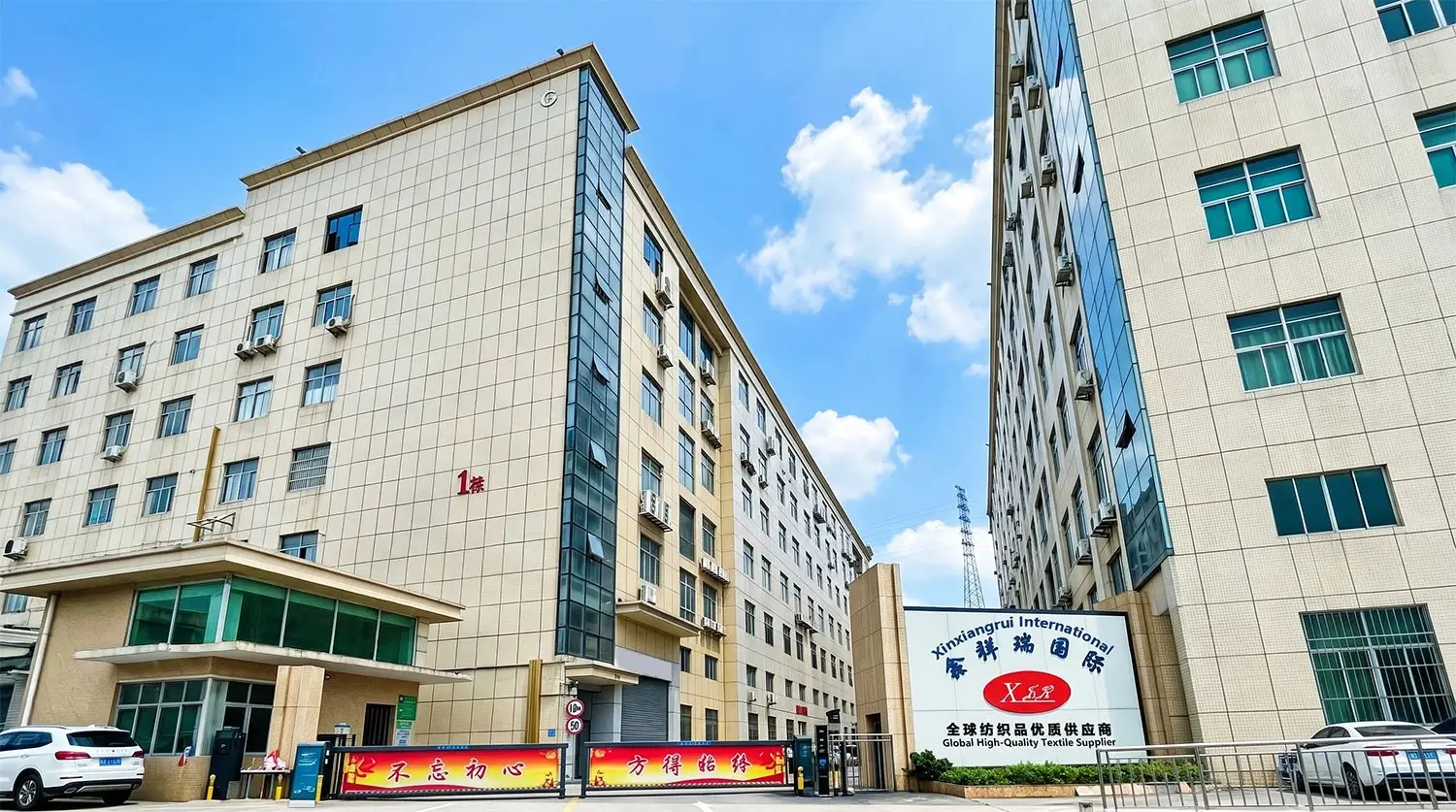
Direct wholesale production from our own plant in Dongguan, not a trading desk. Weaving, dyeing, printing, hardware assembly and packing all run in house, with no middleman margin in the price.
Full Customization
OEM and ODM work starts from your drawing: width, weave, colour, hardware and retail packaging. We match Pantone, send a physical sample before bulk, and keep every change on one work order.
Strict QA & ISO Standards
Every batch is checked for width, thickness, break strength and colour fastness before it ships, and the plant runs to ISO 9001 and ISO 14001. Test reports for your batch travel with the goods.
Proven Track Record
Fifteen years of narrow fabric since 2011, 200+ active partners and shipments to 50+ markets. Long-run programmes are what this factory is built for, which is why most customers reorder.
We Have The Best Solutions for Your Business
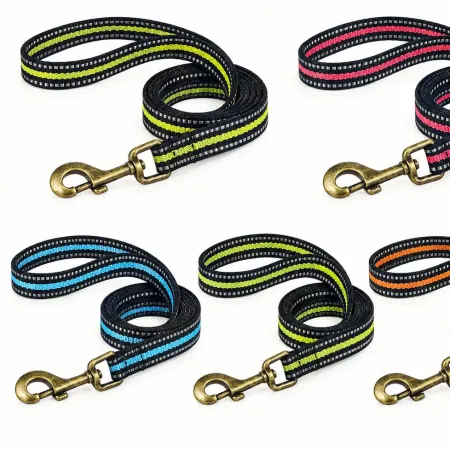
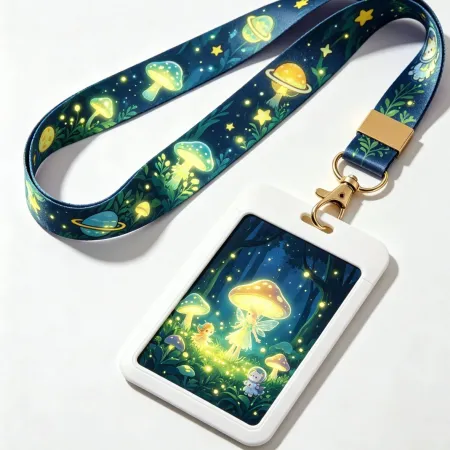
Xinxiangrui has made narrow fabric in Dongguan, China since 2011. Our 8,000 m² plant weaves, dyes, prints, cuts and sews under one roof, supplying 200+ active partners in 50+ markets. We produce polyester, nylon, cotton, elastic, reflective and bio-based webbing, ribbon, lanyards, pet leashes, bags and luggage components, from yarn and reflective tape to finished straps and handles.
Because every step stays in one plant, a widening range does not cost tolerance. Our laboratory tests to 2000N+ break strength, 50,000+ Martindale cycles and 1,000+ hours of UV exposure, and every batch carries its own figures rather than a catalogue sample. We work to OEKO-TEX, CPSIA, REACH, RoHS, ISO 9001, ISO 14001 and GRS. Send us your spec sheet and target quantity, and we will recommend the construction that fits.
Nylon Webbing: Two Polyamides and One Comparison
Almost all webbing nylon is one of two polymers, and the choice sits behind every other decision. The table below puts them beside polyester, because most briefs are really a comparison between nylon and the material the buyer used last time.
| Property | Nylon 6 | Nylon 6.6 | Polyester |
|---|---|---|---|
| Elongation at break | High | High, slightly stiffer | Low |
| Abrasion | Very good | Excellent | Very good |
| Moisture regain | Noticeable | Noticeable | Very low |
| UV resistance | Moderate | Moderate | Good |
The figure that decides most applications: a 25 mm nylon band clears 2000N in a standard construction, and so does the polyester band beside it. The difference is not the breaking point but what happens on the way there: nylon reaches it after stretching a long way, polyester reaches it almost without moving. Two bands with the same number can serve two completely different products.
Elongation Is the Property, Not the Strength
Why give is useful
A load applied suddenly carries more energy than the same load applied slowly, and a material that stretches absorbs that energy instead of passing it to the hardware. This is why nylon is chosen for anything that may be shock-loaded: a leash that takes a lunge, a tie-down on a moving trailer, a sling that arrests a fall. The band acts as a spring, and the spring is the reason the buckle and the anchor survive.
Why give is a problem
The same property is a defect in a strap that has to hold a dimension. A band that extends several per cent under working load will not keep a frame square, will not hold a tension setting, and will keep creeping under a sustained pull. A product designed for nylon and then moved to polyester behaves differently in the opposite direction: the strap stops stretching and starts transferring shock into whatever it is attached to. Neither substitution is safe without a test.
Recovery, which nylon does well
Nylon returns close to its original length after being stretched, which is why it survives repeated shock loading where a cheaper filament would progressively lengthen. The recovery is not perfect and it degrades with UV exposure, so a band used outdoors for years will end up longer than the one that left the factory. That slow change is worth measuring on a retained sample, because it is invisible until a product stops fitting.
Moisture, Sunlight and a Season Outdoors
Polyamide absorbs water into the fibre, which does two things at once: the band gains a little weight and loses a little strength while wet, and it takes longer to dry than polyester. On a leash or a boat cover that is acceptable and predictable; on a product stored damp in a sealed bag it becomes a mildew problem, because the water is inside the fibre rather than on the surface.
Sunlight is the more serious long-term factor. Ultraviolet light attacks the polymer chain, and the visible result is a band that fades, then powders at the surface, then breaks at a lower load than its label claims. Solution-dyed and UV-stabilised yarns slow this down considerably, and a light-fastness figure read after accelerated exposure belongs in the brief for anything that lives outside. A dyed band with no UV stabilisation can lose a third of its strength in a season of direct sun, and nothing about its appearance in the first month predicts that.
Dyeing is the third place where the two polyamides part company. Nylon takes acid dye readily, which gives deep, saturated shades at a relatively low temperature, and that is one of the reasons a bright colour on a nylon band looks richer than the same colour on polyester. The trade is that the same affinity makes the fibre harder to strip and re-dye, so a shade correction is a longer process, and it makes the band more sensitive to dye migration from a neighbouring material in a warm, humid container.
There is also an assembly consequence that appears on every programme sooner or later. A hot-cut end on nylon is not as clean as one on polyester, because the lower melting point leaves a softer bead that can string or smear if the blade temperature drifts. The end still seals and still resists fraying, and the finish is visibly different, which matters on a product where the cut end is exposed on a strap. Ask for a sealed sample end rather than a description of one, and check it under a light before the bulk order rather than after.
Six Lines a Nylon Brief Should Carry
- The polymer — nylon 6 or 6.6, since the two behave differently at temperature and are not always interchangeable in a dyehouse.
- The width, thickness and weave — three numbers, because a band matched on width alone can differ in thickness by enough to jam a buckle.
- The elongation at the working load — not only at break, because the product operates far below the breaking point.
- The exposure it must survive — sun, salt, chlorine or abrasion, with a figure for whichever applies.
- The colour and the dye route — piece dyed or solution dyed, because the second holds its shade far longer outdoors.
- The edge finish — woven selvedge, hot cut or ultrasonically sealed, since a hot cut end on nylon behaves differently from one on polyester.
Four Checks Before a Bulk Order
- Pull to the working load, not to break. Mark the band at the load the product actually sees and measure the extension. The elastic part of the behaviour lives there, and a break test never shows it.
- Soak one and pull it wet. A wet nylon band is slightly weaker and noticeably longer, and a product used near water is used in exactly that state.
- Leave a strip outside for a month. Accelerated tests are useful and a month on a roof is convincing. Compare it with a stored strip for colour and for hand.
- Cut and seal an end. Nylon melts at a lower temperature than polyester, so a hot knife setting carried over from another programme will leave a bead that is either stringy or burnt.
The nylon webbing range is woven beside the polyester webbing line on the same looms, which makes a like-for-like comparison straightforward: same width, same weave, and the difference in give becomes obvious in a hand within seconds. The figures for each lot, including elongation and light exposure, are recorded in the test record rather than left to a general statement about the fibre.
Two Mistakes That Leave a Band Short
Dried in the sun
A wet nylon band hung in direct sun dries quickly and degrades at the same time. The combination of heat, moisture and ultraviolet light is the most aggressive condition the fibre meets in ordinary use, and it happens on a washing line rather than in a laboratory. Shade drying is not fussiness; it is the difference between a band that lasts two seasons and one that lasts five.
A polyester specification carried across
A brief written for polyester and reused for nylon carries numbers that no longer mean the same thing: the same width, the same weave, the same break load, and a completely different elongation. The product that results passes every stated test and behaves differently in a customer's hand, which is the most expensive kind of success. Rewrite the elongation clause whenever the fibre changes.
Nylon webbing is chosen for what it does on the way to its breaking point. Specify the polymer, the elongation at the working load and the exposure it must survive, and the band will behave the way the product needs it to. Specify only a break figure and the fibre becomes an assumption.
Why Xinxiangrui for Nylon Webbing
Nylon webbing is bought for its give, and give is decided by the yarn, the weave and the finishing route, all of which run in one plant in Dongguan rather than across three suppliers. This site has woven narrow fabric since 2011, keeps a retained length from every approved lot, and reads elongation at the load a customer names instead of only at break. Tell us the shock it must absorb and the sun it must survive, and a matched band comes back to you.
Featured Products
Collection about Xinxiangrui Webbing
User Reviews
What users say about Xinxiangrui Webbing
Frequently Asked Question
Do you have any question?
Anything that may be shock-loaded: leashes that take a lunge, tie-downs on a moving trailer, slings, harnesses and pet goods. Its defining property is give rather than strength, and the give is what protects the hardware and the anchor.
Both stretch a long way before breaking and both resist abrasion well. Nylon 6.6 is slightly stiffer and holds properties at higher temperature; nylon 6 dyes more readily and gives deeper shades at lower temperature. The choice sits behind almost every other decision in a brief.
Because the product operates far below its breaking point. A band that stretches absorbs a sudden load instead of passing it to the buckle, and a band that does not stretch transfers the same energy into whatever it is attached to. Two bands with the same break figure can serve completely different products.
Slightly, and it gains a little length. Polyamide absorbs water into the fibre, so a wet band is marginally weaker and noticeably longer, and it takes longer to dry than polyester. Products used near water are used in exactly that state, so test them wet.