Source Factory
Direct wholesale production from our own plant in Dongguan, not a trading desk. Weaving, dyeing, printing, hardware assembly and packing all run in house, with no middleman margin in the price.
Full Customization
OEM and ODM work starts from your drawing: width, weave, colour, hardware and retail packaging. We match Pantone, send a physical sample before bulk, and keep every change on one work order.
Strict QA & ISO Standards
Every batch is checked for width, thickness, break strength and colour fastness before it ships, and the plant runs to ISO 9001 and ISO 14001. Test reports for your batch travel with the goods.
Proven Track Record
Fifteen years of narrow fabric since 2011, 200+ active partners and shipments to 50+ markets. Long-run programmes are what this factory is built for, which is why most customers reorder.
Blank Canvas Tote Bag With Handles: Where Strength Is Won
A blank canvas tote bag with handles looks like the simplest item in a bag range and behaves like one of the most testable. Everything a customer notices after a month — how the bag hangs, whether the seam box holds, whether it keeps its shape after twenty washes — is decided by four lines on a specification that most buyers never write.
This guide sets out where load actually travels in an unprinted bag, which fabric and handle combinations survive retail use, and the numbers worth putting on a drawing before a sample is approved rather than after the first complaint.
The Two Seams That Decide a Blank Canvas Tote Bag With Handles
An unprinted bag has no print to hide behind and no hardware to share the load. Two seam boxes carry the entire rated weight, and everything else in the construction either supports them or does not matter.
- Attachment geometry — an X-box spreads load diagonally into the panel, a plain box pulls only downward. A single row of stitching above the handle is the most common reason a blank bag tears in the first month of use.
- Panel weight and weave — a 10 oz plain-weave canvas and a 10 oz twill behave differently at the same seam. Weight sets the tear strength; weave sets how the hole propagates once a needle has cut a line of them.
- Handle material — self-fabric handles look consistent but stretch and neck under load. Woven webbing holds its width and gives a mill a number to test against instead of a hope.
- Bottom construction — a flat-fold bottom is cheap and concentrates stress on two corners; a gusset spreads it along a fold. The choice changes how the bag sits when loaded, not only how it looks.
The table below maps each decision to a practical range and to the symptom that appears when it is left to the factory.
| Line on the drawing | Working range | Symptom when it is unspecified |
|---|---|---|
| Fabric weight | 8–12 oz/yd², or 270–400 g/m² | A bag that sags at the handle, creases permanently and reads as thin in the hand |
| Handle width | 25–38 mm woven webbing | Handles that roll and cut into the palm once the bag is full |
| Stitch density | 8–10 stitches per inch on the box | Sparse stitching turns the panel into a perforated tear line under load |
| Attachment type | X-box, box-and-cross, or rivet plus stitch | Handles that pull out with a clean rectangular rip in the canvas |
| Handle drop | 200–280 mm, measured inside the loop | A bag that will not clear a shoulder, or one that drags on the ground |
| Bottom | Flat fold, or gusset 80–120 mm deep | Corners that burst first, and a bag that tips over when set down loaded |
Where a Blank Bag Actually Fails in Service
Three failure modes account for almost every return on this product, and none of them is a fabric quality problem in the usual sense.
The panel tears before the thread breaks
A needle punches a hole through every stitch, so a handle attachment is a line of perforations before it is a joint. In a plain weave the tear runs along the weft from hole to hole; in a twill it steps diagonally and resists longer. This is why moving from a single row to an X-box extends life far more than upgrading the thread does.
Self-fabric handles stretch where webbing does not
A handle cut from the same canvas as the body has no longitudinal yarns running its full length, so it necks to a narrow ribbon under a heavy shop load and never recovers its width. Woven webbing is built with warp yarns running end to end, which is the direction the load travels. The visual difference is small at the sample stage and obvious after a month of use.
Bar tacks and X-boxes solve different problems
A bar tack is a short, dense run of stitches that stops a seam from opening further; an X-box is a load-bearing pattern that distributes force across the full footprint of the handle end. Using a bar tack as the primary attachment for a heavy shopping bag is a design error that only shows up when the bag is full. The correct answer is usually both: an X-box for load plus a bar tack at the stress riser.
Wash the sample before you approve it
Canvas shrinks, and it shrinks unevenly at a seam because the stitching has already locked the weave. A bag measured on the desk at 380 mm can arrive at 365 mm after the first domestic wash, with the handle drop shortened by the same amount. Ask for a washed sample measured to the drawing, not a flat sample measured once.
Numbers Worth Putting on the Drawing
Four figures turn a verbal brief into something a factory can hold to, and all four can be measured on the finished bag.
- Weight in oz/yd² with a tolerance — state the nominal figure and the acceptable band, because a mill quoting 10 oz can deliver anything from 9.2 to 10.8 without lying. Weight is the single best proxy for how the bag will feel in a shop.
- Stitches per inch at the attachment — 8 to 10 is the practical band on canvas. Fewer perforates the panel; more crowds the needle and cuts the yarn filaments instead of separating them.
- X-box footprint in millimetres — the width and height of the stitched rectangle, not just the words "reinforced at handle". A 40 by 30 mm box behaves very differently from a 25 by 20 mm one.
- Shrinkage after one wash — ask for the percentage in both warp and weft direction. Unwashed canvas can move several percent, and a bag is a closed shape where every panel has to move by the same amount or the seams pucker.
Six Questions Before You Approve a Sample
Ask these while the sample is still on the table, because each one becomes expensive once a purchase order exists.
- Is the handle a woven strap or a folded strip of the body fabric? — the answer determines whether the bag has a testable strength figure at all.
- How many rows of stitching cross the handle end? — count them on the sample rather than the drawing; the difference between two and four rows is the difference between a season and a month.
- Where does the seam allowance sit? — a raw edge inside the bag will fray into the load; a folded or overlocked edge adds a step and removes a complaint category.
- Was the canvas pre-shrunk or washed before cutting? — this decides whether the dimensions you approved survive the customer's first laundry cycle.
- Which shade of natural? — unbleached, bleached and optical-brightened canvas are three different colours, and a reorder placed against a photo will not match.
- Does the sample match the production line? — a bag sewn by a sample hand and a bag sewn on the line are different products unless the attachment is specified the same way for both.
Keeping Blank Bags Repeatable Across Runs
A blank bag has no pattern to disguise a drift between the first order and the fourth, so repeatability has to be engineered rather than inspected at the end.
- A sealed and dated sample per colourway — kept by both sides, so a reorder is compared against a physical reference rather than a memory of the last delivery.
- Handle strap woven to a recorded sett and width — the strap is a woven component, so it has a specification of its own and should not be cut from whatever is on the shelf.
- Attachment recorded as a stitch programme — needle count, rows and box size written into the work order, so the second run uses the first run's settings instead of a fresh interpretation.
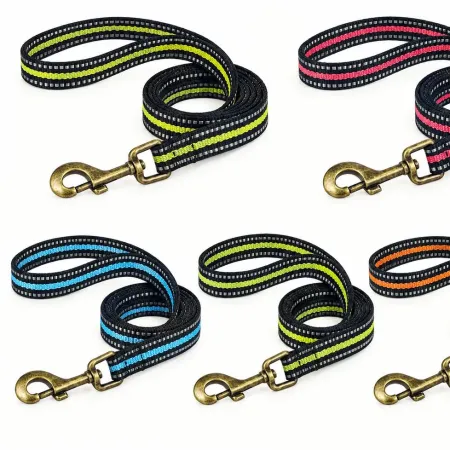
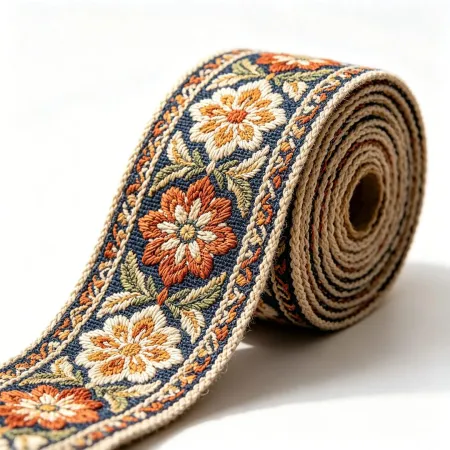
Blank bags sit inside the wider custom spec bag range, alongside a lightweight canvas tote with pockets and a organic cotton tote with embroidered logo. The handle strap itself comes from the cotton webbing line and can be specified at the same time as the bag rather than sourced separately.
FAQ: Blank Canvas Tote Bag With Handles
What fabric weight should a blank tote bag be?
For retail shopping use, 10 to 12 oz/yd² is the practical band. Below 9 oz the bag creases permanently and the handle drags the panel out of shape; above 14 oz it becomes stiff enough that folding and packing costs rise without a real gain in service life.
Are webbing handles stronger than self-fabric handles?
Yes, for the same width. Webbing is woven with continuous warp yarns running along the handle, while a strip cut from the body has no yarns oriented in that direction. Webbing also holds its width under load instead of necking into a thin ribbon.
Why does the canvas rip around the handle rather than at the stitch?
Because the needle has already cut a line of holes. The thread usually survives; the panel between the holes fails first. Spreading the attachment over a larger X-box footprint, and using a tighter weave at the handle end, moves the failure point away from the seam.
Should a blank bag be pre-washed?
If the bag will be laundered by the end user, yes — or the panels should be shrunk before cutting. Deciding this after the sample is approved is the usual cause of a second sample round, because the body and the handle shrink by different amounts.
Can handles be attached after the bag is sewn?
They can, and the result is usually visible. Attaching before the top hem is closed lets the handle end sit inside the seam allowance, which is both stronger and cleaner. Post-attachment leaves a stitch line on the outside face of an otherwise blank bag.
A blank bag is a load path with fabric around it, and the load path is two small rectangles of stitching. Buyers who specify the fabric weight, the handle material, the stitch density and the box footprint get a bag that can be reordered and defended; buyers who specify only a size and a colour get a bag that looks right on the desk and fails in a shopping basket.
Why Xinxiangrui for Blank Canvas Tote Bag With Handles
Established in 2011 in Dongguan, China, Xinxiangrui Webbing has spent 15 years weaving narrow fabric and building bags around it, so a blank tote leaves the plant with its handles tested rather than assumed. Handles are woven in-house to 2000N+ break strength, X-boxed at a recorded stitch count, and a sample is washed and re-measured before a run is released. Because the strap and the bag come from one company, a change in handle drop or panel weight is a single work order. Send us the drawing, the width and the target market — we reply with a construction.