Custom Breakaway Lanyard: The Release Force Nobody Writes Down
A custom breakaway lanyard is judged by one number that almost never appears on the drawing: the force at which it lets go. The strap itself is the easy part — a woven band, a print, a clip — but the closure has to carry a badge through a full day and still separate under a snag that would otherwise pull hard against a neck. Buyers who specify only the width and the artwork usually discover where the release sits when somebody pulls the first sample by hand.
This guide treats the release as an engineering figure rather than a feature. It covers the four closure types that carry the name, the variables in the strap that change the release, how a release force is measured properly, and the decisions worth locking before a tool is cut.
What a Breakaway Closure Is Actually Releasing
Four mechanisms trade under the same word, and they behave nothing alike. A buyer who says "breakaway" without naming the mechanism has described a category, not a product.
- Two-piece plastic breakaway buckle — a male and female moulding that click together and split along a moulded ramp. The release depends on the ramp angle, the resin and the wall thickness, so it is repeatable within a tool but differs between tools.
- Press-stud or snap closure — a metal stud and socket. Cheap, familiar, and the least predictable, because engagement depends on how far the plated cap is set into the cloth and how the fold compresses over time.
- Hook-and-loop release tab — a short overlap of fastener that peels apart. Releases gradually rather than at a threshold, which matters when the standard you are working to expects a defined snap point.
- Magnetic breakaway — two magnets in a moulded housing. Elegant on a corporate lanyard and the wrong choice anywhere a pacemaker, a badge reader or a magnetic lock is part of the environment.
The table sets out what each one does under load, and where it fails once the product is in daily use rather than on a sample card.
| Closure type | How it separates | Where it suits | Failure seen in the field |
|---|---|---|---|
| Moulded breakaway buckle | A single defined threshold, then full separation | Staff badges, school and event lanyards, any programme with a written safety spec | Re-clips loosely after the first release and then drops the badge |
| Press stud | Depends on cap height and cloth compression | Short-run promotional work where tooling budget is the constraint | Releases early on thin webbing, never releases on a double fold |
| Hook-and-loop tab | Progressive peel with no single snap point | Workwear and back-of-house where adjustment range matters | Lint and hair fill the hook face until the tab stops holding |
Custom Breakaway Lanyard: Four Straps Variables That Move the Release
The closure is only half the system. The strap it is sewn into changes the figure the closure produces, which is why two programmes using the same buckle grade can end up with releases a third apart. Nothing in that weakens the strap: a 20 mm woven band clears 2000N before a closure is fitted at all, so the breakaway is meant to be the weakest link in the assembly and the rest of the lanyard has to be strong enough to make that true.
- Fold length behind the closure — a longer tail spreads the peel load and raises the release force. Cutting 15 mm off the tail softens the break noticeably, which is why the fold drawing has to travel with the order.
- Webbing thickness and sett — a 1.0 mm polyester strap folds tighter than a 1.6 mm cotton one, so the same moulding grips harder on the thinner cloth and can sit above the specified band.
- Engagement depth — how far the male part travels into the female before it clicks. Half a millimetre of over-travel is invisible on a drawing and worth several newtons at the neck.
- Print and finish stiffness — a heavy plastisol print over the fold stiffens the strap and lifts the release; a soft water-based print or a dyed-only strap leaves the fold as woven.
Test the assembly, not the component
A moulding supplier will quote a release force for the buckle on its own, and that figure is close to meaningless once the part is sewn onto a folded strap. Always ask for the number measured on the finished lanyard, with the strap width, the fold length and the print method stated next to it. A release figure without those three details cannot be compared with another supplier's, and it cannot be defended if a buyer's safety team asks how it was obtained.
How a Release Force Is Measured Properly
A release test is a tensile test with a low target and a strict mounting method. Done casually it produces a number; done properly it produces a number that repeats.
The rig and the gauge length
The lanyard is closed, hung over a bar at the fold, and the clip end is gripped in the moving jaw. The distance between the two points is the gauge length, and it has to be constant across specimens or the elongation of the strap absorbs part of the travel and lowers the recorded peak. A pull rate of 100 mm per minute is common because it is slow enough to read and fast enough not to creep.
Five specimens, not one
Moulded parts vary by a few per cent from shot to shot, and sewing varies more than that. One specimen tells you the closure worked once. Five tell you the spread, and the spread is what a safety reviewer wants to see — a mean with a range around it, not a single peak. Where a programme runs to hundreds of thousands of pieces, the sample should also be drawn across shifts rather than from one hour of production.
What the report should name
Strap width and thickness, fold length, closure part number and resin, print method, gauge length, pull rate and the number of specimens. Without those, a release force is an anecdote. With them, it is a specification a factory can hold to on the next run, and a document that survives an audit two years later.
Decisions Worth Locking Before Tooling
Six choices decide most of the outcome, and every one of them is cheaper to settle on paper than after a mould exists.
- The band, not a target — ask for a release between two figures with the method stated, because a single figure can never be met twice.
- Who wears it — an adult event badge and a child's school lanyard are different risk profiles and should not share one closure grade.
- Where the seam sits — a seam crossing the fold adds bulk and raises the release; keep it clear of the closure by at least the fold length.
- Refasten or replace — a closure intended to be re-used after release needs a positive click, and that click has to survive the release it was designed for.
- Hardware below the break — a heavy metal clip swings and adds load; a plastic clip at the same length changes the release figure by itself.
- The document set — name the standard or the risk assessment the release has to satisfy, and keep the test record with the production lot.
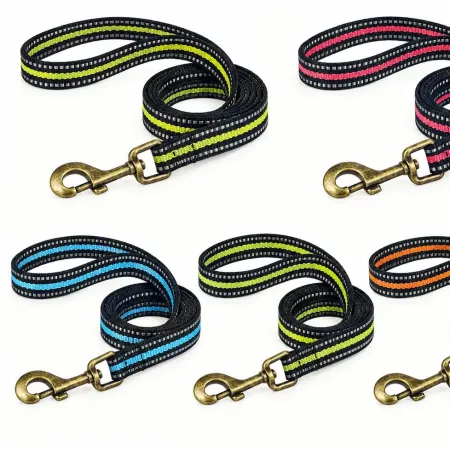
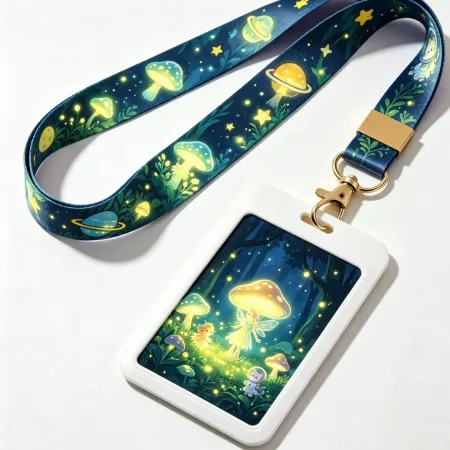
The strap itself is straightforward once the release is fixed. A woven band off the custom lanyard range can be printed, tipped and assembled with a closure in one pass, and the short wristlet version with a lobster clasp shows how much of the construction is shared with a keychain lanyard built on the same webbing. Where the release has to be proved rather than asserted, the measurements come out of the in-house testing laboratory, and development starts through OEM and ODM development.
FAQ: Custom Breakaway Lanyard
What release force should I specify?
Start from the risk assessment or the standard your end product falls under, then translate it into a band. For adult event and staff lanyards a release that needs a deliberate pull but gives way well below a load that could injure a neck is the usual compromise; for anything worn by a child the band is lower and the documentation burden is higher. Ask for the figure measured on the finished assembly.
Does the print change the release?
It can, and usually upward. A thick plastisol layer over the fold adds stiffness that the closure has to overcome, so a strap approved as dyed-only may sit above the band once it is printed. Keep the print at least one fold length away from the closure, or approve the printed version on the test rig rather than the plain one.
Can the lanyard be re-used after it breaks?
A moulded buckle is designed to click back, and most do for a while. The engagement is not the same after the first release, because the ramp edges have been deformed, so a re-used lanyard should be treated as worn rather than as new. Programmes that hand lanyards out daily are better served by a closure rated for repeated cycles than by the cheapest one-shot part.
Is a magnetic closure a breakaway?
Mechanically yes, and for a corporate gift it feels better than plastic. The complication is the environment: badges with RFID chips, card readers, medical devices and any magnetic lock in the building are all reasons to think again. If the lanyard is going into a hospital, a data centre or a school, a moulded mechanical breakaway removes the question.
What documents usually travel with the order?
A material declaration for the webbing and the print, a test record for the release force on the assembled lanyard, and whatever the destination market asks for on textiles and plastics. OEKO-TEX, REACH, CPSIA and RoHS paperwork is normally requested for the materials actually used, so ask for the certificate scope to name the yarn and the dye recipe rather than the factory in general.
A custom breakaway lanyard is a safety device that happens to carry a logo, and the release figure is the whole argument. Fix the closure type, state the band and the method, keep the print clear of the fold, and the strap can then be made as cheaply or as handsomely as the programme allows without changing what it does under load.
Why Xinxiangrui for Custom Breakaway Lanyard
A breakaway claim is only worth the file behind it, and at Xinxiangrui Webbing that file names the yarn, the dye recipe, the closure specification and the release test run on the assembled custom breakaway lanyard rather than on a stock sample. OEKO-TEX, REACH, CPSIA and RoHS documents are issued against the materials actually used, so an auditor can trace them back. Send us the closure, the strap width and the target market — we reply with a construction.