Cute Pet Leashes: What the Word Asks a Factory to Do
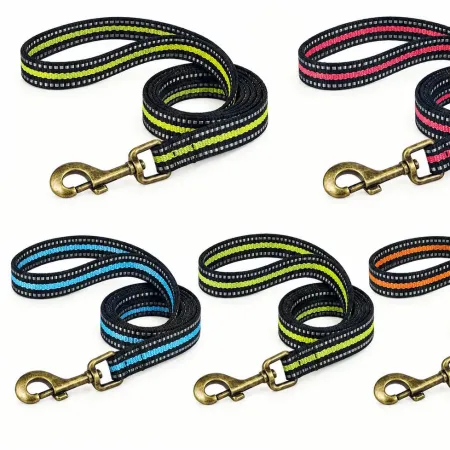
Cute pet leashes are sold on a word that no loom has ever been set for. In a shop, cute means a pattern a child points at, a fitting shaped like a bone and a colour that stands out on a wall of black and grey. On a production sheet it means a repeat size in millimetres, a tool for the fitting and a fixed set of shades that all have to be dyed in the same run. The distance between those two languages is where most of the work sits.
This guide covers the three decisions that turn the word into a product, how a print repeat is decided before the drawing, why a shaped fitting is a tool rather than a finish, six lines a novelty brief should carry, and the two judgements a customer makes at arm's length that no drawing captures.
Cute Pet Leashes: The Three Decisions Behind the Word
A novelty lead is not a plain lead with a picture added. Three decisions carry almost all of the perceived charm, and each of them is a manufacturing choice with its own consequence for the band.
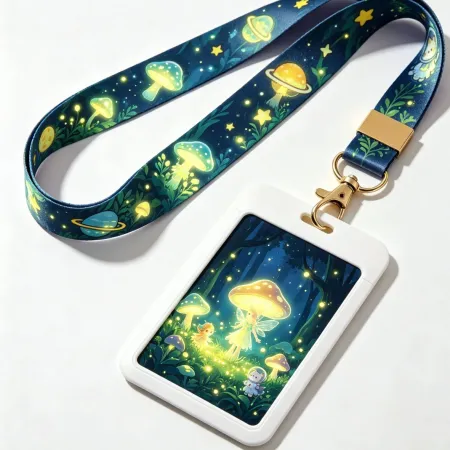
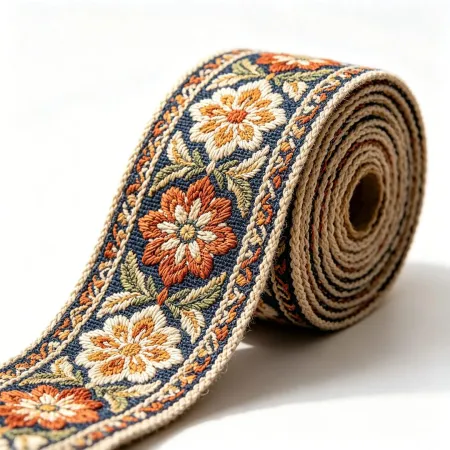
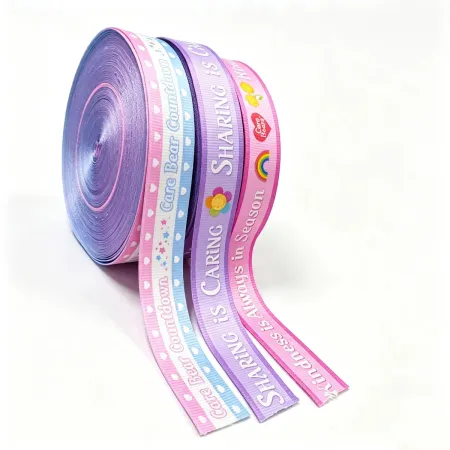
- The pattern route — woven into the band, printed on it, embroidered over it, or attached as a patch, and each route has a different minimum size at which a motif still reads.
- The fitting shape — a bone, a paw, a heart or a plain snap hook, and the shaped ones are cast or stamped from a tool rather than bought from a catalogue.
- The shade set — not one colour but a small family that reads as a collection on a shelf, and the family has to be decided before the dye lots are booked.
| Pattern route | Smallest clean motif | What it does to the band |
|---|---|---|
| Woven in | Around 8 mm, set by the loom's reed | Adds nothing to the surface, so the hand is unchanged |
| Printed | Finer detail, but the repeat has to fit the width | A thin ink film, so abrasion shows at the edges first |
| Embroidered | Small and raised, limited by thread and needle | Stiffens the panel, and the backing adds a layer |
| Patch or charm | Any size, but it hangs and swings | Adds a dangle point that can catch on things |
The base does not need re-engineering for a motif
A 25 mm band clearing 2000N has margin to spare once a print, an embroidery or a charm is added, so the decorative decision need not be tested against the load. That is what makes a novelty range cheap to launch: the engineering is already done, and the new work is the repeat, the tool and the shades rather than the structure.
Three Decisions That Cost More Than They Look
A repeat is a number before it is a drawing
A motif has to tile across the band and along its length, and it has to sit between the two edges with a margin that survives cutting. A drawing that fills the width edge to edge will be sliced by the cut and lose half of its outer element. The practical order is to fix the repeat first, then draw inside it, which is the reverse of how a design is usually presented and the reason a lovely illustration sometimes arrives as a motif that has to be redrawn smaller.
A shaped fitting is a tool, not a finish
A plain snap hook is bought by the box. A bone or a paw is cast or stamped from a die, and the die is a one-off cost that has to be carried by the order. It also changes the engineering: a shaped body has less material around the gate, so the spring and the gate have to be sized for the smaller section. A novelty hook is therefore a design and a tool at once, and the shape should be agreed before the band colour.
A trio sells, a dozen confuses
Novelty ranges usually do better with three or four shades that sit together than with twelve that each stand alone, because the shelf impression is the product. Three shades also mean three dye lots that can be run in sequence, which keeps the batch small and the shade consistency easier to hold. Twelve shades spread a small order across twelve lots and make every shade the least efficient one.
Six Lines for a Novelty Brief
- The width the motif must live in — given as a usable area, not the full band width, since the cut and the seam each take a share.
- The pattern route — woven, printed, embroidered or applied, chosen for the detail the motif needs rather than for the technique that sounds best.
- The repeat length — how far apart the motifs sit along the band, which sets how many appear on one lead and how it looks when coiled.
- The fitting, drawn — a dimensioned sketch rather than a mood, with the gate and the swivel position indicated.
- The shade family — three or four references that work together, plus the order in which they should be dyed.
- The matching pieces — collar and harness in the same repeat, because a novelty lead sold alone is a single item and a set is a display.
The sixth line is where a novelty range earns its space. A lead with a printed motif is attractive; the same motif carried onto a collar, a harness and a waste-bag pouch becomes a collection, and a collection is what a buyer orders in three shades instead of one. Because the base band is shared, matching the set is a matter of the same repeat on the same construction rather than a new development, and the pieces arrive consistent.
Most novelty leads are built on a nylon webbing base at 20 mm, where a motif still reads at a metre and the band stays light enough for a small dog. Dye-sublimation printing gives the widest colour range on a polyester webbing surface, while a woven repeat holds up better to abrasion on nylon. A sample in two routes answers more than a written comparison, and the abrasion report should say whether it was taken over the printed area or beside it.
Two Judgements Made at Arm's Length
Whether the motif reads from three metres
A customer meets a lead on a wall, not in the hand, and the motif has to be legible at that distance. A detailed drawing that is charming on a screen becomes a smudge on a 20 mm band at three metres, while a simple shape in two colours survives. Printing the motif at final size, cutting it out and looking at it from across a room is a faster test than any colour proof.
Whether the shape is comfortable to hold
A shaped fitting sits in a palm, and a shape with points or a hollow will be felt on every walk. The bone silhouette that looks best on a shelf often has an edge that presses into a thumb when the dog pulls, while a rounded form in the same style disappears into the hand. Holding the sample with a load on it, rather than looking at it, is the only way to find this before a customer does.
FAQ: Cute Pet Leashes
Can a photo be printed on the band?
A photograph prints, but the detail is lost on a 20 mm band. A simplified graphic built from the photograph reads far better at the distance a customer sees it.
Does a printed motif wear off?
It abrades at the edges before anywhere else, because the ink sits on the surface. A woven repeat has no film to lose and is the more durable route for a lead that is dragged.
How many shades should a novelty range carry?
Three or four that work as a group. A larger range spreads a small order across many dye lots, and each shade then costs more to hold consistent.
Is a charm a good idea on a lead?
It sells, and it catches. A charm swings at speed near a dog's legs, so the attachment needs a proper ring and the charm needs to be light.
Can cute and strong be the same lead?
Yes. The band behind the motif is the same construction as a plain lead, so the decoration is a surface decision rather than a structural one.
Cute pet leashes come from three numbers and one shape: the repeat, the usable width, the shade family and the fitting drawing. Decided in that order, the motif survives the cut, the fitting sits in a hand and the range reads as a set.
Why Xinxiangrui for Cute Pet Leashes
A novelty lead is a plain lead with a print, an embroidery or a charm, and the plain lead is already here. Three production lines across 17 product categories and 65 items mean the band under a motif is the same base used for collars, harnesses and bag straps, so a pattern travels onto a matching piece without a new development. Share your lead details with us and we will come back with a matched sample.