38mm Cotton Webbing: The Width Where Two Hardware Worlds Meet
38mm cotton webbing is the width at which a single order can satisfy two incompatible hardware conventions. Metric markets build rings and sliders around 38 mm and 40 mm; inch-based markets build them around 1.5 inch, which is 38.1 mm. A strip that measures 37.6 mm drops out of a 38.5 mm slider; a strip at 38.6 mm will not enter it. The window is narrower than most buyers expect.
This guide is about shipping one construction into several markets without splitting the order. It covers where the two systems diverge, what each market tends to ask for at this width, the documents that have to travel with the roll, and the three ways a 38 mm order goes wrong at the border rather than at the loom.
Where the Two Systems Diverge
The difference is a tenth of a millimetre on paper and considerably more in practice, because hardware is not made to the same tolerance as cloth.
- Nominal versus measured — a metric order asks for 38 mm; an inch order asks for 1.5 inch. In the reed the two are 38.0 and 38.1, and after dyeing both are whatever the shrinkage left them.
- Hardware slots are cut to the trade name — a slider sold as 38 mm may have a 39 mm slot, because the maker assumes a soft strap compresses. A slider sold as 1.5 inch may have a 38.8 mm slot. Neither is wrong; both are narrow.
- Thickness changes everything — a 2 mm strip will not pass a slot that a 1.4 mm strip glides through, at identical width. Buyers compare widths and forget thickness.
- Edge structure adds width — a tucked edge is thicker at the boundary than a cut edge, and on a tight slot that extra half millimetre is the difference between feeding and forcing.
The table maps the four combinations that cause most of the trouble, in the order they are usually discovered.
| Ordered as | Arrives near | Behaviour in a 38.5 mm slot |
|---|---|---|
| 38 mm, tight tolerance | 37.8–38.2 mm | Feeds cleanly and holds adjustment |
| 1.5 inch nominal | 38.2–38.8 mm | Feeds stiffly; binds if thickness runs high |
| 40 mm to allow for shrinkage | 39.5–40.5 mm | Will not enter; the order is unusable |
| 38 mm, no tolerance stated | 37.0–39.0 mm | Inspection lottery; part of the lot works |
What Buyers in Different Markets Ask For
The requests that arrive for this width cluster into three groups, and knowing which group an enquiry belongs to shortens the whole exchange.
- Metric-specification buyers — they work from a technical drawing, quote 38 mm with a plus or minus, and expect the same figure on the packing list. Their tolerance is usually the tightest of the three.
- Inch-based buyers — they order 1.5 inch and think in fractions. They are more tolerant of 38.4 mm and less tolerant of a strip that will not thread their existing slider.
- Programme buyers — they need the same construction across several widths and colours, and their real requirement is consistency between the 25 mm and the 38 mm in the same range rather than a tolerance on either.
The third group is the one that benefits most from a single source. A range in which the 25 mm and the 38 mm were woven at the same sett will not match in hand, because the wider strip is heavier at equal density. Getting a programme to look like a family is a decision made at the loom, not at the sample table. Load is rarely the constraint at this width — a standard construction clears 2000N — so the choice between 25 mm and 38 mm is about hand, hardware and proportion rather than about strength.
38mm Cotton Webbing Across 50+ Markets
Xinxiangrui Webbing ships narrow woven products to 50+ markets and supplies 200+ active partners, and at this width that experience shows up as paperwork rather than as weaving. A 38 mm strap is rarely rejected for its hand; it is rejected at inspection because a document does not match the goods.
- The declared width on the invoice — a metric buyer's paperwork says 38 mm, the carton label says 1.5 inch, and the inspection measures 38.2 mm. All three are true and the mismatch still holds the shipment.
- Fibre content wording — the same strip is "100% cotton" in one market's format and needs a composition breakdown with tolerances in another.
- Test reports with a scope — a certificate that names the yarn and the dye house travels; one that names only the mill invites a question at the border.
Put one width figure on every document
Choose the figure that will appear on the invoice, the packing list, the carton label and the inspection report, and make it the measured mean with its tolerance attached. A single declared value removes the class of delay that comes from three documents describing the same roll three different ways, and it costs nothing to standardise.
Three Failures That Happen After the Roll Leaves
The strap will not feed the customer's slider
The most common complaint at this width, and the least often predicted. The buyer tested the sample with their own hardware by hand, approved it, and the production roll arrived a fraction thicker because a different yarn lot was used. Feeding force is dominated by thickness and edge hardness, both of which drift between lots. Keep a retained sample of the approved strip and check the new roll against it with the actual slider.
Shade differs between the pilot and the bulk
A 38 mm strip shows shade variation across its face more than a narrow one, and a bulk dye lot that lands half a step away from the approved piece is visible on a wide surface. Approving a shade from a small swatch is the beginning of this problem; approving from a piece cut at full width is the end of it.
Cartons arrive short
Wider strips pack fewer metres per carton for the same volume, and a packing list copied from a 25 mm programme will overstate the count. This is arithmetic rather than quality, and it is worth checking the carton quantity against the roll length before the goods ship rather than after they land.
Five Lines for a Multi-Market Order
- One declared width — 38 mm with a stated tolerance, used on every document including the carton label.
- The slot it must pass — the internal measurement of the smallest slider in the range, sent as a photograph with a rule against it.
- Thickness band — the figure that governs feeding, stated separately from width.
- A retained approved piece — full width, dated, kept by both sides, used as the reference for every later lot.
- The document set per destination — composition wording, test scope and carton marks agreed before production rather than at booking.
The cotton webbing range covers the widths a programme needs to stay consistent, the twill handle construction shows how a denser sett changes the feed behaviour, and export handling is described under OEM and ODM development.
FAQ: 38mm Cotton Webbing
Is 38 mm webbing the same as 1.5 inch?
Within a tenth of a millimetre, which is enough to matter in a tight slider and not enough to matter in a ring. State which system the hardware was designed around and let the mill weave to that figure.
What is 38 mm cotton webbing used for?
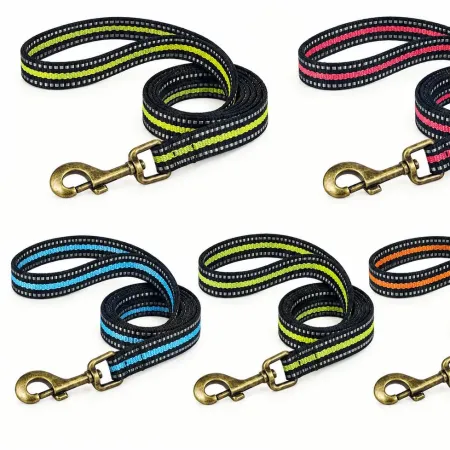
Waist belts, apron ties, tool and equipment straps, pet leads, duffel handles and the seat-back straps on luggage. It is the usual answer when a 25 mm strap feels too narrow for the load and a 50 mm one looks oversized.
Can one roll serve both a metric and an inch market?
If the hardware slots allow it, yes, and 38.2 mm is the figure that most often satisfies both. Send the tightest slider in the range and let the width be chosen against it rather than against a nominal figure.
Does a wider strip change the packing quantity?
Yes. Carton volume is fixed, so a 38 mm roll packs fewer metres than a 25 mm roll of the same diameter. Packing lists copied from a narrower programme overstate the count, and that discrepancy is easier to prevent than to explain.
Which documents should travel with the roll?
A test report naming the yarn and dye recipe, the composition statement in the format the destination requires, and a packing list whose width figure matches the invoice. Where the product touches skin or is intended for children, the chemical compliance file belongs in the same envelope.
38mm cotton webbing is a tolerance problem wearing the clothes of a width problem. The metres are easy; the agreement about what 38 mm means on four different documents is what decides whether the container clears.
Why Xinxiangrui for 38mm Cotton Webbing
Xinxiangrui Webbing ships narrow woven products to 50+ markets and supplies 200+ active partners, so a 38 mm order arrives with the document set its destination expects rather than with whatever was on file. Width, thickness and edge structure are recorded per order, and a retained full-width piece is kept once a shade is approved. Give us the application and the load it must carry, and the construction follows.