Elastic Decorations Webbing: Where Colour Is the Product
In a technical strap the band has a job and the colour is a courtesy. In elastic decorations webbing the order reverses: the band exists to be looked at, and every mechanical property is there only to keep the look intact. That changes what a specification has to say. Shade, sheen, edge shape and the way a metallic yarn behaves after a season in a window matter more than the tension at thirty per cent extension, which in a decorative context nobody will ever measure.
This guide covers the five things a buyer actually judges when a decorative band is opened, how print, knitted pattern and metallic yarn differ in what they can deliver, the six lines that make a decorative brief checkable, and how to sample a product whose success is decided by eye rather than by instrument.
Elastic Decorations Webbing: The Five Things Buyers Judge
A decorative band is assessed in the first three seconds after the box is opened, and the assessment uses five criteria that a technical specification usually ignores.
- Shade — whether the colour reads as the one on the mood board, under shop light rather than under a desk lamp.
- Sheen — matt, satin or metallic, which is a property of the yarn rather than of the dye.
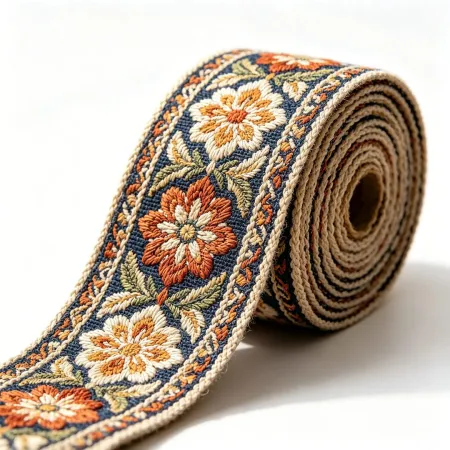
- Edge shape — straight, picot, scalloped or lace, and whether it holds that shape after being stretched.
- Pattern registration — whether a printed motif stays square to the edge or drifts along the length.
- Recovery — a band that sags after a day on a gift box looks tired before it is even sold.
The table maps the three usual decorative constructions against what sells them and what fails first, because the failure is different in each case.
| Construction | What sells it | What fails first |
|---|---|---|
| Printed elastic | Any colour, any motif, small runs | Ink cracks at the fold and along the edge |
| Knitted pattern | Two-tone geometry that cannot peel | Laddering if one yarn is snagged |
| Metallic yarn | A sheen no print reproduces | Tarnish, or the film dulling with washing |
| Picot or lace edge | Craft and gift presentation, a finished look | Loops catch and pull when the band is stretched |
Wave a metallic band before you approve it
A metallic yarn looks convincing flat and reveals itself the moment it is handled. Bend a sample sharply and look along the fold: if the metallic film has cracked and shows a pale line, it will do the same on a wrapped box. Then rub the band between finger and thumb and check for transfer onto the skin. A decorative product is handled more than a functional one, and the sheen has to survive the handling rather than just the photograph.
Print, Knit and Yarn: Three Ways to Make a Pattern
Printing gives range, not durability
A printed decorative band can carry almost any artwork: florals, seasonal motifs, a brand pattern, a photographic gradient. What it cannot do is stretch with the cloth. An elastic substrate moves every time it is pulled, and the ink film on top does not move with it, so the print develops fine cracks along the direction of stretch. On a gift band stretched once around a box, that is invisible. On anything handled repeatedly it is not, and the crack lines read as wear.
Knitting gives structure that lasts
A knitted pattern is made of yarn, so it stretches with the band and cannot peel or crack. The trade is resolution and colour count: a knitted motif is built from loops, so fine detail disappears and each additional colour adds a yarn to the machine. The compensation is a band that looks the same after a hundred stretchings as it did on the first day, which in decorative work is a long way ahead of a print.
Metallic yarn gives a sheen nothing else matches
A metallic yarn is a film wrapped round a core, and its appearance depends on that film staying intact. It gives a genuine reflective quality that no pigment reproduces, which is why it appears in festive and luxury packaging. It also has a shorter life: the film dulls with abrasion, tarnishes in humid storage, and reacts badly to some laundry conditions. Where a metallic band has to survive handling rather than just display, a finer metallic wrapped with a protective yarn lasts noticeably longer.
Six Lines for a Decorative Elastic Brief
- The shade reference — a Pantone code where one exists, and a physical swatch where it does not.
- The finish — matt, satin, metallic or glitter, since these are different yarns rather than different colours.
- Edge treatment — straight, picot or scalloped, with the tolerance on the loop size.
- Pattern type — printed, knitted or woven, because the three fail differently.
- Handling expectation — one wrap on a box, or repeated use in a craft project, which sets the durability bar.
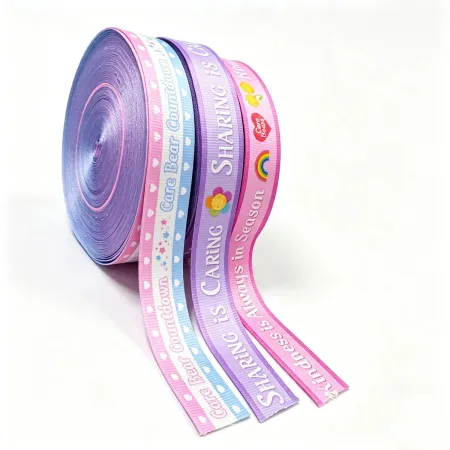
- Presentation — spool, hank or cut length, since a decorative band is usually sold as a visual object in its own right.
One line is worth adding for a different reason: the load the band might be asked to take. Decorative work sometimes crosses into a functional job — a gift band used to carry a small item, a corsage that has to hold. Where that is even possible, the rated member should be a non-elastic webbing rather than the decorative band, since a 20 mm woven tape clears 2000N while a decorative elastic is not designed for load at all.
Sampling Something Judged by Eye
Approve under the light it will be sold in
A decorative band is approved in an office and sold under shop lighting, and the two are not the same. Warm retail lamps lift reds and flatten blues; cool display lighting does the opposite. A band that looked balanced on a desk can look muddy on a shelf, which is a complaint about lighting aimed at the supplier. Ask for the sample photograph under a neutral lamp and again under a warm one, and choose the shade that survives both.
Check the repeat, not the swatch
A 200 mm sample shows one repeat of a printed or knitted motif, and one repeat can flatter a pattern that repeats badly. Ask for a length that contains at least three repeats and lay it out end to end: the join is where registration error shows, and a motif that drifts half a millimetre per repeat has moved a visible amount by the third one.
Elastic base cloth and the coloured yarns behind it sit in the polyester webbing and nylon webbing ranges, fastness and stretch figures are produced in the in-house laboratory, and a new motif or a new finish runs through OEM and ODM development.
FAQ: Elastic Decorations Webbing
Printed or knitted for a decorative band?
Printed for colour range, gradients and small runs. Knitted for durability, because the pattern is yarn and stretches with the band instead of cracking on top of it. A gift band that is stretched once can be printed; anything handled repeatedly is better knitted.
Will a metallic band tarnish in storage?
It can, particularly in warm, humid conditions without ventilation. A metallic film is a thin layer, and the edges of a wound spool are where it degrades first. Where a programme has a long storage period, ask for the band to be wrapped rather than left exposed on the outer layer of a spool.
Can a decorative band carry a logo?
Yes, but the mark has to be designed for a surface that moves. Small type on a stretchy band distorts long before it wears, so a simple shape at a generous size reads better than a detailed mark that has to be stretched to be seen.
Why does the picot edge pull out of shape?
Because a loop is an open structure and any hook — a fingernail, a ribbon, a pin — can catch it. A tighter loop and a smoother yarn reduce it; nothing eliminates it. Where the band will be handled a great deal, a scalloped edge that is knitted in rather than looped out holds its shape longer.
Is a decorative elastic sold by length or by weight?
Almost always by length, on a spool or in a hank, because the buyer is matching a number of items rather than a mass of material. That makes length tolerance part of the specification, and a short spool is a defect that is easy to miss and easy to count.
Elastic decorations webbing succeeds or fails on a judgement made in three seconds, so the specification has to protect that judgement: a shade approved in the right light, a finish that survives handling, an edge that keeps its shape and a pattern checked over several repeats. Get those four right and the band does the rest, because in decorative work looking correct is the whole function.
Why Xinxiangrui for Elastic Decorations Webbing
A decorative band is approved on a short length rather than a roll, so a sample of elastic decorations webbing is produced at the finished width with the shade, the sheen and the edge treatment all present. Pantone matching happens on the yarn, and the approved piece is retained as the reference for the next run. Tell us your elastic decorations webbing spec and a matched construction comes back to you.