GRS Recycled Pet Leashes: What the Certificate Chain Means
GRS recycled pet leashes are usually described by a percentage, and the percentage is the least interesting part of the claim. The Global Recycled Standard is a chain of custody system, which means the recycled content is tracked from the bottle or the mill through every processor to the finished lead, and each transfer is documented. A supplier who says the yarn is recycled is making a statement; a supplier who can produce a transaction certificate naming your order is evidencing one.
This guide covers the two documents a recycled claim actually rests on, why a recycled yarn is not simply a colour, where the chain most often breaks, six lines a recycled brief should carry, and the two timing questions that decide whether the paperwork is useful or merely decorative.
GRS Recycled Pet Leashes: Two Documents, Not One
The standard works with a scope and a transaction, and buyers regularly receive one while believing they have both.
- The scope certificate — held by a facility and listing the products and processes it is certified for, which is a statement about a site rather than about your order.
- The transaction certificate — issued for a specific shipment, naming the quantity and the buyer, and this is the document that attaches the claim to the goods you received.
- The recycled content figure — a percentage of the material by weight, which can be stated for the yarn, for the band or for the finished lead, and those are three different numbers.
- The chain of custody — every handler between the recycler and the sewing floor, because a break anywhere in the sequence invalidates the transfers after it.
| Document | Names | Does not prove |
|---|---|---|
| Scope certificate | A site, a product category, a validity period | That your particular order contained recycled material |
| Transaction certificate | A quantity, a buyer, a transaction date | That the finished lead matches the specification |
| Yarn declaration | A fibre, a batch, a recycled share | That the batch reached the loom |
| Retailer letter | A statement written by the brand | Anything at all, unless it cites the two above |
Recycled fibre does not lower the strength
A recycled PET yarn spun from bottle flake reaches the same order of magnitude as virgin fibre, and a 25 mm band built on it clears 2000N in the same test as a conventional one. That matters for the claim, because it means the recycled route is not a compromise the customer has to accept on performance, and the test report and the transaction certificate can describe the same roll.
Three Places a Recycled Claim Gets Weak
Recycled yarn is not a colour
Bottle flake arrives in mixed colours, and the clearer the feedstock the more consistent the dye result. A natural or light shade dyed onto recycled yarn is the hardest to hold, because any variation in the underlying flake shows through, while a deep shade covers it. A buyer who chooses a pale grey for a recycled range and expects it to match a pale grey in virgin fibre is setting up a comparison the material cannot win.
The dye house is part of the chain
A certified band that is dyed by an uncertified third party has left the chain, and the transfer after that point is not covered. This is why the useful question is not "is the yarn recycled" but "which dye house is on the scope certificate, and is it the one you use". A supplier whose weaving and dyeing sit inside a single certified site has a much shorter chain to evidence than one that sends greige goods out.
The logo has rules
The standard's mark can only be used with approval and only against certified content, and a hang tag printed before the certificate exists is a compliance problem rather than a marketing shortcut. The practical sequence is to confirm the transaction certificate before the tags go to print, which means the paperwork has to be planned alongside the packaging rather than requested after the goods ship.
There is also a surface difference worth knowing before a buyer feels the first sample. Yarn spun from bottle flake often has a slightly drier hand than virgin filament, and on a narrow band that reads as a faint texture rather than a fault. Some programmes treat it as evidence of the recycled origin and put it in the product copy; others finish the band to smooth it out. Either approach works, provided the sample and the description agree, because a customer who expects a glassy surface and receives a matte one will read the difference as a quality problem.
Six Lines for a Recycled Brief
- The standard, named — GRS, RCS or a regional scheme, since they cover different things and a claim under one is not a claim under another.
- Which percentage — of the yarn, of the band or of the finished lead, stated explicitly because the three differ and the highest is the one usually quoted.
- The feedstock — post-consumer bottle flake, pre-consumer mill waste or a blend, which affects both the shade consistency and the story told on the tag.
- The dye house — named, and certified, because an uncertified dye step breaks the chain regardless of where the yarn came from.
- The document set and timing — scope certificate, transaction certificate and the tag approval, with a date for each rather than a promise to follow.
- The shade strategy — whether the palette leans to deeper shades that hide flake variation, or to naturals where the recycled origin is visible in the surface.
The sixth line is a design decision disguised as a compliance one. A recycled range in deep navy, forest and charcoal will hold a consistent look from lot to lot and read as a deliberate palette; the same range in chalk and sand will show every variation in the feedstock and invite comparisons with virgin fibre that it cannot satisfy. Choosing the darker half of the colour card is often the single change that makes a recycled programme look professional on a shelf.
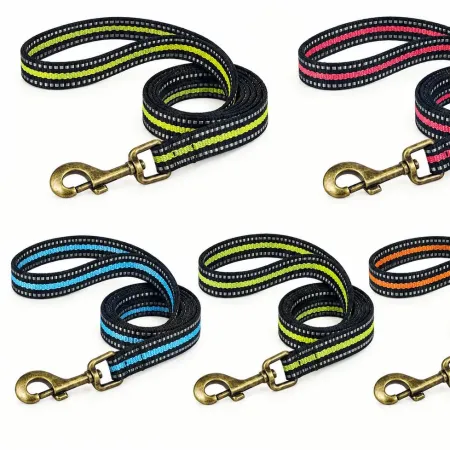
The base for a recycled lead is a nylon webbing or a recycled PET band at 20 mm to 25 mm, and the test report on it should carry the same batch reference as the yarn declaration. Where a buyer is weighing the two routes, a polyester webbing comparison in the same shade shows how much of the difference is the fibre and how much is the feedstock. Colour can be matched to a supplied reference through the development route, and the certificate numbers returned with the sample should name the yarn batch and the dye house actually used.
Two Timing Questions
When does the transaction certificate arrive?
A transaction certificate is issued against a completed transaction, which means it generally follows the shipment rather than accompanying it. A buyer who needs the document before goods leave has to plan for that in the schedule, and a buyer who discovers the sequence at the port is the one who prints a tag early and then asks for a certificate that does not yet exist.
Which weight is the percentage taken from?
A lead is band, thread and metal, and the metal is not recycled fibre. A figure quoted for the yarn will therefore be higher than a figure quoted for the finished product, and both can be accurate. Stating which basis is used, in the same sentence as the number, is the difference between a claim that survives scrutiny and one that appears to shift when a buyer checks it.
FAQ: GRS Recycled Pet Leashes
Is a scope certificate enough?
It shows a site is certified, not that your order was. The transaction certificate is the document that attaches the claim to the goods you received.
Can the recycled logo go on the tag?
Only with approval and only against certified content, so the tags should be printed after the certificate is confirmed rather than alongside the order.
Why do recycled shades vary between lots?
The feedstock varies. Pale shades reveal it and deep shades cover it, so the palette is part of how consistent a recycled range looks.
Does recycled fibre reduce strength?
Not to a level that matters for a lead. A recycled band in 25 mm still clears 2000N, so the load path is unchanged and the claim sits on top of a normal construction.
Does the dye house need certification?
Yes. Dyeing outside the certified chain breaks the transfer, which is why the dye house should appear on the scope certificate by name.
GRS recycled pet leashes are a chain of custody claim, and the chain is only as strong as its shortest link. Ask for the scope, the transaction certificate and the name of the dye house, and state which weight the percentage is taken from.
Why Xinxiangrui for GRS Recycled Pet Leashes
A recycled claim is only useful if the paperwork points at the material in the roll. GRS recycled PET bottle flake is spun for these products, and because weaving, dyeing and finishing sit inside one certified site in Dongguan, the chain of custody has fewer links to evidence and the certificate numbers match the yarn and the dye house actually used. Tell us your lead spec and a matched construction comes back to you.