Bulk Pet Reflective Webbing: What a Roll Actually Contains
A bulk order is not a larger sample order, and the three numbers that change are the ones that decide whether the cartons arrive usable. Bulk pet reflective webbing is bought by length, delivered in rolls, and consumed from the end of each roll, so the questions that matter are how long a roll is, how many joins it carries, and whether the split across widths matches the way the goods will be cut. None of those appears on a sample card, and each of them can turn a correct material into a shift of wasted labour.
This guide covers the three quantities a bulk brief has to fix, why a reflective band is a seasonal product made in the wrong half of the year, how a coated roll behaves in a container, six lines a bulk order should carry, and the two things that only show up after the pallet is opened.
Bulk Pet Reflective Webbing: Three Quantities, Not One
An order written as a total length leaves everything that matters to the supplier's convenience. Three separate figures do the work instead, and each of them maps onto a physical step in the plant.
| Quantity | What it fixes | What goes wrong if it is left open |
|---|---|---|
| Roll length | How much continuous band a cutting table can run before it reloads | Short rolls mean more setup per metre and more offcuts per run |
| Joins per roll | Whether a splice can fall inside a finished collar | A join that lands mid-cut becomes scrap, or worse, a weak point that ships |
| Split by width and shade | Whether the pallet matches the way the range is sold | One width arrives deep and another is short for the whole season |
The middle figure is the one buyers forget, and it is the one that produces the complaint. A join is a factual part of weaving a long roll: a warp end breaks, a weft runs out, a needle mark appears, and the mill cuts and rejoins rather than shipping a length with an obvious fault in it. The join is normal. What is not normal is a join in the middle of a finished collar, where the reflective face has a band of plain fabric across it and the seam sits at a point that takes the highest load.
A join is a cutting instruction, not a defect
A 25 mm band clears 2000N across its width whether or not a splice sits somewhere in the roll, and the splice itself is not the weak point people imagine. The problem is positional: a joined area has no reflective coating across its full width, so a collar cut through it loses both the visibility and the appearance the customer paid for. Marking joins on the outside of the roll turns a hidden fact into a cutting instruction.
Three Things That Decide a Bulk Season
The product is sold in winter and made in spring
Reflective collars and leads sell hardest as the evenings shorten, which means the order that fills a winter shelf is placed while the weather is still warm. A plant that also runs summer categories is booked in the months a reflective buyer needs, so the sensible ordering window is earlier than the selling season suggests by roughly one production cycle plus one shipping cycle. Buyers who order by the calendar of their own market arrive at the end of the queue and pay for air freight to recover.
A coated roll is not a textile roll
A plain woven band tolerates compression and heat. A coated band is a film on a fabric, and the film takes a set if it spends weeks under load at a high temperature. A container crossing the tropics can reach temperatures well above what a warehouse sees, and a roll stacked on its side under other cartons will arrive with flats where it was pressed. Standing rolls upright, limiting stack height and allowing a pallet to breathe costs a little space and prevents a delivery of band with a permanent crease across the reflective face.
The packing is part of the order
Bulk does not always mean unbranded. Many buyers take a pallet of plain rolls and a carton of printed header cards, then assemble at their own warehouse; others want the band cut, carded and polybagged before it leaves. The two arrangements have different labour in them, and the second has to be described before the order is confirmed rather than discovered at packing. A retail-ready request that arrives late is the most common cause of a shipment that is correct in quantity and three weeks late.
- Rolls upright — a roll lying on its side under weight flattens along one line and keeps the mark after unpacking.
- Stack height limited — pressure is harmless for a week and not harmless for a crossing, so the limit belongs in the loading plan.
- Wrapping that breathes — sealed film traps moisture against a coated face, and a warm container turns that into a bloom.
Six Lines for a Bulk Order
- Roll length and core — the continuous length wanted, and whether the roll should fit a stand the customer already owns.
- Joins allowed and marked — a maximum per roll, and a flag on the outside so the cutting table can plan around them.
- The split — how much of each width and each shade, so the pallet mirrors the range rather than the factory's setup.
- The packing stage — plain roll, cut length, carded, bagged or boxed, named before confirmation.
- The delivery window — a date at the destination rather than a date at the port, since one includes the part nobody controls.
- The documents — what the customs file needs, including any declaration for the coating rather than only for the fabric.
The fourth line surprises buyers more often than the others, because it looks like a detail of packaging and behaves like a change of product. Cutting to length adds a step, carding adds a step, and each step consumes days that were not in the plan when the order read simply as a length of band. Naming the stage at the quotation is what keeps the delivery window honest.
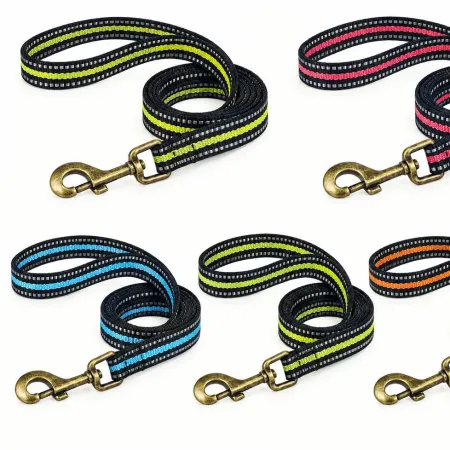
The material itself travels as a normal textile: a pet reflective webbing roll needs no dangerous-goods handling, and the customs description follows the woven base, usually polyester webbing. What the file should carry beyond that is the coating declaration, since a customs officer reading only the fabric line sees a plain band. Where the order includes finished leads, the pet leashes page describes the assembled options and the packing formats that can leave the plant ready for a shelf.
Two Things That Appear After the Pallet Is Opened
The end of the roll, not the beginning
Every roll is inspected at its head, because that is the part a person sees when the wrapping comes off. The tail is where the last metres of a loom run live, and it is where tension drift, a slightly different shade and a join tend to gather. A receiving check that unrolls two metres from the outside and stops has checked the best part of the delivery. Pulling the last three metres of one roll per pallet costs a few minutes and finds the faults that otherwise reach the cutting table.
A shade shift between rolls, not within one
Two rolls from the same order can differ slightly if they were coated in different passes, and the difference is invisible when each is examined alone. It appears when collars from both rolls sit on the same shelf, which is precisely the situation the customer sees. The practical answer is to ask for the coating pass to be recorded per roll, and to keep one roll of each pass for the reference file, so a future complaint can be traced to a batch rather than to a memory.
FAQ: Bulk Pet Reflective Webbing
How long is a standard roll?
It is a decision rather than a standard, and the useful figure comes from the length your cutting table can run. A long roll reduces setup, and it also makes a single join affect more of the delivery.
Are joins acceptable in a bulk order?
They are normal and they should be limited and marked. The number per roll belongs in the order, and the marking lets your cutting plan avoid them instead of discovering them mid-run.
Does the coating change the shipping class?
It does not make the goods dangerous, and it does belong in the description. A file that mentions only the fabric understates what is being imported, which is a paperwork problem rather than a handling one.
Can rolls be cut to length before shipping?
Yes, and it changes the schedule. Cutting and carding are production steps, so they need to be in the order from the start rather than added when the goods are already packed.
When should a winter range be ordered?
Early enough to cover a production cycle and a shipping cycle before the shelf is due to be full. Working backwards from the selling date is more reliable than counting forwards from the order date.
Bulk pet reflective webbing is decided by three quantities and one calendar. Fix the roll length, the joins and the split, name the packing stage, and order by the date the shelf has to be full rather than the date the sample was approved.
Why Xinxiangrui for Bulk Pet Reflective Webbing
A bulk reflective order is judged on what arrives, and here the goods leave from the plant that wove and coated them, in Dongguan, with air, sea and express arranged in-house and the customs file written against the actual construction. Retail-ready packing, cut lengths and marked joins are handled on site, so the packing stage named at quotation is the stage that ships. Share your width, your total length and the date the shelf has to be full, and we come back with a plan that fits the calendar.