Cotton Webbing Dog Leads: Four Load Points and the File Behind Them
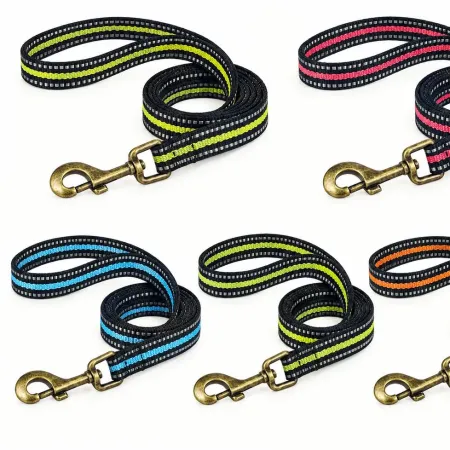
Cotton webbing dog leads are bought for how they feel in the hand and sold on how they look, but they are safety equipment, and a lead that fails does so at one of four points that have nothing to do with appearance. Two of those points are hardware, one is a stitch, and only one is the cloth — which is why the specification has to cover all four rather than the width.
This guide sets out where a lead carries load, what cotton does differently from the synthetics it competes with, and which documents a buyer should hold before the order ships. It is written for brands and importers putting a cotton lead into a market that regulates dyed textiles and metal fittings.
Four Load Points on a Lead
Load travels from the dog to the hand through a chain of four components, and the weakest one sets the rating for the whole product.
- The trigger clip — the snap hook at the dog end. Its gate, spring and rivet are three small parts that can fail independently, and it is the component most often rated below the webbing.
- The fold at the clip — two layers of webbing around a ring or through the clip eye, stitched or riveted. This is where abrasion and flexing concentrate.
- The handle loop — often the same webbing doubled back, sometimes a padded section. A loop that is stitched shut takes the full pull of a lunging dog at one seam.
- The webbing itself — a sound cotton construction at 25 mm clears 2000N, which is more than most clips are rated for, so the cloth is rarely the limiting part.
The table puts the four in order of how often they cause a return rather than how strong they are.
| Load point | Failure mode | Prevention |
|---|---|---|
| Trigger clip | Gate opens under a shock load; spring corrodes | A clip rated above the webbing, with a plating test |
| Fold at the clip | Abrasion through the edge, then the stitch | A ring with a generous diameter; a longer stitch run |
| Handle loop | Seam tears; loop stretches permanently | Box-X plus bar-tack; a denser sett in the handle |
| Webbing | Edge wear over months; colour loss at the grip | Tucked edge; abrasion and rub data on the roll |
What Cotton Does Differently on a Lead
Most leads in the market are polypropylene, polyester or nylon. Cotton behaves differently in three ways that matter to a handler, and one of them is a genuine disadvantage that has to be designed around.
- It stretches far less — a nylon lead extends noticeably under load and springs back, which is comfortable on a walk and vague on a strong dog. Cotton gives a firmer, more direct feel, which handlers of large dogs tend to prefer.
- It does not glaze when it rubs — a synthetic lead develops a shiny, stiff patch where it runs through a hand or against a clip. Cotton softens and furs instead, which looks worn but keeps its grip.
- It absorbs water and dirt — the real disadvantage. A wet cotton lead is heavier, dries slowly and holds odour. A finish that resists water helps, but it also reduces the grip that makes cotton pleasant to hold, so the two aims pull against each other.
- It takes colour deeply — which is a commercial advantage and a compliance question at the same time, because a deep shade on a lead is a dye load that has to be documented.
The material choice also changes how the lead is sold. A cotton lead is presented as a natural-fibre product with a hand feel, and that positioning invites questions about dyes and finishes that a polypropylene lead never receives.
The File Behind Cotton Webbing Dog Leads
A dog lead is handled constantly, sits against a handler's hand and is chewed by the animal it restrains. That combination puts it in a stricter category than a tote handle, and the file that supports it has four parts.
- Dyestuff restrictions — the azo colourant question is asked of every dyed textile in regulated markets. The answer names the amines tested for, not the certificate's title.
- Skin-contact certification — OEKO-TEX at the class matching prolonged skin contact, with a scope that names the yarn and the dye house actually used.
- Nickel release from the hardware — a plated clip or ring held in a hand is the component that raises this question. Ask which plating was used and whether a release result accompanies it.
- Physical test results — tensile on the assembled lead, not the cloth alone, plus a salt-spray result for the clip where the product will be used outdoors.
Test the assembly, and test it with a load it will never see
A 30 kg dog can produce a momentary load several times its weight when it hits the end of a lead at speed. Test the finished lead — clip, fold, stitch, handle — to a figure well above the animal's weight, and watch which component gives first. The answer tells you what to upgrade, and it is usually the clip rather than the webbing.
Three Failures Specific to a Cotton Lead
The clip outlives its rating
A clip chosen for its finish rather than its load rating becomes the weak link on a lead whose webbing is rated far higher. The mismatch is invisible until the day it matters, and it is settled by asking for the clip's rating in writing.
The fold abrades from the inside
Where the webbing wraps a ring, the inner face rubs against itself with every step. On a cotton lead the wear shows as a thinning band rather than a cut, and it reaches the stitch before it reaches the surface. A ring with a larger diameter spreads that wear over a longer length of cloth.
The colour transfers to a hand
A deep-dyed cotton lead held in a warm, slightly damp hand is the classic crocking scenario. Surplus dye that was not washed off properly transfers, and the handler notices on their palm rather than on the product. Rub fastness data, wet and dry, is the only way to catch it before shipment.
Six Lines for a Lead Specification
- Length and width — a 25 mm lead suits most dogs; a 38 mm lead suits a large one and a long-haired handler's grip.
- Dog weight range — the figure that sizes both the webbing and the clip.
- Clip type and rating — trigger clip, swivel or fixed eye, with the rating above the webbing figure.
- Handle construction — loop, padded, or with a D-ring for a second attachment.
- Fastness floors — separate grades for wet rub, dry rub and light.
- The document set — chemical file, hardware plating, and the assembled lead test.
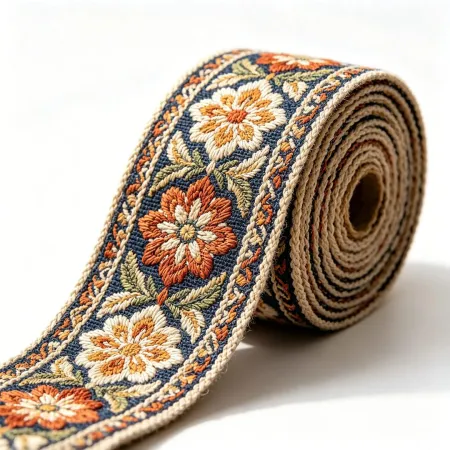
The cotton webbing range covers the widths a lead programme uses, the twill construction is the firmer option for a handle loop, and hardware assembly with the strap is described under OEM and ODM development.
FAQ: Cotton Webbing Dog Leads
Is cotton strong enough for a large dog?
A sound 25 mm construction clears 2000N, which is far above the steady pull of a large dog. The limiting component is the clip and the stitching at the fold, so the rating should be quoted for the assembled lead rather than for the cloth.
Does a cotton lead stretch?
Far less than nylon and noticeably less than polyester. It elongates a few per cent at break, which gives a direct feel rather than the springy give a synthetic lead has. Handlers who want a soft correction tend to prefer it for that reason.
Can a cotton lead go in the washing machine?
It can, and it will shrink. The dye and the finish both influence how much, and the metal parts are better protected by hand washing. Ask for the dimensional change figure with the wash cycle named so the care instruction is written from data.
What hardware should a lead use?
A trigger clip or a swivel snap rated above the webbing, in a plating that resists salt and moisture. The gate spring is the part that fails first in a wet climate, so a salt-spray result is worth asking for on any lead sold near the coast.
Which certificates should ship with the order?
The chemical file for the dyed cloth, the hardware plating statement and the assembled lead test. A generic mill certificate describes capability; these three describe the goods in the carton.
A lead is judged by its weakest component, and on a cotton lead that is rarely the cotton. The clip, the fold and the stitch decide whether the product is safe, and the file decides whether it can be sold.
Why Xinxiangrui for Cotton Webbing Dog Leads
A dog lead claim is only worth the file behind it, and at Xinxiangrui Webbing that file names the yarn, the dye recipe, the hardware plating and the tests run on the assembled lead rather than on a stock sample. Clips and rings are fitted in-house, so a lead can be tried in the real hardware before the run is approved. Send us the drawing, the width and the target market — we reply with a construction.