
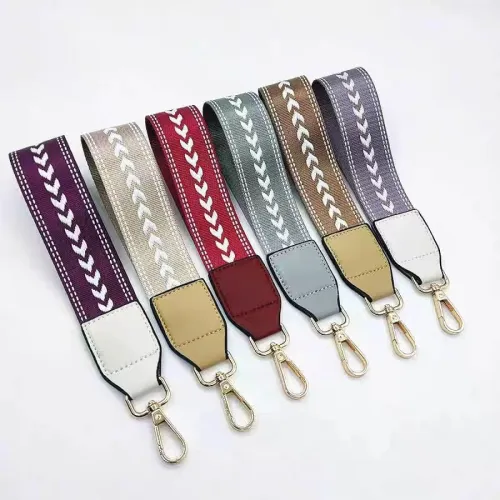
Features
Why Choose Xinxiangrui Webbing?
Source Factory
Direct wholesale production from our own plant in Dongguan, not a trading desk. Weaving, dyeing, printing, hardware assembly and packing all run in house, with no middleman margin in the price.
Full Customization
OEM and ODM work starts from your drawing: width, weave, colour, hardware and retail packaging. We match Pantone, send a physical sample before bulk, and keep every change on one work order.
Strict QA & ISO Standards
Every batch is checked for width, thickness, break strength and colour fastness before it ships, and the plant runs to ISO 9001 and ISO 14001. Test reports for your batch travel with the goods.
Proven Track Record
Fifteen years of narrow fabric since 2011, 200+ active partners and shipments to 50+ markets. Long-run programmes are what this factory is built for, which is why most customers reorder.
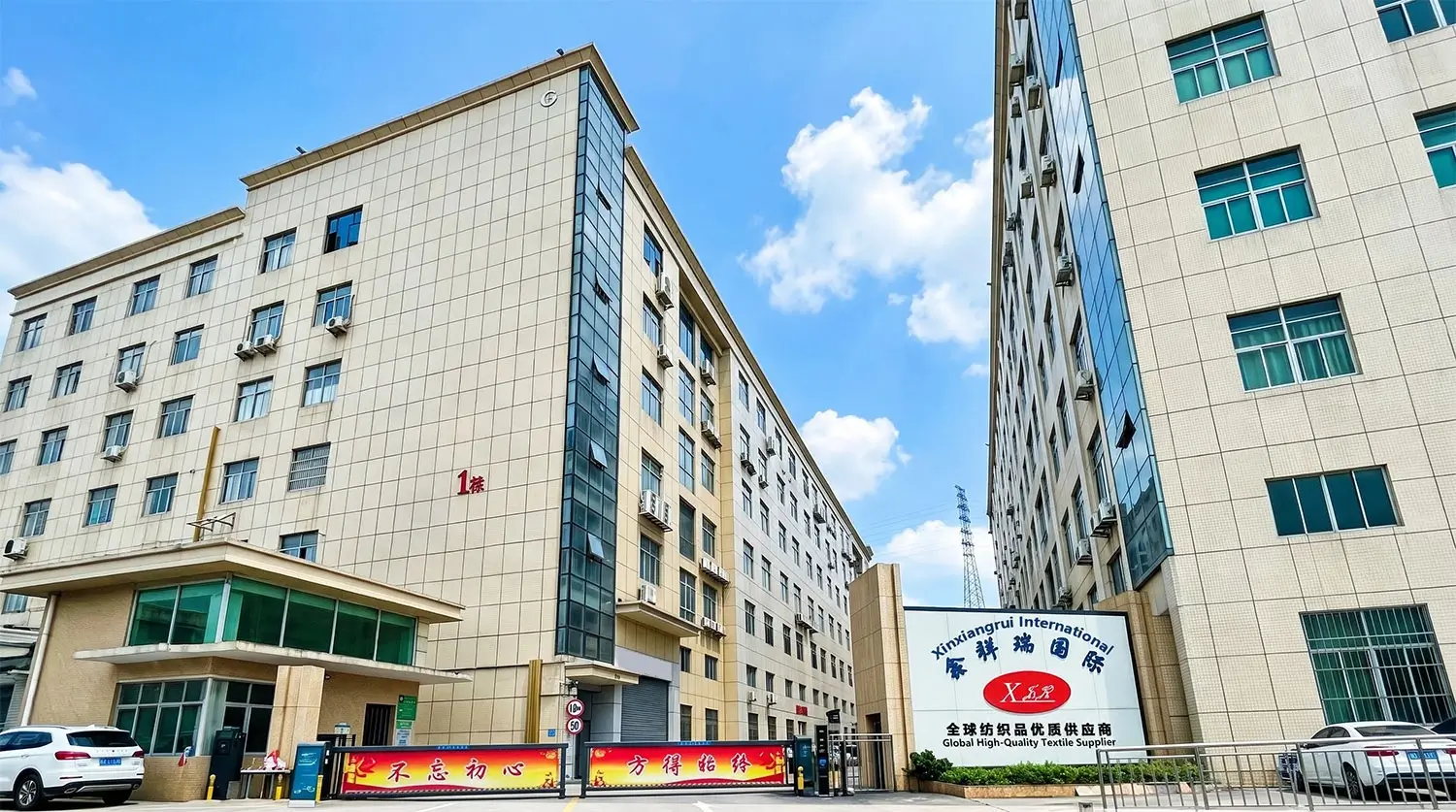
We Have The Best Solutions for Your Business
Xinxiangrui has made narrow fabric in Dongguan, China since 2011. Our 8,000 m² plant weaves, dyes, prints, cuts and sews under one roof, supplying 200+ active partners in 50+ markets. We produce polyester, nylon, cotton, elastic, reflective and bio-based webbing, ribbon, lanyards, pet leashes, bags and luggage components, from yarn and reflective tape to finished straps and handles.
Because every step stays in one plant, a widening range does not cost tolerance. Our laboratory tests to 2000N+ break strength, 50,000+ Martindale cycles and 1,000+ hours of UV exposure, and every batch carries its own figures rather than a catalogue sample. We work to OEKO-TEX, CPSIA, REACH, RoHS, ISO 9001, ISO 14001 and GRS. Send us your spec sheet and target quantity, and we will recommend the construction that fits.
Custom Lanyard: The Three Attachments
The fitting is the part that fails first in almost every field report, and the three common types answer different questions.
| Attachment | How it works | What it suits | Where it disappoints |
|---|---|---|---|
| Swivel hook | Spring gate on a rotating joint | Badge holders, keys, quick changes | The gate, which loses tension with use |
| Trigger clip | Squeeze lever, positive lock | Tools, keys, anything that must not drop | Bulk and weight on a thin band |
| Strap or bulldog clip | Flat jaw with a light spring | Cards in a rigid sleeve, event badges | Repeated opening; the jaw relaxes |
The safety feature that is usually missing: a neck lanyard should break away rather than hold. A band that takes a full pull around a throat is a hazard the moment it catches on a door handle, a machine or a closing lift. The breakaway is a small plastic joint that separates under a stated load, and it belongs in the brief as a number rather than as an option.
Print Routes and What Survives Daily Wear
Dye sublimation, the route for full colour
Sublimation turns a solid dye into a gas and drives it into the fibre, so the design becomes part of the band rather than a film sitting on top of it. That is why a sublimated lanyard does not crack at the fold and does not peel after a wash. It only works on a polyester surface, because the dye needs a polymer it can enter, and it shows through to the reverse side on a thin band, which is fine for a two-sided design and wrong for a one-sided one.
Screen print, the route for a few solid colours
Screen printing lays an ink film and cures it. It gives a dense, opaque colour on any ground, including a dark one, and it costs less to set up for a single-colour logo. The trade is feel and flex: the film sits on the weave, and on a narrow band that is folded and rubbed all day the ink is the part that shows wear first. A thin deposit and a soft ink keep it alive; a heavy one turns the band into a stiff ribbon.
Woven or jacquard, the route that never wears off
A jacquard band carries the logo in the weave itself, using coloured warp ends in a programmed sequence. Nothing sits on the surface, so nothing can peel, crack or fade off, and the band is reversible by construction. The constraints are design-led rather than durability-led: fine detail and gradients cannot be woven, a new programme needs a harness set-up, and the minimum length per design is longer than a print run. For a programme that will be reordered for years, it is usually the cheapest route over its life.
Width and Comfort Are the Same Decision
A neck lanyard is worn for hours and is judged by how it feels at the back of the neck, not by how much space the logo has. A narrow band concentrates its weight on a small area and cuts in; a wider one spreads the same load and feels lighter. A 15 mm band suits a badge for an afternoon; a 20 mm band is the usual compromise for daily office wear; a 25 mm band is chosen when the print needs the room or the product is worn over a collar. The same numbers apply to the wrist, where a loop in a narrow band digs in far sooner than one in a wide band.
There is a second-order effect worth naming. A wider band needs a longer print repeat and a larger fitting, and the fitting is what a hand touches. Moving from 15 mm to 25 mm usually improves comfort and forces a hardware change at the same time, which is why the two decisions are best made together rather than in sequence.
Six Lines a Custom Lanyard Brief Should Carry
- The band width and length — measured flat and end to end, with the length stated for the finished loop rather than for the cut piece.
- The print route — sublimation, screen or woven, because the artwork has to be redrawn for each one and cannot be swapped after approval.
- The ground colour — named separately from the design, since a dark ground changes how every other colour reads.
- The attachment type and finish — swivel, trigger or strap, in a named metal or moulded finish, because a mixed finish across a run is visible at a glance.
- The breakaway requirement — whether it is needed and at what load, stated as a number rather than as a preference.
- The packing format — individually bagged, bulk, or clipped to a card, since the packing decides how the product is handled at the event.
Four Checks Before a Bulk Order
- Hang a loaded lanyard for a day. A badge in a rigid holder is heavier than it looks, and the band will tell you within hours whether the fitting is gripping or slowly sliding.
- Fold the printed area along the hanging crease. Every lanyard folds where it leaves the neck. A print that whitens on that line will whiten in a week.
- Test the breakaway twice. Once tells you it separates; twice tells you whether it reconnects reliably, which is the property that keeps a wearer from taking it off.
- Wash one in a pocket. A lanyard normally meets a washing machine by accident, and the accidental wash is the test that matters.
The custom lanyard programme sits beside the webbing lanyards line, where the same bands are built for heavier use, and both draw on the hardware and printing that also feed the lanyard keychain range. A 25 mm band in that family clears 2000N when it is woven as a load-bearing strap, which is exactly why a neck lanyard is specified to break away instead: the load figure exists to show where the material stops, not to describe what a neck should carry.
Two Mistakes That Produce a Return
Artwork approved before the route was chosen
A design with a gradient, a photograph and a line of small type is fine for sublimation and impossible for a jacquard band, where the image has to be reduced to a grid of coloured warp threads. When the route is decided after the artwork, either the design is redrawn at cost or the route is changed to one that wears faster. Decide the route first, then draw for it.
The fitting that was never load-tested
A swivel hook is a small spring in a metal shell, and a cheap one loses its gate tension long before the band wears out. The result is a lanyard that still looks new and drops a badge in a lift. Ask for the fitting's own cycle figure rather than the band's, and test one to a few thousand open and close cycles if the product is used daily.
A custom lanyard is three decisions in one shape: what is printed, what holds it closed, and what it has to survive. Choose the route before the artwork, choose the width for comfort, and specify the breakaway as a number. Those three choices decide whether the product is worn or quietly removed.
Why Xinxiangrui for Custom Lanyards
A custom lanyard needs the band, the print and the fitting to agree, and a custom lanyard made here is printed on bands woven in the same Dongguan plant, with the hardware fitted on the same line that packs it. Nothing travels between suppliers, so a change of ground colour or fitting finish is a single work order. We have run narrow fabric since 2011 and keep every print version on file, so a reorder two seasons later matches the original. Send the artwork and the load it must carry, and a matched sample comes back to you.
Featured Products
Collection about Xinxiangrui Webbing
User Reviews
What users say about Xinxiangrui Webbing
Frequently Asked Question
Do you have any question?
A narrow band made to a specific design, fitted with a closure at each end and worn around the neck or wrist to carry a badge, a key or a small tool. Custom covers three separate decisions: what is printed, what holds it closed, and what the band has to survive.
Sublimation for full colour because the dye enters the fibre and cannot peel; screen print for a few solid colours because it is dense and opaque; jacquard when the design will be reordered for years, because nothing sits on the surface. Decide the route before the artwork, not after.
Yes, and this is where most sampling rounds are lost. A gradient and a line of small type work in sublimation and cannot be woven in jacquard, where the image has to become a grid of coloured warp threads. Deciding the route first means the design is drawn for it.
Fifteen millimetres suits a badge for an afternoon, twenty is the usual compromise for daily office wear, and twenty-five is chosen when the print needs the room or the product is worn over a collar. Width is a comfort decision, because the band is held at the back of the neck for hours.