1.5 Inch Polyester Ribbon: Three Numbers That Drift
A 1.5 inch polyester ribbon is 38 mm on a loom, 38.1 mm in a conversion table and anything between 37.4 and 38.4 mm under a caliper, and all three are described as one and a half inches. The width is not the problem. The problem is that width is one of three numbers on a label that all move after the ribbon leaves the machine, and buyers usually check only the first one.
This guide sets out what a measurement of a ribbon actually contains, why a roll measured under tension is shorter than the same roll relaxed, which tolerances are worth writing into a brief, and the two figures that never appear on any label and decide how the ribbon behaves on a machine.
1.5 Inch Polyester Ribbon: What the Label Actually States
Three quantities travel with a roll, and each of them is measured under conditions that are rarely written down. That omission is where disputes come from, because two people can measure the same roll correctly and disagree.
| Quantity | How it is stated | What moves it |
|---|---|---|
| Width | Nominal, to the nearest whole millimetre | Selvedge tightness, heat setting, and whether the roll has been compressed in a carton |
| Length | Metres per roll, as wound | The tension of the winding, which is set by the machine and never stated |
| Thickness | Seldom stated at all | Yarn count, pick density, and the pressure the caliper applies |
A caliper pressed hard on a satin ribbon reads lower than one rested on it, because a satin face is a series of floats that compress. Two inspectors with different habits will therefore disagree by a tenth of a millimetre on a ribbon that has not changed. Writing the pressure into a specification is unusual and it removes the argument entirely.
A roll measured taut is shorter than the same roll relaxed
Polyester extends a little under quite modest tension. Measure a fifty-metre roll with a hand pulling at one end and the same roll will read short once it is laid flat, because the tape was stretched while the ribbon was. Measure relaxed, on a table, with no tension at either end, and the figure matches what the next order should produce.
Three Measurements Worth Doing Yourself
Width at three points, not one
Width varies along a roll, and it varies in a pattern rather than at random: a beam that is slightly slack at one edge produces a band that is wide at the start, narrow in the middle and wide again at the end. Measuring at the beginning alone gives the most flattering figure. Three points, a metre in from each end and one in the middle, take two minutes and show whether the roll is consistent or merely within tolerance somewhere.
The consequence is practical. A ribbon fed through a bow-making machine or a print registration unit needs consistent width more than it needs an accurate nominal one, because the guides are set once and the machine does not re-measure. A roll that averages 38 mm but swings between 37.5 and 38.5 will jam where a steady 37.8 would run without adjustment. The same logic applies to a hand-tying bench: a narrow section makes a smaller loop than the previous one, and a display of bows built from three rolls will show the difference as unevenness rather than as a fault.
Length relaxed, on a table
The stated length is the length as wound, and winding tension is the least discussed variable in the whole product. A tight wind packs more metres into the same roll diameter and produces a roll that looks generous and measures short when opened. A loose wind does the opposite. Neither is dishonest; both are a decision made at the winder that nobody wrote down, which is why a length check on receipt is worth more than a length printed on a carton.
Width again after steam
A ribbon that will be pressed, steamed or fed through a heat printer is measured twice: once as received and once after the process it will actually meet. Polyester relaxes with heat, and a band held under tension through a hot platen can come out narrower than it went in by enough to matter at a fold. Buyers who specify a finished width without saying what happens to the ribbon before it is used are specifying half a product.
Six Lines for a Measured Brief
- Width with a tolerance — a nominal figure and a plus-or-minus band, since a number without a band cannot be checked.
- Where width is measured — start, middle and end, and whether the roll is under tension when measured.
- Length as wound — stated with the winding tension, or at least with an acceptance that a relaxed measurement will read lower.
- Thickness and its pressure — because a satin face compresses and the figure is meaningless without the load.
- The process after receipt — printing, steaming or pressing, each of which changes one of the three figures.
- The retained sample — one metre kept from the approved lot, because the next complaint will be about drift and not about a single roll.
The sixth line costs nothing and settles most arguments. A metre kept from each approved lot, labelled with the date and the beam, turns a conversation about whether the ribbon has changed into a comparison of two pieces of cloth. Without it, every complaint rests on memory, and memory is generous to whoever is speaking.
- Measure on a flat table — a hanging tape adds its own weight to the reading.
- Use one caliper for both sides — two instruments, two habits, two results.
- Record the roll end you measured — the outer wrap has been under different tension since it left the winder.
- Check one roll per carton at least — variation between cartons is larger than variation within a roll.
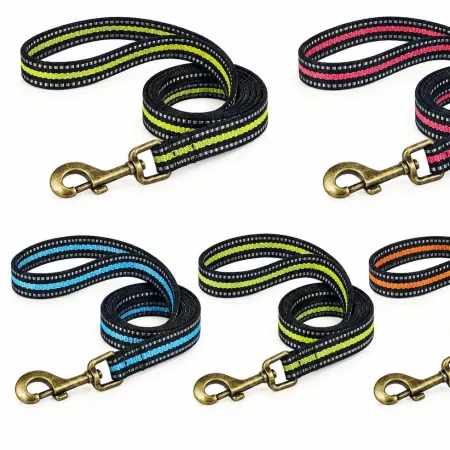
Measuring is what the in-house laboratory does on the roll that is being shipped rather than on a sample kept for the purpose, and the same instruments check the polyester ribbon and the polyester webbing that shares the yarn. The 25 mm webbing base from these looms clears 2000N; a decorative ribbon is not asked for that figure, and the loom that produces one produces the other.
Two Figures No Label Carries
The elongation at the tension you wind at
A polyester ribbon extends by a small percentage under the tension of a normal wind, and that percentage is the difference between the length on the carton and the length on the table. It is not published because it is measured under conditions nobody standardised for ribbon, and it is not asked for because buyers assume length is length. A buyer who has been short on three deliveries in a row is usually looking at this number without knowing it exists.
The width after the first hot process
Heat relaxes the filaments and the band settles to a slightly different width, usually narrower, sometimes wider if it was wound tight. The shift is small enough to ignore in a gift bow and large enough to fail a registration guide on a printing line. It belongs in the brief as a second width, described as the width after the process rather than as the width of the goods.
FAQ: 1.5 Inch Polyester Ribbon
Is 1.5 inch the same as 38 mm?
Almost. One and a half inches is 38.1 mm, and 38 mm is the millimetre figure most mills weave to. The tenth of a millimetre is inside any normal tolerance.
Why is my roll shorter than the last one?
Usually winding tension rather than a short measure. Lay both rolls flat, untensioned, and measure again before concluding anything about the supplier.
Does width matter if I only tie bows by hand?
Less, unless the bows sit side by side on a shelf. A half-millimetre difference is invisible on one bow and obvious across a row of twelve.
How much does a ribbon stretch before it breaks?
Enough that the figure is worth knowing for a machine feed, and it is best measured on the construction you are buying rather than taken from a table for the fibre.
Should I ask for a certificate with the measurement?
Ask for the figures and the method together. A number without the method cannot be reproduced, and a method without the number cannot be checked against your own tape.
A 1.5 inch polyester ribbon is three numbers in a paper wrapper, and each of them is measured under a condition somebody chose. Write the condition next to the number, keep a metre from every approved lot, and the second delivery becomes comparable with the first.
Why Xinxiangrui for Measured Ribbon
A 1.5 inch polyester ribbon is checked here on the roll that is going out, not on a sample photographed for a brochure. Width, length and thickness are read with the same instruments that test the webbing beside it, and the figures travel with the lot number rather than with the invoice. Send us the width, the roll length and where it will be sold, and we reply with a construction.