Plant Based Bio-Based Webbing: A Map of What the Feedstocks Actually Are
Plant based bio-based webbing is a category label covering at least five genuinely different material routes, and they do not behave alike on a loom, in a dye bath or in service. Two straps can both be described as plant-based and share almost no technical characteristics.
This guide maps the main routes, explains what each one is good at and where it struggles, and sets out how a plant-derived percentage is measured so the figure on a specification can be checked rather than believed.
Five Routes, Five Different Materials
The feedstock determines the polymer, and the polymer determines everything a buyer cares about. These are the routes that actually appear in narrow fabric supply.
- Cotton — the original plant-based webbing fibre and still the most credible to a consumer, because it is visibly what it claims to be. Cellulose, so it holds moisture, abrades by fuzzing and needs a denser sett to match a synthetic strap's life.
- Plant-derived polyester — one of the two monomers in polyester can be made from plant sugars, producing a partially plant-based polymer that is chemically identical to conventional polyester. It is the closest thing to a drop-in substitution available.
- Plant-derived polyamide — certain nylon grades are built from castor oil derivatives. Strong, abrasion resistant and dimensionally different from polyester, which matters for creep and dye uptake.
- Polylactic acid — made from fermented plant starch. Genuinely compostable in industrial conditions, and sensitive to heat, which constrains dyeing temperature, heat setting and anything that involves a hot iron or a car dashboard.
- Other bio-based routes — bio-based elastomers, PHA family materials and blends. Interesting technically and inconsistent in supply, so they belong in development rather than in a production plan until a supplier can show continuity of supply.
The table sets each route against what it does well and where a programme is likely to hit a limit.
| Route | Where it excels | Where it struggles |
|---|---|---|
| Cotton | Consumer recognition, hand feel, natural undyed shades, print receptivity | Wet strength, mildew, moisture pickup, dimensional change after washing |
| Plant-derived polyester | Near drop-in behaviour, existing dye recipes, strength and UV performance | Plant-derived share is partial rather than total; supply is allocated through the chain |
| Plant-derived polyamide | Abrasion resistance, tensile strength, good for load-bearing narrow fabric | Different moisture behaviour, different dye uptake, needs its own recipe and setting window |
| Polylactic acid | Compostability, a clean consumer story, adequate strength for light duty | Heat sensitivity in dyeing and storage, creep, limited suitability for load-bearing use |
| Blends | Balancing hand feel against strength; using available yarns | Complicates both the bio-based figure and any end-of-life claim; two fibres wear differently |
| Recycled plant-derived | Addresses two axes at once where both are certified | Two sets of documentation, and the two claims are often confused in marketing copy |
Three Things the Category Label Hides
"Plant based" is accurate for all five routes above and tells a buyer almost nothing about which one they are being offered. Three distinctions carry the real information.
Not every route is a drop-in replacement
Plant-derived polyester can usually be substituted into an existing construction with no change beyond a fresh dye check. Polylactic acid cannot, because its heat behaviour forces a different dyeing temperature, a different setting window and a different view of storage conditions. Treating these as two grades of the same thing is how a programme ends up with a strap that deforms in a warm warehouse.
Allocated material is not the same as segregated material
In a mass-balance arrangement, plant-derived feedstock is fed into a system that also handles conventional material, and the environmental attribute is allocated administratively to a share of output. This is a legitimate and widely used method, but the physical yarn in your strap may not be plant-derived molecule for molecule. Segregated or identity-preserved supply costs more and keeps the physical and administrative streams together. The distinction belongs in the specification, because it changes what the claim means.
The percentage is measured, not estimated
Plant-derived carbon content is determined by radiocarbon methods, which distinguish carbon recently fixed by plants from carbon that has been underground for millions of years. A measured figure states a share and a method. A figure without a method is an assumption, and an assumption is what an auditor will ask about first.
Ask for the method before the number
When a specification quotes a plant-derived percentage, ask how it was determined and whether it refers to the yarn or the finished article. The same question applied to three suppliers usually produces three different answers, and that difference is the most useful thing you will learn in the whole comparison.
Choosing a Route for a Specific Product
The feedstock is the last decision, not the first. Four questions narrow the field before any material is discussed.
- Is the strap load-bearing? — a harness or a leash needs strength and creep resistance, which points to polyester or polyamide routes. A decorative tie does not.
- Will it get wet? — cellulose routes need drying and a design that tolerates it. Synthetic routes simply do not care.
- How hot does it get? — a car interior, a warehouse roof or a hot dye bath all constrain a heat-sensitive polymer.
- What will the label say? — a consumer-facing claim about plants is easiest to support with cotton, and hardest with an allocated mass-balance polyester whose physical origin is not visible.
Six Questions About a Plant-Based Claim
A supplier who can answer all six has a real material story. One who can answer two has a brochure.
- Which polymer is it? — the family name, not the feedstock marketing name. Polyester, polyamide and polylactic acid behave differently and are not interchangeable.
- What share is plant-derived, and on what basis? — a measured figure, the method, and whether it applies to the yarn or the article.
- Is it mass balance or segregated? — administrative allocation and physical segregation are both valid, and they mean different things on a label.
- What changes in the dye house? — temperature windows, dye class and setting conditions differ, and a recipe carried over unchanged is a risk.
- What are the performance figures? — tensile to 2000N+ break strength on load-bearing constructions, abrasion, UV and colourfastness, measured on the actual route rather than the conventional benchmark.
- Is supply continuous? — a route that may be unavailable next season is a development project, not a production specification.
How the Routes Are Run on the Same Looms
A mill that weaves several fibre families learns where each one needs different handling, and that knowledge is more useful to a buyer than a feedstock list.
- Sett adjusted per fibre — a cellulose strap needs a denser construction to reach the same service life, and the sett is a decision made before the beam is drawn rather than a complaint raised afterwards.
- Dyeing matched to the polymer — continuous high-temperature dyeing is set per fibre and per weight, which is why a new route needs its own recipe and its own retained standard.
- Results reported against the roll — tensile, abrasion past 50,000 Martindale cycles, UV ageing beyond 1,000 hours and colourfastness to wash and rub, so the comparison between two routes is made on evidence rather than on principle.
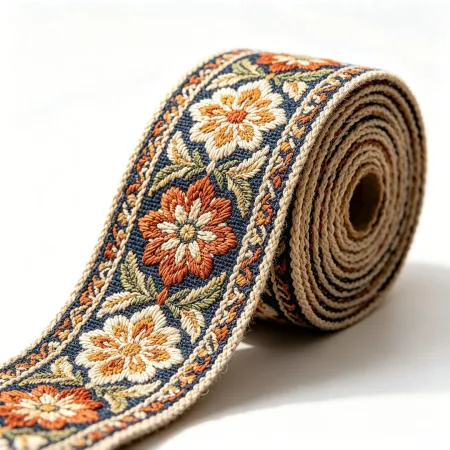
The plant-derived routes sit alongside the conventional ones in the bio-based webbing range, with a natural cellulose option shown in the herringbone cotton bio-based strap. The cotton webbing line and polyester webbing line provide the performance baselines, and the testing page lists the methods used.
FAQ: Plant Based Bio-Based Webbing
Is plant based webbing automatically compostable?
No. Cotton is plant based and does not compost in a home bin at any useful rate, and plant-derived polyester is not biodegradable at all. Compostability is a separate property that has to be certified separately, on the finished article.
What does a 30% plant-derived figure actually mean?
It means that share of the carbon in the material was recently fixed by plants, measured by a radiocarbon method. It says nothing about the other 70%, nothing about biodegradability and nothing about the dye. Ask which method produced the number and whether it applies to the yarn or the article.
Why is mass balance controversial?
Not because it is invalid, but because it is easy to overstate. It allocates an attribute administratively across a mixed system, so the physical material may not be plant-derived even where the claim is legitimate. That distinction needs to reach the label, and it often does not.
Can plant-based polyester match conventional performance?
Yes, in most respects, because it is the same polymer. Strength, UV behaviour and abrasion are comparable, and load-bearing constructions are qualified to the same 2000N+ break strength figure. What still needs checking is dye uptake on the specific yarn.
Which route is easiest to explain to a customer?
Cotton, because it is visible and familiar. That ease comes with technical obligations — moisture, mildew and a denser sett — which is why the most communicable story is not automatically the simplest construction to run.
Plant based bio-based webbing is not one product and should not be specified as one. Name the polymer, measure the share, state whether the chain is mass balance or segregated, and check what the route does to dyeing and service life. The category label is the beginning of the conversation, not the answer to it.
Why Xinxiangrui for Plant Based Bio-Based Webbing
Three product lines, 17 categories and 65 product pages mean Xinxiangrui Webbing already weaves cotton, polyester, nylon and bio-based routes on the same Dongguan site, so a feedstock change can be compared against a real baseline rather than a hypothetical one. The laboratory sits beside the looms and reports against the shipping roll. Share your webbing details with us and we will come back with a matched sample.