Bio-Based Webbing Strap: The Lines a Workable Specification Actually Needs
A bio-based webbing strap is usually specified in three words — width, colour and material — and then argued about for six months. The specification that would have prevented the argument takes about twenty minutes to write and fits on one page.
This guide sets out the lines worth writing, what happens when each one is left to the mill's default, and how a bio-based claim attaches to a strap so that the document, the sample and the shipment all describe the same product.
What a Strap Specification Has to Settle
Four properties define a woven strap, and each one is a decision rather than a measurement. When a buyer leaves one blank, the mill chooses, and the mill chooses what runs well that week.
- Width and thickness together — width is the visible dimension and thickness is the functional one. Hardware, buckles and sliders feel thickness, and a strap that is nominally correct but a fraction thick will bind.
- Weave structure and sett — plain, twill, herringbone and jacquard look different and behave differently. Sett, the number of ends per inch, decides density, hand feel and how much yarn sits under an abrasion point.
- Edge construction — tucked, sealed or welded. This single line determines whether a strap frays at the buckle in month two, and it is the line most often missing.
- Colour reference and finish — a Pantone number is a target, not a standard. The finish — soft, crisp, calendered — changes hand feel more than most buyers expect.
The table shows what each unspecified line defaults to, and the complaint that follows.
| Line left blank | What the mill decides | Complaint that follows |
|---|---|---|
| Edge type | Whatever the loom was set up for, usually a heat seal | A hard edge on skin, or fraying where the seal did not suit the fibre |
| Sett | The fastest running count for the yarn available | A strap that feels loose and wears through early; a hand feel that shifts between lots |
| Thickness band | A nominal figure with the tolerance implied | Binding in an adjuster; a buckle that holds on one batch and slips on the next |
| Yield and length | Roll length that suits the beam rather than the cutting table | Cutting waste; a cutting plan that no longer yields the expected number of straps |
| Colour standard | A visual match to a Pantone chip under plant lighting | A shade that matches the chip and not the previous order |
| Bio-based wording | A generic description on the invoice | A claim on the label that no document in the folder supports |
Three Things Buyers Usually Get Wrong
The specification failures in this category are consistent enough to name. All three are fixable on paper.
The edge is treated as a detail
On a narrow strap, the edge is a third of what the customer touches and the first place wear appears. A tucked edge is soft and durable but adds bulk; a heat-sealed edge is crisp and fast but must be set for the fibre, and the same setting that suits polyester will scorch a cotton-rich strap. Naming the edge type, and the fact that it must match the fibre, removes an entire class of complaint.
A bio-based strap is described as bio-based on its own
The bio content belongs to the yarn. Once the strap is dyed, printed, coated and fitted with hardware, the article contains other materials whose origin is not covered by that figure. The specification should state the share for the yarn, name the yarn, and — if the finished strap is to carry a claim — say which components are included and which are excluded.
Roll and strap are specified as if they were the same
A roll is bought by length and converted later; a strap is bought as a finished length with a cut, a seal and often a hole or a stitch. The put-up changes the yield, the packing and the defect rate. Deciding at enquiry stage whether you are buying metres or pieces settles questions that otherwise surface at the cutting table.
Write the spec from your last complaint
The fastest way to build a specification is to take the last defect you had to explain and turn it into a line. If a strap frayed at the buckle, the line is edge type. If a buckle slipped, the line is a thickness band. Six complaints become a six-line specification, and it will be more useful than any template.
How to State Each Line So It Cannot Be Misread
The wording matters as much as the decision. Four conventions make a specification reproducible by someone who has never spoken to you.
- Always give a band, never a point — width and thickness with an explicit allowance, plus the instrument and pressure used to measure. A soft woven structure reads differently under a heavy calliper, and two methods will always disagree.
- Name the standard, not just the number — a tensile result is meaningless without the method and the specimen length. State which standard the figure is measured to, so a second laboratory can reproduce it.
- Require a retained physical standard — one piece per colour, dated and signed by both parties. A Pantone reference describes a target; a retained piece describes what was accepted.
- Attach the claim wording verbatim — the exact sentence that will appear on the label, so the mill can confirm which document supports it before production rather than after.
Six Items to Confirm Before Sampling
Sampling is cheap and re-sampling is not, mostly because the second round delays a launch rather than because of anything lost at the loom.
- The application and the load — a decorative strap and a load-bearing one are different constructions at the same width.
- The hardware the strap will pass through — send a buckle sample with the brief; thickness decisions become obvious once the real part is on the table.
- The yarn lot behind the sample — ask whether the lot used for the sample will still be available at production, because hand feel and dye uptake follow the lot.
- The colour reference pair — a Pantone chip and a physical piece from a previous approved run, if one exists.
- The tests that will travel with production — tensile to 2000N+ break strength where load matters, abrasion, UV ageing and colourfastness, agreed at sampling so there is no surprise at shipment.
- The put-up and packing — metres on a roll or pieces in a bag, and how many of each per carton.
Where the Sample Comes From Matters
A sample is a promise about production. Three conditions decide whether that promise holds.
- Woven on production settings — a sample made on a bench or from stock tells you what the mill can do once, not what it can repeat. Sampling on the loom, with the sett recorded, is the point of sampling at all.
- Dyed and finished in the same plant — a shade approved on a lab dip and then dyed on a production line can arrive a half-step away, and the customer sees a half-step.
- Tested, not just looked at — tensile to 2000N+ break strength, Martindale abrasion past 50,000 cycles, UV ageing beyond 1,000 hours and colourfastness to wash and rub, reported against the strap rather than the yarn. A sample that has only been handled has only been handled.
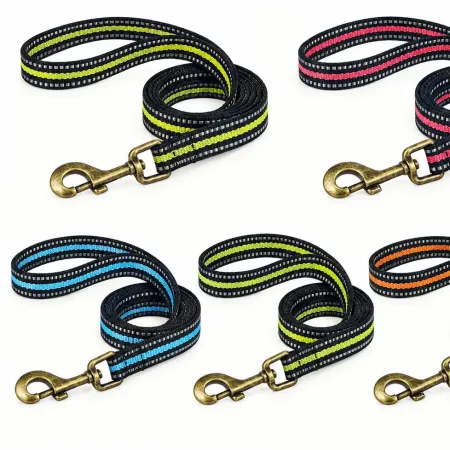
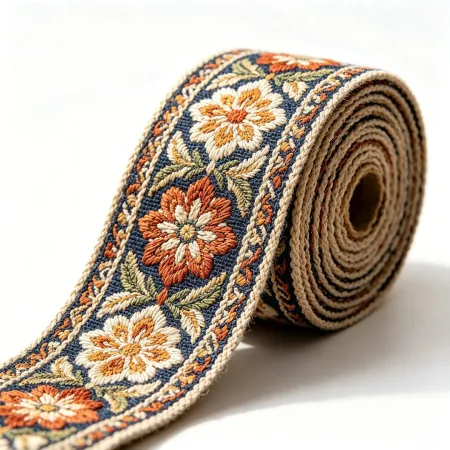
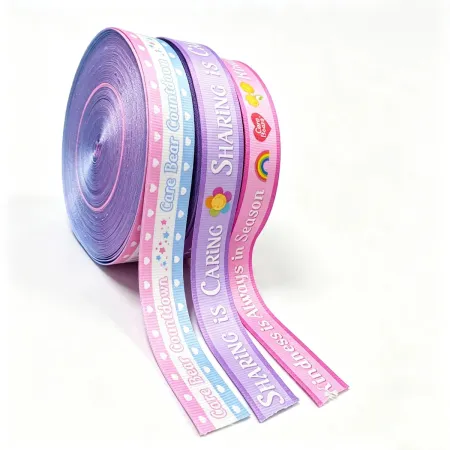
Strap constructions include a printed bio-based roll with a custom logo and the broader bio-based webbing range, with conventional polyester webbing available on the same looms for comparison. Free samples and Pantone matching are described under OEM and ODM development.
FAQ: Bio-Based Webbing Strap
How detailed should a strap specification be?
One page is enough if it covers width, thickness band, weave and sett, edge type, colour standard, tensile requirement, put-up and the exact claim wording. More detail than that usually describes testing procedure rather than product, and belongs in an annex.
Should a bio-based strap be specified by percentage or by yarn?
By yarn, with the percentage attached to it. Naming the yarn makes the claim traceable and repeatable; naming only a percentage allows a substitution that meets the number but changes the hand feel, the dye uptake and the abrasion behaviour.
Does the edge type affect strength?
It affects the strength that survives handling rather than the strength measured on a new sample. A poorly sealed edge sheds yarn progressively, and a strap that has lost its edge yarns is measurably weaker at the point where it passes through hardware.
Can a strap be approved from a photograph?
Not for colour and not for hand feel. A photograph under unknown light can make two different shades look identical, and it cannot transmit stiffness or edge hardness. Approve colour against a physical piece and, if travel is impossible, ask for a courier sample before the bulk run.
What if the finished strap needs a hole, a stitch or a print?
Put it in the specification as a separate operation with its own requirement — hole position and diameter, stitch type and thread, print method and fastness grade. Each one is a process that can fail independently, and each one needs a line of its own rather than a note at the bottom of the drawing.
A bio-based webbing strap is only as good as the page that describes it. Width, thickness band, weave, edge, colour standard, claim wording and put-up — seven lines, twenty minutes, and most of the arguments that would otherwise arrive with the container never happen.
Why Xinxiangrui for Bio-Based Webbing Straps
Free samples at Xinxiangrui Webbing are woven on production settings rather than pulled from stock, Pantone matching is done on the actual fibre, and a retained piece is kept once a shade is approved. Sett, edge type and thickness band are recorded per order, so the second run follows the first rather than being renegotiated. Share your strap details with us and we will come back with a matched sample.