Hook and Loop Fastener Factory: Two Materials Behind One Gate
A hook and loop fastener factory is unusual among textile suppliers because it handles two materials that are made by two different processes. The loop face is woven or knitted; the hook face is a monofilament formed into a hook and anchored to a backing. Very few plants do both, and knowing which of the two a supplier actually makes is the first useful question a buyer can ask.
This guide walks through the five stages a closure passes between yarn and carton, what to look at in each, how a converter differs from a mill, and how to tell a trader from a manufacturer without asking a question anybody can answer politely.
Hook and Loop Fastener Factory: The Five Stages
Between a cone of yarn and a sealed carton, a closure passes through five operations. Each one can be in-house or bought in, and the pattern of which is which describes the plant more accurately than any brochure.
- Face making — weaving or knitting the loop, or forming the hook, which decides weight, pile height and hook geometry.
- Dyeing and finishing — colour, fastness, hand and any coating, and the operation where shade consistency is won or lost.
- Backing and adhesive — coating or laminating a backing, which turns a tape into a self-fixing product.
- Slitting and cutting — widths, rolls and die-cut pieces, the stage that most often determines lead time.
- Testing and packing — peel, shear, cycle and colour checks, then the carton and the marking.
| Stage | What to look at | What it tells you |
|---|---|---|
| Face making | Looms or knitting machines running | Whether weights are fixed by design |
| Dyeing | Shade cards against production lots | Whether colour repeats batch to batch |
| Backing | Coating line and adhesive store | Whether tapes are made or bought |
| Slitting | Blade condition and width control | Whether a narrow order ships on time |
| Testing | A bench with a current calibration | Whether figures are measured or copied |
Most plants make one face and buy the other
A mill that weaves loop tape at speed will often buy hook tape from a specialist, and a hook maker will buy its loop. That is normal and not a weakness, as long as it is stated. What matters is whether the plant controls the dyeing, the slitting and the testing of the finished pair, because those three decide whether the closure that leaves the gate matches the sample that was approved.
Three Ways to Read a Plant
Count the operations, not the machines
A hall full of looms says the plant can weave; it says nothing about whether it can dye a shade to a chip or slit a roll to a tolerance. The useful count is how many of the five stages happen inside the building, because each one outside it is a lead time and a place where a change of supplier happens without the buyer being told.
Ask what was rejected this week
A factory with a functioning quality process can answer this immediately, with a reason and a disposition. A factory without one describes a process instead of an event. The question is difficult to prepare for and easy to answer honestly, which makes it more informative than a tour of the packing area.
Follow one order through
Pick a lot and trace it: which yarn, which dye bath, which slitting run, which test report. A plant that can walk the chain in ten minutes has a system; one that has to make three phone calls has a filing cabinet. This is the same discipline the woven side of the business needs, where a strap that clears 2000N has to be traceable to the loom that wove it, and the two products are held to one standard for that reason.
Six Questions for a First Visit
- Which face is made here — hook, loop or both, and where the other comes from.
- Where dyeing happens — in-house, on a line, or at a commission dyer, since shade control follows the answer.
- How the width is controlled — the slitting setup and the tolerance it holds on a narrow order.
- Which tests are run in-house — peel, shear, cycle and colour, and on what equipment.
- What the packing unit is — roll, box or retail pack, which reveals which market the plant usually serves.
- Who owns the die — for cut pieces, since a die held by the factory is a decision the buyer has not made.
The sixth question is the one most likely to produce an uncomfortable pause. A die is a small tool and a large piece of leverage: if the factory holds it, moving the product to another supplier means paying for the tool twice. Buyers who intend to grow a line should ask early, when the answer is still cheap to change, rather than in the year the relationship sours.
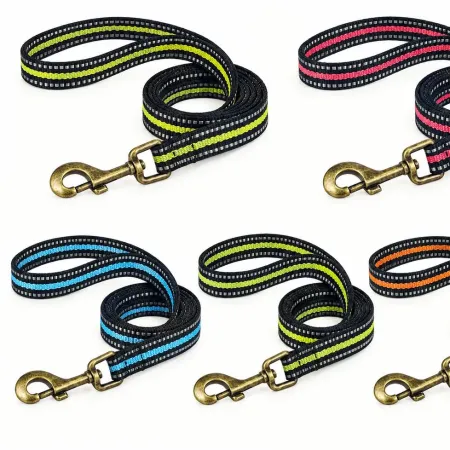
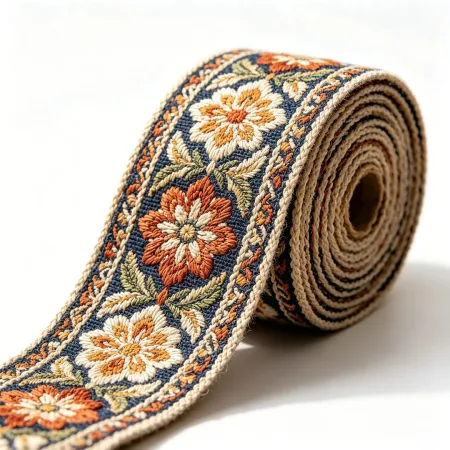
A closure is rarely bought alone, and the strap that goes with it comes from the same narrow fabric family: polyester webbing for the parts that hold length, nylon webbing where a softer hand matters, each clearing 2000N in a standard construction and each tested on the same bench as the closure.
Trader or Manufacturer
The questions nobody can fake
Ask for the width tolerance the slitting holds, the dwell used in the peel test, or the lot number on the last shipment. A manufacturer answers with numbers because those numbers are in front of them. A trader answers with a policy statement, or with a promise to check, and the promise is the tell: the information exists somewhere, just not in that building.
The honest trader is not the enemy
A converter who buys faces and adds adhesive, slitting and testing is doing real work, and many buyers are better served by one than by a mill that would rather run a full beam than a mixed order. The problem is never the trading; it is the trading described as manufacturing, because that description hides where the lead time and the quality control actually sit. A supplier who says plainly what they make and what they buy is easier to hold to a specification than one who claims everything.
The warehouse answers a question the showroom cannot. Look at what is stacked and in what units: full beams suggest a mill selling to converters, small cartons with printed labels suggest a plant used to retail orders, and a shelf of part-used rolls suggests sampling rather than production. A plant organised for one kind of customer will still take the other kind of order, but it will take it slowly, and that is worth knowing before a delivery date is promised.
FAQ: Hook and Loop Fastener Factory
Do most factories make both faces?
No. Weaving loop tape and forming hook tape are different processes, and most plants specialise in one and buy the other. What matters is that dyeing, slitting and testing of the finished pair stay under their control.
How can I check a factory is a factory?
Ask for the lot number of the last shipment and the width tolerance of the slitting, then ask to see the bench where peel is measured. Answers that arrive as numbers indicate a plant; answers that arrive as assurances do not.
Does a commission dyer matter?
It can, because shade control depends on the bath and on who is watching it. If dyeing is outside, ask which dyer, how many, and whether a shade approved on one will be repeated on another.
Why does a narrow order take longer?
Because slitting and cutting are separate operations with their own setup, and a narrow width often means more passes for the same length. Lead time usually sits at that stage rather than at the loom.
Should a first order be small?
A first order should be small enough to inspect and large enough to run on the customer's own line. The point is to test the plant's consistency, not to fill a warehouse, so two shipments from different lots teach more than one large one.
A hook and loop fastener factory is best judged by how much of the five-stage chain sits inside its walls, and by whether it will say which parts do not. The plant that answers that plainly is usually also the one that can tell you which lot made the last shipment and what the slitting held that day.
Why Xinxiangrui for Hook and Loop Fastener Factory
A visitor to this site can walk the whole chain for a hook and loop fastener factory order without leaving the park: face making, dyeing, backing, slitting and testing sit behind one gate, so a shade change and a width change are two work orders rather than two suppliers. The webbing that goes beside the closure is woven here to clear 2000N, and every lot keeps its ticket. Tell us which stage you want to see and the visit is arranged around it.