Source Factory
Direct wholesale production from our own plant in Dongguan, not a trading desk. Weaving, dyeing, printing, hardware assembly and packing all run in house, with no middleman margin in the price.
Full Customization
OEM and ODM work starts from your drawing: width, weave, colour, hardware and retail packaging. We match Pantone, send a physical sample before bulk, and keep every change on one work order.
Strict QA & ISO Standards
Every batch is checked for width, thickness, break strength and colour fastness before it ships, and the plant runs to ISO 9001 and ISO 14001. Test reports for your batch travel with the goods.
Proven Track Record
Fifteen years of narrow fabric since 2011, 200+ active partners and shipments to 50+ markets. Long-run programmes are what this factory is built for, which is why most customers reorder.
Canvas Tote Bag With Webbing Handles: Strength Per Gram
A canvas tote bag with webbing handles is a rare case where the cheapest-looking component is also the strongest one. The woven strap costs less sewing time than a folded fabric handle, weighs less at the same strength, and gives a buyer a number to test against instead of an impression.
Most totes still use self-fabric handles because they are easy to pattern, not because they perform better. This guide sets out what a woven strap actually changes, how to specify one in four lines, and where the attachment rather than the strap remains the limiting factor.
Why a Canvas Tote Bag With Webbing Handles Behaves Differently
The difference is not cosmetic. A woven strap and a folded strip of body fabric are structurally different components that happen to look similar when the bag is new.
- Continuous warp yarns along the load — a woven strap has yarns running end to end in the direction the weight travels. A strip cut from the bag body has yarns running across its width, which is why it necks and stretches under a heavy load.
- Width that holds — a folded handle narrows into a ribbon under a shop load and does not recover. A 30 mm woven strap stays 30 mm, so the pressure on a hand stays distributed across the same area every time.
- A testable strength figure — webbing is a textile with a break strength, usually quoted to 2000N+ on load-bearing constructions. A folded fabric handle has no comparable figure, so the only test available is to break a finished bag.
- Fewer sewing steps — a folded handle requires turning, pressing and edge stitching; a strap is cut to length and attached. Fewer steps means less variation between the first bag and the thousandth.
The table compares the two handle types on the points a buyer can actually verify.
| Property | Woven webbing strap | Self-fabric handle |
|---|---|---|
| Yarn direction | Continuous along the handle | Across the handle; the load runs against the weave |
| Stretch under load | Low and recoverable | Visible elongation and permanent necking |
| Edge behaviour | Woven, tucked or sealed edge specified as a line item | Folded and stitched; the fold line wears first |
| Strength evidence | Break strength tested on the strap itself | Only testable on the assembled bag |
| Colour options | Dyed separately; contrast and stripe possible | Always matches the body exactly |
| Sewing time | Cut and attach | Cut, fold, press, edge stitch, then attach |
Three Choices Inside the Strap Itself
Once the decision to use webbing is made, three details inside the strap determine whether it feels like a bag handle or a piece of cargo strap.
Plain weave against twill
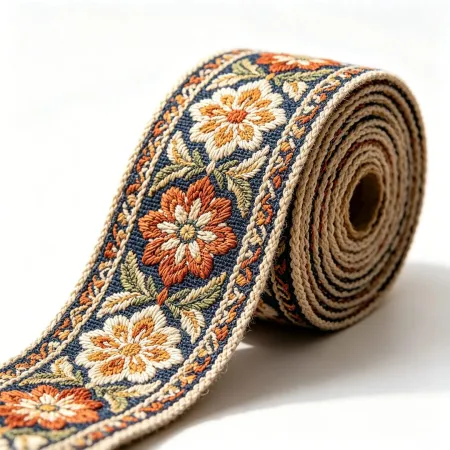
A plain-weave cotton strap has a flat, matte face and a slightly firmer hand, which suits a structured tote. A twill has a visible diagonal and a softer drape, which suits a bag that is meant to fold. Twill also hides soil better along the grip area, which matters on a handle that is never washed.
Edge finish and how it ages
A tucked edge is folded back into the weave and gives the cleanest profile; a sealed edge is faster and holds a crisp line on polyester, but on a cotton strap a heat seal can stiffen the last two millimetres into a wire. On a handle that is gripped hundreds of times, that stiffened edge is what frays first.
Width against the hand
A 25 mm strap is fine for a light bag and uncomfortable on a full one, because the load is spread over less skin. At 30 mm a loaded tote stops cutting, and at 38 mm the handle starts to look like a strap for a tool bag. Most retail totes sit at 30 mm for exactly this reason.
The attachment will fail before the strap does
A strap tested to 2000N+ break strength does not make the bag carry 2000N. The limiting element is the stitch box where the strap meets the panel, and that joint is worth a fraction of the strap's strength unless it is backed. When a bag fails in the field, look at the canvas around the box before suspecting the webbing.
Four Lines That Specify the Handle
A handle specification that fits in four lines can be quoted accurately and reproduced exactly, which is more than most bag tech packs achieve.
- Width and thickness — for example 30 mm wide by 2 mm thick. Thickness is the number buyers forget, and it decides how the strap sits in a buckle or under a stitch box.
- Fibre and weave — cotton twill, cotton plain, or polyester, stated with the yarn count if the buyer has one. This line decides dye behaviour, hand and stretch.
- Colour reference and whether it must match the body — a Pantone number plus a note on metamerism, because a strap and a bag dyed on different equipment will diverge under shop lighting even at the same reference.
- Attachment method and box size — the strap specification is incomplete without it, since the joint is the weakest part of the assembly and belongs in the same document.
Six Questions Before You Approve the Handle
These are answerable with a ruler, a sample and one email, and each one closes a specific route to a complaint.
- Is the strap woven or cut from webbing stock? — woven to the required width means the edge is formed, not trimmed, and the width will not creep.
- What is the break strength and on what width? — a figure without a width is not a specification. Ask for the test on the strap that will be used.
- Does the colour match the canvas under daylight or only under shop light? — check both. Metamerism is the usual reason a handle looks wrong in a photograph.
- How many stitch rows and what box footprint? — four rows over a 40 by 30 mm box is a different level of security from two rows over 20 by 15 mm.
- Is the strap end sealed, folded or raw inside the seam? — a raw end inside a tote will fray into the load within a season.
- Does the same mill weave the strap and sew the bag? — if not, a change in handle width becomes a conversation between two suppliers with different lead times.
What Changes When One Mill Does Both
Most bag factories buy handle webbing from a converter and most webbing mills never see the finished bag. Doing both in one place removes a specific set of problems.
- Width can be set to the bag rather than the catalogue — a 28 mm strap is possible when the loom is in the same building, and 28 mm is sometimes exactly what the ring and the seam allowance require.
- Colour matching happens before cutting — the strap and the panel are compared as raw materials rather than as finished components, which is the only point at which a shade can still be corrected cheaply.
- One test report covers both — strap break strength and bag seam strength arrive in the same document, tied to the same production lot.
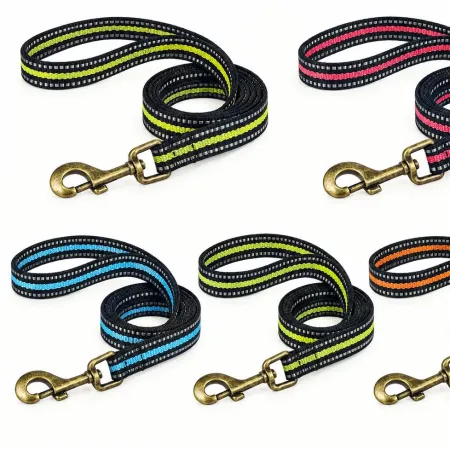
Handle webbing for totes is standard production in the cotton webbing range, and the twill cotton tote handle strap is the version most often specified for a heavy retail bag. A finished bag using this construction appears in the brown canvas shoulder tote, and the wider custom spec bag range shows how the strap and the bag are quoted together.
FAQ: Canvas Tote Bag With Webbing Handles
What width of webbing suits a tote handle?
30 mm is the usual answer for a retail tote. Twenty-five millimetres rolls and cuts into the hand when the bag is full, and 38 mm reads as utility rather than fashion on a lighter canvas.
Is cotton or polyester webbing better for a handle?
Cotton feels better in the hand and ages into the bag's look; polyester holds colour more predictably and resists abrasion at the grip. For a bag that will be washed, polyester keeps its shape; for a bag sold on a natural story, cotton is the coherent choice.
Can webbing handles be colour-matched to the canvas?
Yes, but they are dyed on different equipment, so expect a small difference in how the colours read under different light. A deliberate contrast, or a tone a shade lighter, is often a better design decision than a near-match that looks like a mistake.
Why do the handles fray at the edge first?
Because the edge is where the weave is terminated and where the hand grips. A tucked edge or a properly bonded seal resists it; a heat seal on cotton can make it worse by stiffening the last two millimetres into a brittle line.
Can the strap be printed with a logo?
Yes, by dye-sublimation or by weaving the logo in. A printed strap needs a rub-fastness result on the finished shade, because the grip area is the most abraded part of the whole bag and a logo that fades there looks worse than no logo.
A canvas tote bag with webbing handles is stronger per gram than almost any other construction, and the reason is simply that the yarns run the way the load runs. What remains is the joint: a strap tested to 2000N+ break strength is only as good as the stitch box and the facing behind it. Specify the strap in four lines and the attachment in two, and the handle stops being the uncertain part of the bag.
Why Xinxiangrui for Canvas Tote Bag With Webbing Handles
A free handle sample comes before any quote at Xinxiangrui Webbing, because a canvas tote bag with webbing handles is decided by hand rather than by photograph. Width, thickness, weave and Pantone shade are set against the bag's own dimensions, the strap is woven on computerized needle looms to 2000N+ break strength, and the sample comes off production settings instead of a bench. Approving the handle first cuts one sampling round rather than repeating it. Share your handle details with us and we will come back with a matched sample.