Polyester Webbing Manufacturer: What the File Holds
Choosing a polyester webbing manufacturer is usually framed as a question about capability, and capability is the easy part to check. The harder question is whether the same band can be made again in two years, when the buyer has changed job, the yarn supplier has changed hands and nobody remembers why a particular pick density was chosen. What a manufacturer really sells is repeatability, and repeatability lives in a file.
This guide covers the three documents that make a repeat possible, the three things a manufacturer owes beyond the goods, six lines worth asking before the first order, and the two signs that a supplier is estimating rather than knowing.
Polyester Webbing Manufacturer: Three Documents and What They Answer
Each of the three exists to answer a question that a sample cannot, and a supplier who has only the first is a supplier who has not yet been asked the other two.
| Document | The question it answers | What happens without it |
|---|---|---|
| Set-up card | How this exact band is made: yarn, warp count, pick density, width, finish | The next run is rebuilt from a sample, and the sample is a guess |
| Change log | What moved since the last approved lot, and why | A customer notices a difference and neither side can explain it |
| Batch record | Which yarn, which dye lot and which test readings belong to the rolls in the box | A report exists and cannot be tied to the goods it describes |
The second row is the one almost nobody asks for and almost everybody needs. A band changes over years for entirely good reasons: a yarn is discontinued, a finish is improved, a loom is replaced. Each change is small and each one moves something. A supplier who can say what moved, and when, is a supplier who can have a sensible conversation about a complaint instead of a defensive one.
Fifteen years is a record, not a certificate
A site that has run narrow woven fabric since 2011 has accumulated something that cannot be bought: the knowledge of which changes were harmless and which ones a customer felt. That knowledge is only useful if it was written down, which is why the age of a plant matters less than the depth of its files. An old mill with no records is simply an old mill.
Three Things Owed Beyond the Goods
A construction that can be reproduced, not a parameter table
A parameter table lists width, thickness and strength, and two mills can print the same three numbers from completely different constructions. A set-up card names the yarn, the ends, the picks and the finish, which is what a second run actually needs. The difference shows when a customer asks for the same band in a different colour and expects the hand to be unchanged.
Notice of change before it is noticed
Every manufacturer substitutes something eventually, because supply chains force it. What separates a good one is telling the customer before the goods arrive rather than after the complaint. A note that a yarn lot has changed and the hand may read slightly firmer is worth more than an assurance that nothing ever changes, because the second statement is never true.
A way to settle a disagreement
When a customer says the current roll is not the one they approved, the argument is settled by a retained sample with a date and a batch number, or it is not settled at all. Keeping those is unglamorous and it is the single practice that most reduces friction over a long programme.
A practical consequence of all this is worth stating for buyers who are switching fibre. The same set-up card run in polyester and in polyamide produces two different bands, because the two polymers differ in density, stiffness and how they take dye. A manufacturer who hands over one card and says it works for both is either simplifying or has not tried. Asking what changes on the card when the yarn changes is a fast way to find out which.
Six Lines to Ask a Manufacturer
- May I see a set-up card — for a product similar to mine, redacted if necessary, to see what is recorded.
- What has changed in the last two years — the answer reveals whether a change log exists.
- Which processes are in this building — weaving, dyeing, printing and hardware under one roof removes handoffs.
- Who signs the test report — a name and a lot number, rather than a document with no author.
- How a retained sample is stored — wrapped, dated and kept away from light, or not kept at all.
- What happens if the yarn is discontinued — the answer separates a plan from a hope.
The sixth line is the one that predicts a future problem best. Every yarn is discontinued eventually, and a manufacturer who has thought about it will name the nearest equivalent, the change in hand it will cause and the sample that will be sent before the substitution is made. A manufacturer who has not thought about it will discover the problem at the same moment the customer does.
- Ask for the file before the sample — a supplier who can produce one is a different kind of supplier.
- Compare two cards, not two samples — the cards show whether the constructions are genuinely alike.
- Keep your own approved roll — the only reference that belongs to you rather than to the supplier.
- Write the lot number on the box — five seconds that make every later conversation shorter.
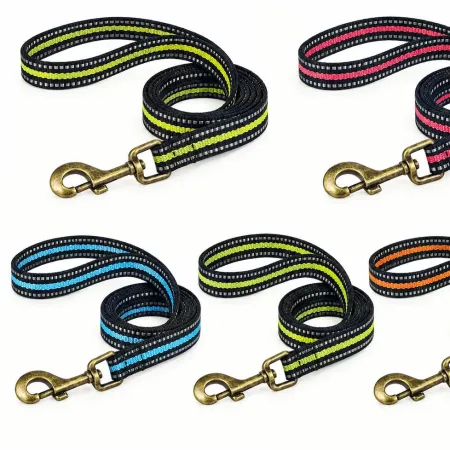
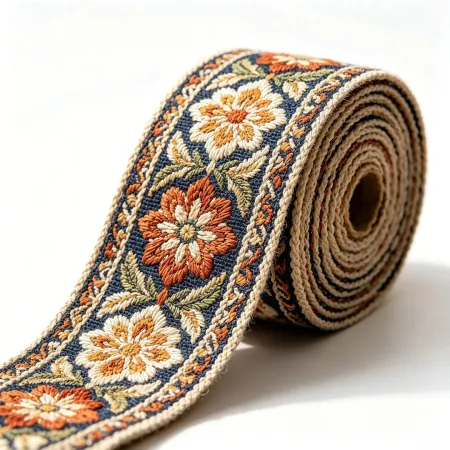
The polyester webbing range and the nylon webbing beside it run on the same site here, which is what makes a change of fibre a comparison rather than a leap, and the OEM and ODM work is built on the same set-up cards. A 25 mm base clears 2000N; a repeat order is cleared by a document.
One question is worth asking that has nothing to do with textiles. How long does a customer stay? A manufacturer who has held the same accounts for years is doing something beyond the goods: answering the same question twice, absorbing a change quietly, replacing a roll without an argument. No one publishes that figure and it is the most reliable signal available, because a customer who has stayed has already tested everything a sample cannot show. Ask it as a range rather than a number, and listen to whether the answer comes quickly or after a pause.
Two Signs a Manufacturer Is Guessing
Every question is answered with a range
A manufacturer who knows a construction will give a figure and then explain what moves it. One who is estimating gives a range wide enough to cover every outcome, and a wide range is not flexibility, it is the absence of a measurement. The tell is whether the same question asked twice produces the same number.
The sample cannot be traced to a machine
A sample that arrives without a card behind it was made somehow, and the somehow is what the production run has to repeat. When a supplier cannot say which loom, which beam or which finish produced the piece in the envelope, the first bulk order is a second experiment. That is not dishonesty; it is a workshop that has never needed to write things down, and it becomes visible exactly when volume arrives.
FAQ: Polyester Webbing Manufacturer
What is a set-up card?
The record of how one band is made: yarn, ends, picks, width, tension and finish. It is what allows a second run to match the first.
Does the age of a factory matter?
Only if the experience was recorded. An old mill with no files has age; an old mill with a change log has knowledge.
Why does it matter which processes are on site?
Every handoff between companies is a place where a specification can drift and a batch number can be lost. One site means one file.
Should I keep my own reference sample?
Yes, wrapped, dated and away from light. It is the only standard that belongs to you, and it settles most disagreements.
Can one set-up card cover two fibres?
No. Polyester and polyamide differ in density, stiffness and dye behaviour, so the card changes even when the width does not.
A polyester webbing manufacturer is chosen on a sample and kept on a file. Ask what is recorded, what changed and who signs the report, and the decision stops being about the envelope on the desk.
Why Xinxiangrui as a Webbing Manufacturer
What a manufacturer sells is repeatability, and a polyester webbing manufacturer demonstrates it with a set-up card rather than with a photograph: this one has run narrow woven fabric since 2011 from a single site in Dongguan, and every construction leaves with the yarn, the loom setting and the finish recorded. Tell us the width, the load and the market, and a matched construction comes back to you.