Custom Bio-Based Webbing: What a Development Programme Really Asks of You
Custom bio-based webbing is usually requested as a single sentence — the width, a logo and a colour — and delivered as a six-week conversation. That is not inefficiency. It is what happens when a product brief has to be translated into a sett, a beam, a dye recipe and a print method before anyone can quote a sample.
This guide explains what can be customised on a narrow loom and what cannot, which decisions cost a development cycle when they are left late, and how to brief a custom programme so the first sample is a variant rather than an experiment.
What Can Actually Be Customised
Almost everything about a strap is changeable; almost nothing is changeable for free. Each customisation below is a different kind of work, and they run on different timelines.
- Width and thickness — the most common request and the one most likely to collide with hardware. Changing width means a new beam and a new sett; changing thickness means changing the yarn count, which changes hand feel.
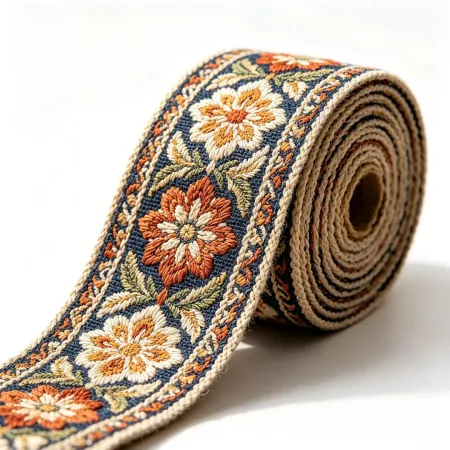
- Weave structure — plain, twill, herringbone and jacquard are four different loom programmes, not four settings on one programme.
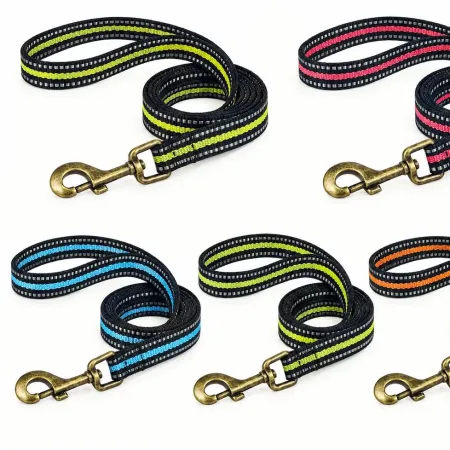
- Colour and repeat pattern — solid shades, multi-colour stripes and a stripe sequence are all achievable, provided the sequence and the yarn colours are fixed before the beam is drawn.
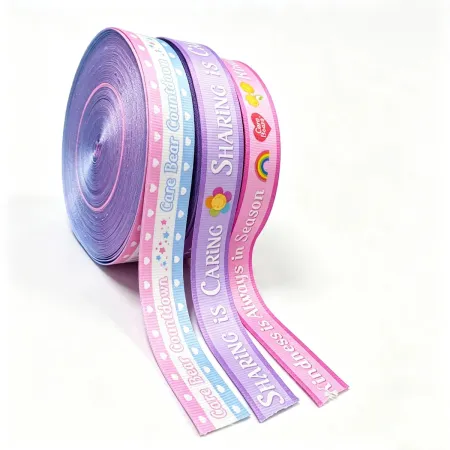
- Logo and print — woven into the structure as a jacquard, or printed on top by dye-sublimation. Two very different routes with very different constraints.
The table separates each customisation by what it changes in the plant and what it constrains at the design stage.
| Customisation | What changes in the plant | What it constrains |
|---|---|---|
| Width | Reed, ends per inch and beam drawing | The hardware it must pass through; very narrow widths limit pattern detail |
| Thickness | Yarn count and pick density | Hand feel and buckling behaviour; a thicker strap is not a stiffer strap by default |
| Weave structure | Loom programme and heddle arrangement | Face and back differ; a herringbone cannot be produced on a plain programme |
| Jacquard logo | Design file converted to a weave lift plan | Resolution; fine detail and small text close up at narrow widths |
| Printed logo | Print file, colour profile and sublimation calibration | Solid coverage and edge-to-edge designs; print fastness to rub and wash |
| Hardware and finishing | Assembly line, tooling and stitch programme | Added thickness at the joint; salt-spray and pull requirements for the metal part |
Three Constraints That Decide the Design
Most custom programmes that run into trouble do so at one of these three points, and all three can be resolved in a single conversation at the brief stage.
A woven logo has a resolution limit
A jacquard pattern is built from interlacing points, and every point is a yarn. On a narrow strap there are simply fewer points across the width than there are pixels in a logo file, so thin strokes, small counters and gradients do not survive the translation. The practical rule is to design the simplified version first and check it at the intended width before it is approved anywhere else.
Print and weave are not interchangeable
A woven logo is part of the structure and cannot rub off, but it is limited in colour count and detail. A printed logo can reproduce almost anything, but it sits on the surface and must be assessed for rub and wash fastness. Choosing between them is a durability decision as much as an aesthetic one, and the right answer depends on whether the strap is decorative or handled daily.
A bio-based yarn takes colour differently
Where the polymer family is the same, dye uptake is close but not identical, and a recipe developed on a conventional yarn may land a half-step away on the lower-fossil version. This is not a defect; it is why a new dye recipe and a retained standard are part of a custom programme rather than an afterthought. Approving a shade on the wrong substrate is the most common cause of a second sampling round.
Send three things with every artwork file
A vector file, a Pantone reference for every colour used, and one physical object that shows the intended scale — a cut piece of the strap at the right width works better than a printed page. The physical piece removes the single most common misunderstanding in custom weaving, which is how large a 4 mm letter actually looks on a 25 mm strap.
How a Development Programme Should Run
A custom programme has four stages, and the cost of moving backwards through them grows sharply at each step.
- Brief — application, load, hardware, width, colour references and the intended claim. Missing any one of these turns the next stage into a guessing exercise.
- Construction proposal — a sett, a yarn, a weave and a finishing route, with a note on what each choice trades away. This is the stage worth arguing about, because it is still cheap.
- Sampling — woven on production settings, dyed on the production line where possible, and tested rather than only handled. Pantone matching happens here, not at bulk.
- Approval and bulk — a retained physical standard signed by both parties, settings recorded against the order, and the first production roll checked against the record.
Six Things That Save a Sampling Round
Each of these is a small piece of information that prevents a full cycle of waiting.
- Change one variable per sample — if width, colour and weave all change at once, a result you do not like tells you nothing about which decision caused it.
- State the hardware — buckles, sliders, clips and D-rings all constrain thickness and stiffness, and sending the real part is faster than describing it.
- Name the market — chemical limits and label guidance differ, and they can change which dye set is appropriate.
- Give the exact claim wording — so the mill can confirm which document supports it and flag anything that cannot be supported before production rather than after.
- Say whether the programme repeats — a seasonal line and a one-off need different yarn reservation decisions.
- Agree the approval criteria in advance — what "approved" means for colour, hand feel and edge, so the decision is a comparison rather than an opinion.
Why Development Belongs in the Same Plant as Production
A custom programme succeeds or fails on how quickly a decision can be tested. Three capabilities shorten that loop.
- Jacquard, printing and assembly under one roof — a design can be tried as a woven logo and as a print without leaving the building, which is usually the fastest route to the right answer.
- Dyeing on site — a shade that misses can be corrected within the sampling round instead of triggering a new round with a third party.
- A laboratory beside the looms — tensile to 2000N+ break strength, Martindale abrasion past 50,000 cycles, UV ageing beyond 1,000 hours and colourfastness to wash and rub can be run on a sample before it is couriered, so a weak proposal is caught internally.
Existing custom work includes a herringbone bio-based cotton strap and a custom-width printed bio-based strap, both part of the bio-based webbing range. The OEM and ODM page describes how a development project is handled from brief to shipment.
FAQ: Custom Bio-Based Webbing
Can any logo be woven into a strap?
No. A woven logo is built from interlacing points, and narrow widths allow fewer of them. Fine strokes, small text and gradients usually need simplifying, or switching to a printed route where the design matters more than the durability of the mark.
Is a custom bio-based strap more expensive than a standard one?
Custom work adds development steps — a new beam, a new dye recipe, sometimes a new weave programme — and those steps are what a quotation reflects. The useful conversation is about which customisations are worth a development cycle and which can be met by an existing construction.
How many colours can a woven strap carry?
In practice, a small number of yarn colours arranged in a controlled sequence. Each additional colour adds a yarn to the beam and to the warp plan, which constrains both the pattern and the minimum run. Multi-colour stripe sequences are routine; photographic gradients are not.
Should the first sample be a full production run?
It should be woven on production settings, which is not the same as a full run. The point is that the sample reflects how the goods will actually be made, at the intended width and on the intended yarn, rather than a bench trial that cannot be repeated.
What happens if the approved shade cannot be matched again?
That is precisely what a retained standard prevents. One physical piece per colour, held by both parties and dated, turns a future argument into a comparison. Without it, a re-run is matched to a number, and two batches can both be "correct" and still not match each other.
A custom bio-based webbing programme is a sequence of small, cheap decisions that become expensive if deferred. Fix the hardware, name the market, give one physical reference, change one variable at a time, and keep a retained standard once you approve. Do that and the second sample is production, which is where a development programme is supposed to end.
Why Xinxiangrui for Custom Bio-Based Webbing
Custom development at Xinxiangrui Webbing happens in the same plant as production: jacquard weaving, dye-sublimation printing, continuous high-temperature dyeing and hardware assembly all sit under one roof in Dongguan, so a design can be tried two ways in one week instead of two months. Samples are free, matched to Pantone on the actual fibre, and tested before they are sent. Send us the drawing, the width and the target market — we reply with a construction.