Nylon Webbing Straps: Why the Three Parts Fail Together
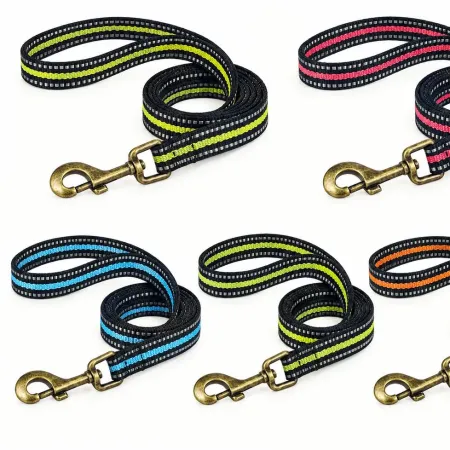
Nylon webbing straps are assemblies, and the reason they are hard to fix is that a failure has three possible homes. The band, the stitching and the hardware each fail in a way that looks like the other two from the outside, and a buyer who replaces the wrong one pays for the same fault twice. The fastest route to a correct diagnosis is having all three made or bought in one place, so the question can be settled by looking rather than by post.
This guide covers the four components of a strap, how to read a failure back to its source, what a single work order is worth when three parts have to change together, six lines a strap brief should carry, and the two habits that stop a diagnosis from becoming a guess.
Nylon Webbing Straps: Three Parts, One Diagnosis
Four components, three of which can be blamed for the same symptom. Knowing which is which turns a complaint into a measurement.
- The band — width, thickness and weave, which set the strength and the hand but rarely cause a failure on their own.
- The seam — stitch pattern, thread and density, and the joint that most straps actually break at.
- The hardware — rings, buckles and hooks, rated differently from the band and usually the lightest-rated part of the assembly.
- The finish — edge treatment and any coating, which decides comfort, fraying and how the strap ages.
| Symptom | Most likely source | What to change |
|---|---|---|
| Band parts at the join | Stitch pattern or thread | Box-and-cross plus a bar tack, heavier thread |
| Edge frays along its length | Selvedge tightness or cut sealing | A tighter selvedge or a sealed edge |
| Ring opens or deforms | Hardware rating or material | A cast or welded fitting with a stated load |
| Strap feels stiff and cuts in | Thickness or edge treatment | A lighter gauge or a folded, bound edge |
One site means one work order for three parts
A strap that needs a thicker band, a darker shade and a different ring involves three suppliers in most programmes, and the three changes have to be coordinated by the buyer. Where weaving, dyeing, finishing and hardware assembly sit inside one park, the same three changes are one instruction, and the person who makes it can see all three parts of the result. That is the practical value of integration: fewer handovers is fewer opportunities for a version to drift.
Reading a Failure Back to Its Source
Where the break sits tells you who made it
A band that breaks in the middle has been overloaded or abraded, which is a specification problem. A band that breaks at the stitch line has been cut by the needle or has a joint that was never strong enough, which is a stitching problem. A band that is intact but has let go of its ring has a hardware problem. Those three are easy to tell apart with the failed piece in hand and impossible to tell apart from a photograph of a whole strap.
A stretched hole means the stitch held and the band did not
When the holes the needle made have elongated into slots, the stitching survived and the weave around it failed, which points at a sett that is too open or a thread that is too strong for the band. It is the opposite of the usual assumption and it is why a heavier thread is not automatically an improvement. The fix is often a denser band or a wider seam, not a stronger thread.
A clean cut through the band is abrasion, not load
A strap that has been sliced by a sharp edge fails at a load far below its rating, and the cut face shows it. That is a routing problem rather than a material one, and the answer is often a sleeve, a different path past the frame or a twill face where the strap rubs. Increasing the band's strength does nothing for it, which is why abrasion and load should be specified separately.
A fourth symptom is easy to miss because nothing has broken: the strap stiffens, squeaks against the fitting and stops lying flat. That is the finish and the fibre taking up moisture or losing the set that the heat setting gave it, and it usually appears after a few wet-and-dry cycles rather than at once. It reads as a quality complaint even when the strap still holds everything it was rated for, which is why hand and stiffness belong in the brief beside the load.
Six Lines for a Strap Brief
- The load and its direction — a straight pull, an angled pull or a rub, because the same strap needs different answers for each.
- The hardware, with its rating — and whether that rating is a working load or a break, since mixing the two hides the weak part.
- The seam, by pattern and thread — box-and-cross, bar tack, single or double run, named rather than left to the machine operator.
- The edge and what touches it — a hand, a shell fabric or a steel rail.
- The adjustment, if any — how much take-up, and whether the strap slides through a buckle or is fixed.
- The intended weak point — stated aloud, because every assembly has one and choosing it is better than discovering it.
The sixth line sounds philosophical and is entirely practical. On a bag strap the intended weak point is usually the seam; on a safety-critical sling it may be the hardware; on a cheap tie-down it is deliberately the buckle. Naming it tells the supplier which component to hold back and which to reinforce, and it prevents the situation where three parts are all made stronger than the fourth without anyone deciding that.
The numbers should be quoted for the assembly rather than for the band alone. A 1 inch nylon webbing base clears 2000N, and the strap that contains it will hold whatever the seam and the ring allow, which is usually less. A test report that lists band, seam and hardware separately is the only version a buyer can act on. Where the strap lives outdoors, a polyester webbing version changes the balance, and custom development can set the three parts in one brief.
Two Habits That Keep a Diagnosis Honest
Ask for the failed piece, not the story
A complaint that arrives as a description has already been interpreted by the person describing it, and the interpretation is often wrong in a way that sends the fix to the wrong component. One returned strap answers the question in a minute: where it broke, whether the holes stretched, whether the edge is cut. It is worth paying the return freight to avoid re-making the wrong part.
Change one part at a time
A second sample that changes the band, the seam and the ring together may work, and nobody will know which change did it, so the next product starts from a guess again. Changing one part per round costs an extra round and produces knowledge, which is what makes the third product faster than the first. On a strap with three variables, that discipline is the whole of the development method.
FAQ: Nylon Webbing Straps
Why do my straps break at the stitching?
The needle cuts fibres and the stitch line concentrates load, so the joint is normally weaker than the band. A box-and-cross with a bar tack recovers most of the difference.
Should I use a heavier thread?
Only up to the point where the band can hold it. A thread stronger than the weave around it turns a stretched seam into a torn band, which is harder to repair.
How do I stop a strap fraying at the cut?
A sealed edge or a row of stitching just behind the cut. On a strap that is handled often, a folded and stitched end is the most durable of the three.
Is a wider strap always stronger?
Stronger in the band, not necessarily in the assembly. A wider band needs a longer seam and a bigger fitting, and the fitting may then become the limit.
Can one supplier make the whole strap?
Where weaving, dyeing, finishing and hardware assembly are in one place, yes, and that is worth having when a strap needs several parts changed at once.
Nylon webbing straps fail in three places and are usually diagnosed from a photograph. Ask for the failed piece, change one part at a time, name the intended weak point, and the third strap you develop will cost a fraction of the first.
Why Xinxiangrui for Nylon Webbing Straps
A strap is an assembly, and an assembly is easier to correct when the parts that make it sit in one place. Weaving, dyeing, finishing and hardware assembly run inside one 8,000+ m² site in Dongguan, so a nylon webbing straps order that needs a thicker band, a darker shade and a different ring is one work order rather than three supplier conversations. Tell us what the strap has to do, and the three parts are set together.