Pet Leashes Manufacturer: The File Behind the Order
A pet leashes manufacturer is best judged on the third order rather than the first, because the first order is a sample and the third is a memory test. By then the person who approved the colour has moved on, the dye lot has changed twice and the fitting may have been sourced differently, and the only thing that keeps the product identical is a file. Years of experience matter, and they matter through that file rather than through the number itself.
This guide covers the four records that make a reorder reproducible, why a retained standard is the only real defence against shade drift, why a signed deviation matters more than a promise, six lines a manufacturer brief should carry, and the two ways a supplier can look experienced without being able to reproduce anything.
Pet Leashes Manufacturer: Four Records That Matter
A file that can rebuild the product is four documents, and each one answers a question a customer eventually asks.
- The construction sheet — width, thickness, weave, thread, stitch count and fitting reference, in the factory's own terms.
- The dye recipe and the retained standard — the method, plus a physical piece kept from the approved lot to measure the next one against.
- The test record — tensile, abrasion and fastness results, with the batch they were taken from rather than a date alone.
- The packing specification — bag, card, carton and count, which is the part most often reconstructed from memory and most often wrong.
| Record | Held by | Answers, in year three |
|---|---|---|
| Construction sheet | The plant, and the buyer in copy | Why this lead feels different from the last one |
| Retained standard | The plant, in a dark drawer | Whether the new shade is acceptable |
| Test record | The laboratory | Whether the band still meets the number quoted |
| Packing spec | The plant, and the printer | Why the carton count changed without notice |
One figure, kept in the file
A 25 mm band clearing 2000N is a number that should be reproducible on demand rather than quoted from a brochure, and the file is where the batch behind it belongs. When a customer asks in year three whether the band is the same, the answer is a roll reference and a pull, not a sentence about experience.
Three Records That Do the Real Work
A reorder is a memory test
A reorder asks the supplier to reconstruct a product from information they may not have written down: the exact thread, the exact stitch count, the exact bag and the exact shade. Where the answers live in a person's head, the reorder is as good as that person's tenure. Where they live in a construction sheet, the reorder survives a change of staff, which is the difference between a supplier and a relationship that has to be rebuilt every year.
The standard in the drawer
A dyer works to a recipe, and a recipe reproduces within a tolerance rather than exactly. The only way to know whether a new lot is inside that tolerance is to compare it with a physical piece from the approved one, kept away from light and dated. A shade card printed years ago is not the same thing, because print and dye age differently, and a supplier who offers only a card is offering a memory of a colour rather than the colour.
Who signs a deviation
Things change: a fitting is discontinued, a bag size is unavailable, a thread is substituted. A manufacturer tells you before the goods are made and puts the change in writing; a less careful supplier tells you when the carton is opened. The record that matters is not the promise that nothing will change but the note that says what changed, when, and who agreed to it.
Width is the least reliable line on any sheet, because 25 mm from one plant and 25 mm from another differ by a fraction of a millimetre, and a fraction is visible on a narrow band. Recording the reed and the measured width rather than the nominal one is what makes a reorder match a previous delivery instead of a description of it.
Six Lines for a Manufacturer Brief
- The construction, in their terms — width, thickness, weave, thread and stitch, so the sheet can be written from your brief rather than translated into it.
- The colour reference and the light — a physical target where possible, and the lighting the approval will be made under.
- The test that matters — which property is being specified, since a general report answers a general question.
- The retained standard — who keeps it, for how long and where, because a standard stored in daylight is not a standard.
- The change rule — what must be notified before production and who confirms it, written as a procedure rather than an intention.
- The packing record — bag, card, carton and count, recorded with dimensions rather than described.
The fifth line is the one that prevents most disputes, and it costs a paragraph. A rule that says a substitution must be notified and confirmed before the run turns an awkward conversation into a routine notice, and it protects the supplier as much as the buyer, because it establishes that a change made silently is not a change made within the terms, and it gives the buyer a date from which to judge whether a complaint belongs to this batch or to the one before it.
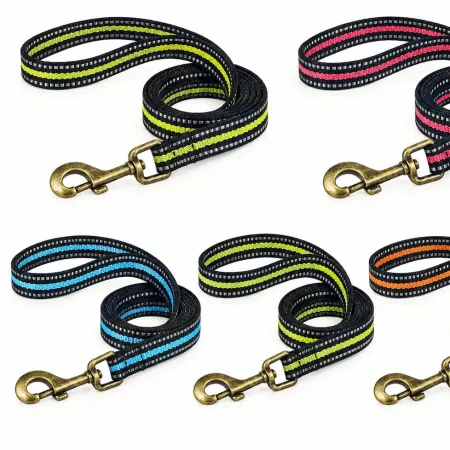
The construction that gets filed is a nylon webbing or polyester webbing lead at the widths the market uses, with the fitting and the stitching recorded alongside it. The standard models carry their own sheets, so a first order can begin from a documented construction rather than a new one. Colour matching and development run through the OEM and ODM routes, and the laboratory records are the part of the file a buyer is most entitled to see.
The buyer's own copy matters as much as the supplier's. A purchaser who holds the construction sheet and a piece of the approved band can move a product to a second supplier and still receive the same lead, and that portability is the most reliable consistency available: the record makes the product independent of any single factory.
Two Ways Experience Looks Convincing
Years counted rather than records kept
A long history is easy to state and hard to verify, and it is worth nothing on a reorder if nothing was written down. The practical test is to ask for the construction sheet of something they have made before and see whether it contains the thread and the stitch or only the width and the colour. A sheet with four lines is a catalogue entry; a sheet with fifteen is a record.
How a complaint is handled
Every supplier produces a problem eventually, and the difference appears in the response: whether the batch is identified, whether the cause is named, whether the fix is applied to the next run and whether it is written down. A supplier who answers a complaint with a replacement and no explanation has solved the shipment and not the process, and the same fault will return in a year with someone else's name on the paperwork, at which point the file is the only thing that shows it has happened before.
FAQ: Pet Leashes Manufacturer
What should I ask for before a reorder?
The construction sheet and the retained standard. With those two, a second order can be checked against the first instead of trusted.
Is a shade card a retained standard?
No. Print and dye age differently. A piece of the approved band, stored dark and dated, is the only comparison that means anything.
What if a fitting is discontinued?
It happens. The point is that the substitution is notified and confirmed before production rather than discovered at the carton.
How long should records be kept?
Long enough to cover the life of the product in the market, which in practice means several years and at least one reorder cycle.
Does a manufacturer need to be local?
No, but distance makes records matter more, because a problem cannot be settled by walking into the plant. Written specifications travel better than conversations.
A pet leashes manufacturer is a file as much as a factory, and the file is what a third order tests. Ask for the construction sheet, the retained standard and the change rule, and the years become something you can check.
Why Xinxiangrui for Pet Leashes Manufacturer Work
Fifteen years on narrow woven fabric since 2011 in Dongguan means a shelf of constructions rather than a claim about time, and each one carries its width, weave, thread, stitch and fitting. A retained standard is kept for every approved shade, and a change to a fitting or a packing is written down before the run rather than after it. Give us the application and the load it must carry, and the construction follows.