25mm Polyester Ribbon: One Width, Six Different Markets
A 25mm polyester ribbon is the closest thing this trade has to a universal size. It is one inch in the United States, 25 millimetres almost everywhere else, and the width that bow makers, card printers, florists and packaging lines have all tooled around. That universality is exactly why it is worth being careful with: the same band leaves the same loom and arrives in six industries that want six different things from it.
This guide covers why this width became the default, what each market adds to the specification, which requirements travel with the goods rather than with the product, six lines a brief should carry when the same ribbon serves several customers, and the two things that change when a market is added rather than a product.
25mm Polyester Ribbon: What Each Market Adds
The band itself is the same object in every column below. What differs is the requirement that arrives with the order, and in practice that requirement decides the construction more than the width does.
| Market | What the order adds | What goes wrong first |
|---|---|---|
| Gift wrapping | A shade that repeats across seasons and a hand that ties without slipping | A shade drift between lots, noticed only when two rolls meet on one counter |
| Floristry | A band that holds a stem wrap and tolerates water | A water-based dye that bleeds into a wet bouquet sleeve |
| Apparel trim | A shade approved against a garment and a hand soft enough to sit against skin | A ribbon that is right on the card and wrong against the cloth it trims |
| Packaging | A document trail, and a print that survives a machine feed | A declared material that does not match the roll in the carton |
| Craft and retail packs | Short lengths, a header card and a shade that photographs well | A cut end that frays in the pack before it is ever used |
| Industrial tying | Consistent break behaviour and a knot that does not creep | A decorative construction sold into a job that needed a load-bearing one |
The last row is where the most expensive mistakes happen, because the width is identical and the figure on the quotation is not the signal a buyer expects. A 25 mm decorative ribbon and a 25 mm load-bearing band can look similar on a bench and behave nothing alike, and the difference is in the weave density and the yarn rather than in anything visible from a metre away.
The width travelled; the requirement did not
One inch became 25 mm through a conversion, and the number survived because the tooling around it survived. What did not travel is why each customer wanted it: a florist wants water resistance, a garment factory wants a hand, and a packaging line wants a document. A supplier quoting all three from one construction is quoting one of them wrongly.
Three Requirements That Travel With the Goods
Labelling language
A retail pack that says one inch in one market and 25 mm in another is two labels, two artwork files and two approvals for the same ribbon. Markets that sell by the metre and markets that sell by the yard also split the put-up: a roll of 25 yards and a roll of 25 metres are nearly ten per cent apart in length and identical on a shelf. Deciding the unit before the artwork is cheaper than correcting it after the first print run.
Colour approval against a local reference
A shade approved in one country and shipped to another is approved under one set of lights and judged under another. A red that reads as festive under a warm shop lamp can read as orange under a cooler one, and no one is at fault. The practical fix is a physical standard kept by the buyer and a note of the light it was approved under, which turns a conversation about taste into a comparison of two objects.
Documents that match the roll
Markets differ in what they ask for at the border, and the paperwork is written per shipment rather than per product. A fibre declaration, a recycled-content certificate or a statement about a restricted substance all have to describe the roll in the carton, which means the lot number has to survive from the dye house to the customs file. When it does not, the goods are correct and the shipment still waits.
Six Lines for a Multi-Market Brief
- The unit and the roll length — yards or metres, decided once, because the same number means two different lengths.
- The markets, listed — because the label, the document set and the shade approval all change with the destination.
- The construction, per use — if one width serves six uses, say which use each lot is for rather than assuming one band fits all.
- The colour standard and its light — a physical reference and the conditions it was approved under.
- The pack format — spool, flat roll or cut length, since the pack decides the labour and the freight.
- The retained standard per lot — one metre kept, because a multi-market range drifts one market at a time.
The fifth line is the one that surprises buyers new to the width. A 25 mm ribbon packed on a spool, on a flat roll and as a cut length is three different products with three different amounts of labour inside them, and a quotation that does not name the format is a quotation for whichever one the supplier assumed.
- Keep one shade standard per market — a range that serves several countries may need more than one approved reference.
- Print the unit on the core — the roll label is the last place a yard-metre confusion can be caught.
- Separate decorative and load-bearing lots — they share a width and nothing else.
- Ask which document the border wants — the answer differs by market and is cheaper to learn before shipping.
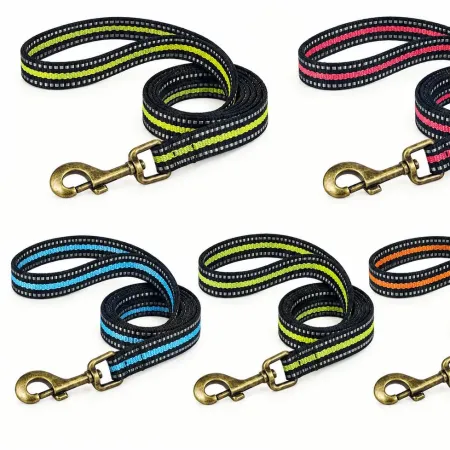
The same width goes out to more than fifty markets from here, which is less a claim about reach than a description of how much paperwork sits behind a plain roll: the polyester ribbon shares a site with the polyester webbing and the custom spec bags that often ship in the same carton. A 25 mm webbing base clears 2000N where the job calls for it; the ribbon beside it is chosen for how it ties.
Two Things That Change When a Market Is Added
The label becomes a second product
A second market means a second label, and a label is not a sticker on a roll: it carries a unit, a fibre content, a country of origin and often a handling symbol, each of which has to be true of the lot underneath. Buyers who treat labelling as a print job rather than as a specification end up with a carton that is correct and unsaleable, and the fix costs a reprint plus the labour of relabelling every roll.
The complaint arrives in a different vocabulary
One market complains that a ribbon is stiff, another that it is limp, using the same word for opposite judgments, because each is comparing against the local habit. A supplier who records what the approved sample felt like, in plain language, can answer both without changing the construction. A supplier who recorded only a number cannot, and ends up adjusting a product that was never wrong.
FAQ: 25mm Polyester Ribbon
Is 25 mm exactly one inch?
No. One inch is 25.4 mm. The difference is inside most tolerances and large enough to notice when a 25 mm roll sits beside a 25.4 mm one.
Can one construction serve all six uses?
It can serve several and will be mediocre at one of them. The width is shared; the weave, the finish and the documents are not.
Why does a roll of 25 yards look the same as 25 metres?
Because the number is printed, not the unit. Twenty-five yards is about twenty-three metres, and the shortfall is only visible when someone measures.
Do different markets need different certificates?
Often yes, and the requirement is set by the importer rather than the mill. Listing the destinations in the brief is what makes the answer possible before the shipment.
Is a wider ribbon easier to sell?
It photographs better and needs more shelf. The 25 mm size survives because it fits the tooling and the display, not because it is the most attractive width.
A 25mm polyester ribbon is one object and six specifications. Name the unit, list the markets, and give each use its own construction; the width will take care of itself.
Why Xinxiangrui for Multi-Market Ribbon
A 25mm polyester ribbon sold into several markets needs one site that can hold several specifications apart. Here the loom, the dye line and the packing bench sit in one 8,000+ m² plant in Dongguan, and lots are separated by use rather than by width. Give us the market and the use it will be put to, and the construction follows.