Source Factory
Direct wholesale production from our own plant in Dongguan, not a trading desk. Weaving, dyeing, printing, hardware assembly and packing all run in house, with no middleman margin in the price.
Full Customization
OEM and ODM work starts from your drawing: width, weave, colour, hardware and retail packaging. We match Pantone, send a physical sample before bulk, and keep every change on one work order.
Strict QA & ISO Standards
Every batch is checked for width, thickness, break strength and colour fastness before it ships, and the plant runs to ISO 9001 and ISO 14001. Test reports for your batch travel with the goods.
Proven Track Record
Fifteen years of narrow fabric since 2011, 200+ active partners and shipments to 50+ markets. Long-run programmes are what this factory is built for, which is why most customers reorder.
Canvas Tote Bag With Zipper Closure: Teeth, Tape and Gap
A canvas tote bag with zipper closure is the configuration buyers ask for when a tote has to behave like a handbag: contents stay in on a bus, rain does not reach a laptop, and the bag can be carried at an angle without spilling. It is also the configuration where a cheap zip quietly ruins an expensive bag.
The zip is the only component on a tote with moving parts, and it is usually the cheapest line on the bill. This guide covers which zip belongs on a canvas bag, where the three predictable failures occur, and which compliance documents a metal slider brings into the file.
What the Zip Changes on a Canvas Tote Bag With Zipper Closure
Adding a zip is not a matter of sewing one into the mouth. It stiffens the top edge, adds a second material with different stretch, and introduces metal or moulded parts that carry their own rules.
- Zip type sets the character — a number 5 coil is flexible and forgiving on a soft canvas mouth; a moulded plastic zip looks more premium and resists bending less; a metal zip reads luxury and brings nickel-release obligations with it.
- Tape width decides the seam — the tape has to be sewn to a fabric that will not gather. On a 12 oz canvas a narrow tape is easily swallowed by the seam allowance and the zip ends up sitting inside the bag rather than on the edge.
- The mouth needs structure — a zip on an unsupported canvas mouth ripples when closed and leaves a wavy top line that no amount of pressing removes. A bound or faced mouth holds the zip flat.
- The ends need a stop, not a hope — the last 10 mm at each end is where a zip either terminates properly against a top stop or unravels into the seam.
The table sets out the four zip options used on canvas totes against the bags each one suits.
| Closure | Where it works | What to watch |
|---|---|---|
| No. 3 coil | Interior pockets and small totes | Too light for a main closure; the slider is easily overloaded |
| No. 5 coil | Main closure on a soft or foldable tote | Needs a taped or bound seam so the coil does not curl the mouth |
| No. 5 moulded | Structured totes, work bags, travel use | Less tolerant of a bag that folds; teeth can crack in cold weather |
| Metal tooth zip | Premium and luxury positioning | Nickel release, salt-spray and lead limits apply to the slider and pull |
| Zip plus top flap | Bags that need to look closed but open often | Two closures to align; the flap must not sit on the zip coil |
| Recessed zip | Clean-faced totes where the zip is hidden | Hardest to sew; the recess must be wide enough for the slider to travel |
Three Ways the Zip Fails
Zip failures on canvas totes are predictable, and all three are decided by the bag rather than by the zip.
The slider opens behind itself
A slider separates when the two tapes are pulled apart at an angle, which is exactly what happens when a soft bag is stuffed and carried by one handle. The fix is not a heavier slider but a flatter mouth: a faced or bound top edge keeps the tapes parallel, and a parallel pair does not split. This is the difference between a zip that lasts years and one that fails the first week the bag is full.
The tape pulls away from the seam
Zip tape is woven polyester and does not stretch, while the canvas it is sewn to does. Every time the bag is filled the canvas moves and the tape does not, so the stitches at the tape edge take a shear load. A tape wide enough to sit under two rows of stitching, rather than one, is what keeps this joint intact.
The end unravels past the top stop
At each end of the zip there is a short run of teeth beyond the slider's travel. If that section is not secured with a top stop and a bar tack through the tape, the coil separates the first time the slider is pulled hard. It is a two-second operation at the machine and a replacement bag if it is missed.
Cycle the zip two hundred times before you sign it off
A new zip always works. Two hundred open-and-close cycles on a loaded bag will reveal a slider that was too light, a mouth that was too soft, or a tape that was too narrow, and it takes one person about fifteen minutes. Record how many cycles the sample survived; a zip that starts skipping at sixty is a specification error, not bad luck.
Four Lines That Specify the Closure
A zip specification that a factory can quote without asking a question has four parts.
- Zip number and construction — number 5 coil, number 5 moulded or metal tooth, stated with the brand if the buyer has one. The number refers to the tooth width in millimetres, so it is a real dimension rather than a grade.
- Tape width and colour — a 25 to 30 mm tape sits under two stitch rows on a canvas mouth. The tape colour is visible whenever the bag is open, so it is a design decision, not a default.
- Slider and pull style — auto-lock or non-lock, metal or moulded, with the pull shape named. An auto-lock slider stops a loaded bag from opening itself, which matters on a bag carried at an angle.
- Mouth construction — faced, bound or recessed, with the finished depth of the opening. Without this line, two factories will deliver two different top edges from the same zip number.
Six Questions on the Zip and Its Paperwork
The last three of these are the ones buyers remember only after a customs laboratory has asked.
- Is the zip rated for the bag it is going into? — a number 3 coil on a 15 kg shopping tote is a mismatch that shows up as a skipped tooth within weeks.
- Does the slider lock? — an auto-lock slider holds a loaded bag closed when it is set down; a non-lock slider opens under the same load.
- Are both ends bar tacked through the tape? — check the inside of the bag at each end of the zip. If the tape is only stitched to the fabric and not tacked across, the stop is unsupported.
- Does the metal pass nickel release? — relevant for any slider or pull that a hand touches repeatedly, and tested to the release limit rather than the content limit.
- Is there a lead and cadmium statement for the metal parts? — CPSIA applies to children's products but buyers increasingly ask for the same statement on adult bags, because the slider is a small accessible metal part.
- Do the azo and APEO statements cover the tape and the thread? — a certificate for the canvas does not cover the zip tape, and the tape is dyed separately.
Building the Compliance File Around the Hardware
A zipped canvas bag has three material families in one product — textile, coating or trim, and metal — and each brings a different document to the file.
- Textile declarations for the canvas and the tape — azo dyes, formaldehyde, APEO, and where relevant OEKO-TEX Standard 100 by product class. The declaration has to name the article, not the supplier's company.
- Metal statements for the slider and pull — nickel release, lead, cadmium and, for a plated finish, a note on the plating thickness. These are separate tests from the textile ones and are often missing from a file that looks complete.
- A batch link across all of them — the point of the file is that a customs officer or a retailer's auditor can trace a bag to a roll of canvas, a dye lot and a zip shipment. A folder of certificates with no batch number answers nothing.
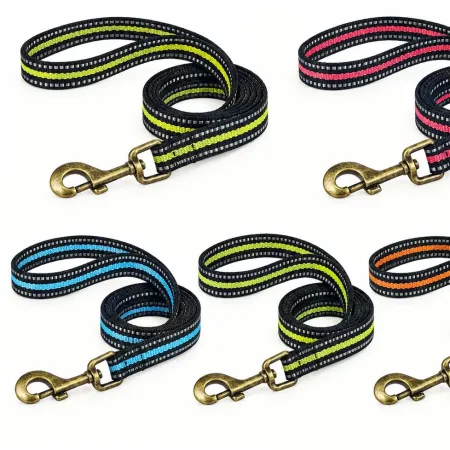
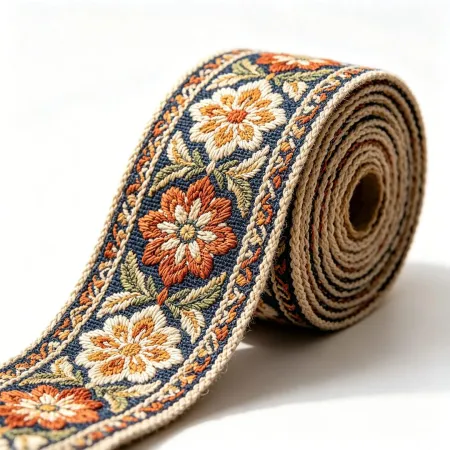
Zipped totes are quoted as part of the custom spec bag range, and the webbing used for handles and trim comes from the polyester webbing line, whose dye lots sit in the same documentation system as the canvas. A finished embroidered example is the floral cotton canvas tote, and the OEM and ODM page explains how a hardware specification is handed over at the start of a project.
FAQ: Canvas Tote Bag With Zipper Closure
What size zip belongs on a canvas tote?
A number 5 coil for a main closure on a soft bag, and a number 5 moulded zip for a structured one. Number 3 is for interior pockets; number 8 and above is luggage hardware and makes a tote stiff at the mouth.
Why does the zip ripple along the top of the bag?
Because the canvas has stretched while the tape has not, or because the mouth was sewn without a facing. Either way the two materials are fighting along the seam. A faced mouth and a wider tape solve it; pressing will not.
Can a zip be added to an open-top tote design?
Yes, but it changes the pattern, not just the seam. The mouth needs a facing or a binding, the lining has to be re-cut, and the top edge usually needs interfacing. Treat it as a new sample rather than a modification.
Is a metal zip a compliance risk?
It brings obligations rather than risk. Nickel release applies to parts in prolonged skin contact, and lead and cadmium limits apply to accessible metal. Both are standard tests and should be in the file before the order, not after a query.
Does a zipped tote cost much more to make?
The zip itself is a minor line; the labour is what changes. A faced mouth, two bar tacks and a lining re-cut add several operations, which is why a zipped tote is a different product class rather than an upgrade on an open bag.
A canvas tote bag with zipper closure is decided by the mouth, not by the zip. Parallel tapes do not split, a faced edge does not ripple, and a taped end does not unravel — and none of those three is a zip feature. Add the metal documents for the slider and the file is complete, which is a different thing from a folder of certificates.
Why Xinxiangrui for Canvas Tote Bag With Zipper Closure
Xinxiangrui Webbing assembles the file for a canvas tote bag with zipper closure at the point where each part is chosen: canvas and zip tape declarations for the textile side, nickel release and lead statements for the slider and pull, then a batch number tying the roll, the dye lot and the hardware shipment together. The handle webbing is woven in-house to 2000N+ break strength, and where a document does not cover what you are importing, the gap is named rather than papered over. Give us the application and the load it must carry, and the construction follows.