Custom Lanyard Printing: Four Routes and the Tests That Judge Them
Custom lanyard printing is usually discussed as a colour question when it is really a durability question. The same artwork can be applied four different ways, each producing a different hand, a different minimum detail and a very different answer to what happens after twenty washes or a summer against a collar. Choosing the route is a decision about wear, and the wear is measurable.
This guide compares the four print routes on a woven strap, explains what each fastness grade on a test report actually means, and sets out the print positions that fail first so the artwork can be laid out to avoid them.
Four Routes, Four Different Products
A strap can be printed by screen, by sublimation, by heat transfer or woven with the design in the cloth. They are not interchangeable, and the cheapest one is rarely the cheapest once returns are counted. What does not change is the strap underneath: a 20 mm woven band clears 2000N before a single pass of ink touches it, so the print is always the part being judged.
- Screen print — one screen per colour, ink sitting on the surface. Opaque and vivid on any fibre, and the only route that puts white onto a dark strap convincingly.
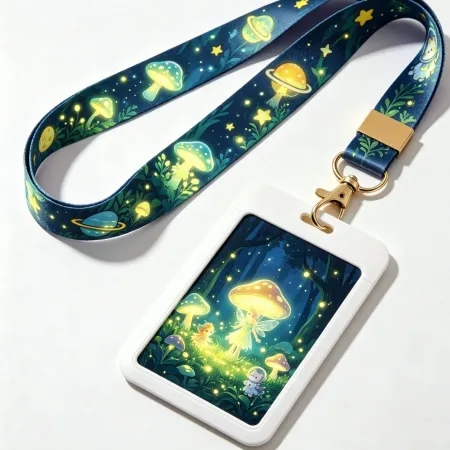
- Dye sublimation — the ink becomes part of the polyester fibre. No hand change, no layer to crack, and no white ink at all.
- Heat transfer — a printed film bonded to the strap. Fine detail and photographic work, at the cost of a film edge that can lift at a fold.
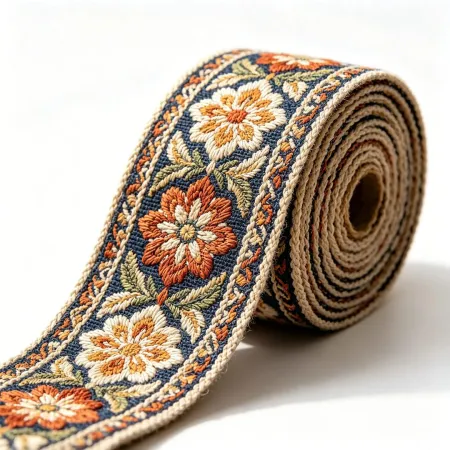
- Woven logo — the design is built into the weave with coloured yarn. Nothing to rub off, and the most durable option, limited by the picks available across the width.
The table sets out what each route can hold, because most artwork problems are a route chosen for the wrong kind of design.
| Route | Minimum detail | Colours | Weak point |
|---|---|---|---|
| Screen print | About 1 mm stroke on a tight weave | One screen per spot colour, plus white | Ink sits proud of the weave and can crack at a hard fold |
| Dye sublimation | Sub-millimetre along the strap | Full colour, but no white | Polyester only, and gradients can band on a coarse sett |
| Heat transfer | Fine detail and halftones | Full colour including white | A film edge that can lift where the strap bends |
| Woven logo | Coarse — a pick count, not a resolution | Up to four yarn colours in practice | Detail limited by the width, and a jacquard programme to set up |
Custom Lanyard Printing: Reading a Fastness Grade
Fastness results are reported as a grade, usually from 1 to 5, where higher is better. The number is only meaningful when the method, the specimen and the test condition are named beside it.
- Rubbing, dry and wet — the test that predicts a mark on a white shirt collar. Wet rubbing is always the harsher of the two, and a deep shade that passes dry and fails wet is a common result.
- Washing — colour change of the strap plus staining of an adjacent fabric. A print that holds its own colour but bleeds into a white badge holder has still failed.
- Light — a stated exposure with a colour change figure. A lanyard that lives on a dashboard or a lanyard used outdoors all summer are two different endurance problems.
- Perspiration and saliva — relevant wherever the strap sits against skin for hours, and mandatory for anything a child might put in their mouth.
- Adhesion, for transfer — not a colour test at all, but the one that matters on a film-based print. It is measured by trying to lift the edge, which is exactly what a fold does in service.
Ask which shade was tested
Fastness is not a property of a print method; it is a property of a colour on a fibre. A mill that reports one grade for its whole range is reporting the easiest shade it makes. Ask for the grade on the colour you are buying, and where the design uses several, ask for the worst one. A report that names the shade and the specimen is worth more than one that carries a higher number attached to nothing.
Where Print Fails First
Print wear is not random. It concentrates in three places on a lanyard, and all three can be designed around.
The fold at the closure
The strap turns through a tight radius where it meets the closure, and any ink layer is asked to bend with it several times an hour. Surface ink cracks and film lifts; sublimation survives because there is no layer. Keep the artwork 25 to 30 mm clear of the closure and the question stops arising.
The edge
A printed border that runs to the selvedge loses definition because the edge is where the weave is least uniform. Holding the design 2 mm inside each edge looks tidier and wears better, and on a screen print it also avoids the ink bridging the edge and flaking.
The registration across the width
On a narrow band, a fraction of a millimetre of drift is visible as a border that is heavier on one side. The print has to be centred to the woven width rather than to the roll edge, which is a setting rather than a design decision — but it is worth writing into the order because it is the difference between a professional-looking strap and one that looks printed by hand.
Six Lines for a Print Brief
A print brief that carries these six items can be quoted, sampled and tested without another conversation.
- Fibre and strap width — these two decide which routes are even possible before any artwork is discussed.
- Number of colours and any white — white is the line that separates screen and transfer from sublimation.
- Minimum stroke in the artwork — stated in millimetres at final size, not in points at some imaginary scale.
- Repeat length — so the design closes cleanly at the back of the neck rather than mid-letter.
- Keep-out zones — the distance from the closure and the edges that the artwork must respect.
- Fastness targets — the grades the product actually needs, written down before the strike-off rather than discovered after the first complaint.
Printing is the part of a lanyard that carries the brand, and the part that ages fastest. The custom lanyard range can be printed or woven depending on the design, the polyester webbing base takes a sublimated print without a hand change, and the grades on the report come from the in-house laboratory measured on the roll that ships.
FAQ: Custom Lanyard Printing
Which print lasts longest?
A woven logo, because there is nothing applied to rub off. Among the print routes, sublimation on polyester is the most durable in normal wear since the colour is inside the fibre. Screen print is excellent until it meets a sharp fold, and transfer is the most vulnerable at its edges.
Can a print be removed and redone?
Not cleanly. Screen ink and transfer film sit on the surface and leave a mark when removed, and sublimation is inside the fibre and cannot be taken out at all. A design change means a new strap, which is why the repeat and the keep-out zones are worth arguing about at the sampling stage.
What grade should a lanyard print reach?
For a badge lanyard worn daily, a wet rub grade of 3 or better on the actual shade is a sensible floor, with wash and light checked on the same piece. For a giveaway used once, a lower grade is acceptable and cheaper. The important thing is that the target is written down before the print is made.
Does print stiffen the strap?
Screen print and transfer do, slightly, and the effect is proportional to the ink area. A large solid block changes how the lanyard folds at the closure, which is why the fold area is usually left unprinted. Sublimation and a woven logo change nothing at all.
Can one strap carry two different print methods?
It can, and sometimes should: a sublimated background with a screen-printed white logo is a common combination. The constraint is process order and drying, not design. Ask whether the two passes can run on the same base and the same schedule before assuming the answer is no.
Custom lanyard printing is a choice between four different wear curves. Pick the route by what the strap has to survive, keep the artwork clear of the fold and the edges, and ask for the fastness grade on the actual shade — the colour will then still be the colour in six months.
Why Xinxiangrui for Custom Lanyard Printing
Fastness grades for custom lanyard printing are produced against the roll that ships, with the shade, the fibre and the test condition named on the page, so the figure describes the goods rather than a catalogue sample. Print and weave are decided together, which is how a keep-out zone gets respected instead of explained. Send us the artwork file, the strap width and the print method — we come back with a layout and a fastness sheet.