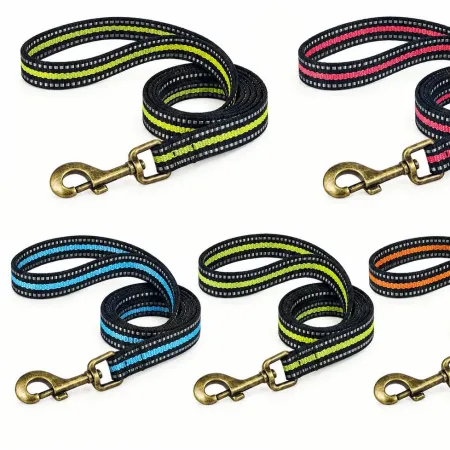
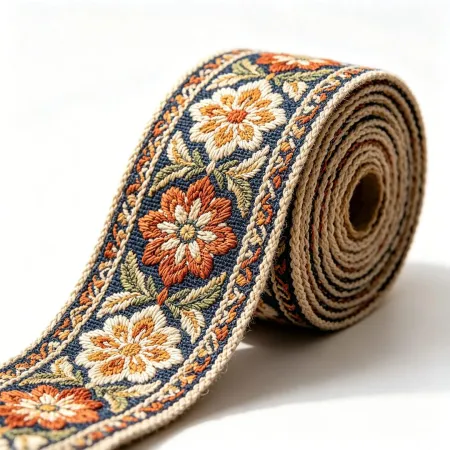
Elastic Seat Webbing: The Suspension Nobody Sees
A chair seat is a spring made of cloth. Elastic seat webbing stretched across a frame carries the sitter, deflects under load and returns when they stand, and it does that tens of thousands of times without being seen by anyone who is not repairing the chair. When it fails, it fails in the least dramatic way possible: the seat slowly sinks, the foam takes the load instead of the webbing, and the furniture starts to feel tired long before anything is visibly broken.
This guide covers what a seat actually asks of the band, why a single load figure is the wrong number to buy on, the three tests that predict sag, the six lines that make a seat webbing requirement checkable, and why the attachment at the frame decides more of the outcome than the elastic itself.
Elastic Seat Webbing: What the Seat Asks For
Four properties govern whether a seat feels right on the first day and still feels right in the third year, and only one of them is usually written into an order.
- Stiffness at working deflection — how much the band resists when a person sits, which sets whether the seat feels firm or bottomed out.
- Permanent set — the length the band keeps after being loaded, which accumulates into visible sag.
- Fatigue behaviour — how the band behaves after many cycles rather than one, which is where most of its life is spent.
- Attachment strength — whether the staple, the clip or the sewn loop holds the tension the band is pulling.
The table sets out what each property controls, because a specification that states only one of them leaves the other three to the factory's default.
| Property | What it controls | Symptom when wrong |
|---|---|---|
| Stiffness | The feel of the seat under a person | Bottoming out, or a seat that feels like a board |
| Permanent set | How much of the original tension survives | A dip that appears in the middle of the seat |
| Fatigue | Life rather than first-day performance | A seat that was fine at delivery and soft two years on |
| Attachment | Whether the tension can be held at all | Tearing at the staple line, or the band pulling free |
Buy a curve, not a number
A single figure for load at a single deflection describes one point on a curve that is not a straight line. Two bands can share that figure and behave completely differently either side of it: one rises steeply and feels hard, the other stays flat and bottoms out. Ask for the load at three deflections — light, working and maximum — and the seat's character becomes visible on paper before anything is upholstered.
Three Tests That Predict Sag
Static set after a held load
Load the band to the working deflection, hold it, release it and measure what it kept. That single figure explains most of the sag complaints in furniture: a band that grows a few millimetres per metre after one held load will grow steadily through a year of sitting. The holding time matters, because a short test flatters a band that creeps.
Cyclic fatigue at working deflection
Thousands of cycles between relaxed and working deflection, with the residual growth recorded at intervals. This is the test that separates a band designed for a seat from a general-purpose elastic that happens to be the right width. The interesting part of the curve is not the first thousand cycles but the ten-thousandth, where the rate of growth settles into the pattern the product will live with.
Heat ageing
A seat near a radiator, in a car interior or in a warehouse roof space lives hotter than a sampling room. Elastic yarns lose power faster at elevated temperature, and the loss is permanent rather than recovered on cooling. An accelerated heat step followed by the same set and fatigue measurements shows whether the band is likely to survive the environment it will actually occupy, which for furniture is often warmer than anyone plans for.
Six Lines for a Seat Webbing Requirement
- Frame spacing — the span the band has to cross, because the same band behaves differently across 400 mm and 600 mm.
- Load at working deflection — stated with the deflection, not on its own.
- Set limit — the permanent growth allowed after a stated hold and a stated number of cycles.
- Attachment method — staple, clip or sewn loop, with the tension the frame will be loaded to.
- Service environment — indoor furniture, vehicle interior or covered outdoor, since temperature and light differ enormously.
- Width and colour — narrower bands at higher count for a softer seat, wider bands at lower count for a firmer one.
A note on what the band is not. Seat webbing is a suspension element working at modest loads over a long life, not a structural sling: nobody should expect a 2000N rating from it, and where a furniture design needs a rated member — a stretcher, a lifting point, a transport strap — that member is a non-elastic webbing that clears 2000N by construction. Mixing the two expectations produces a seat that is overbuilt in tension and still sags, because the sag comes from set rather than from strength.
Attachment and the Frame
The staple line is the weak point
Most seat webbing is stapled or clipped to a wooden or metal frame under tension, and the staple perforates the band precisely where the load is highest. A band that tests well in a tensile machine can still tear at the staple line in service, because the test grips the whole width while a staple grips in points. Ask for the attachment to be replicated in the test rather than assumed, and check that the staple count and spacing are stated alongside the band specification.
Frame tension is a decision, not a default
How far the band is stretched when it is fixed to the frame sets the seat's character as much as the band does. Fixed too slack, the seat bottoms out on the first sitting; fixed too tight, the frame takes a load it was not designed for and the band starts its life partly extended, with less travel left. The tension figure belongs on the drawing, and it should be checked on the first frame rather than on the thousandth chair.
Seat and furniture tapes sit alongside the polyester webbing and nylon webbing ranges, load-deflection and fatigue figures are produced in the in-house laboratory, and a new stiffness target goes through OEM and ODM development.
FAQ: Elastic Seat Webbing
How long should seat webbing last?
That depends entirely on the set limit and the cycle count, so it is better asked as a specification question than as a promise about years. Define the acceptable sag, define the cycles, and test against both. A band that meets a defined set limit after a defined number of cycles has done its job, whatever the calendar says.
Why does the middle of the seat sag first?
Because that is where the deflection is greatest and where the band accumulates the most set. The ends, held at the frame, barely move. A seat with more, narrower bands distributes the deflection and sags more evenly than one with few wide bands under the same total tension.
Can a sagging seat be re-tensioned?
Sometimes, if the band still has power and the frame allows the attachment to be moved. But a band that has lost power through heat or fatigue will not recover it by being pulled tighter — it will simply reach the same length again sooner. Replacing the band is the honest repair.
Does colour matter for an unseen part?
Only where it can be glimpsed through a gap or under a cushion, which is more often than buyers expect. A black band under a pale cushion is visible at the edges of the frame, and a shade mismatch at that seam is the first thing a customer notices when they turn the chair over.
Woven or rubber for a seat?
Rubber webbing gives a softer, more progressive feel and a longer travel. Woven elastic gives a firmer seat with more predictable set, and it staples more reliably. The choice follows from the furniture rather than from the material.
Elastic seat webbing is bought on numbers that describe a curve over time, not a strength at one moment. Ask for load at three deflections, set after a held load, growth after thousands of cycles and behaviour after heat, then check the staple line on a real frame. A seat that still feels like a seat in the third year is the result of those four figures being written down at the start.
Why Xinxiangrui for Elastic Seat Webbing
Seat webbing is judged on figures rather than on appearance, so the load-deflection curve, the permanent set and the fatigue result for an elastic seat webbing are measured on specimens drawn from the roll that ships, with the test conditions printed beside each number. Where a figure disappoints, the roll is still in the building. Send us the seat drawing, the frame spacing and the target market — we reply with a construction.