Bio-Based Webbing for Tote Bag Handles: Load, Stitch and the Retail Story
Bio-based webbing for tote bag handles is the cheapest part of a bag and the first part a customer touches. It is also the part most likely to fail: a handle carries the entire load through two stitch boxes and a fold, and a strap that looked generous on a sample table can pull out of its seam in the first week of real use.
This guide covers where a tote handle actually breaks, how a bio-based material choice affects the rest of the bag, and what changes in packing, shipping and retail presentation when the handle is a natural fibre rather than a synthetic one.
Where a Tote Handle Fails First
Four failure points account for nearly every tote handle complaint, and only one of them is a webbing problem in the narrow sense.
- The stitch box — the rectangle where the handle meets the bag panel. Load concentrates at the two upper corners of that box, and a stitch pattern with too few rows or an unbacked panel simply tears through the bag fabric before the webbing gives way.
- The fold at the top — a handle is folded over and stitched, and that crease takes the entire weight of the bag every time it is lifted. A hard or thick edge here becomes a hand discomfort long before it becomes a structural failure.
- Edge wear along the length — a tote handle rubs against a coat, a car seat and a door frame. On a natural fibre handle this shows as fuzzing, which customers read as ageing even when the strap is structurally sound.
- Colour transfer — a dark dyed handle against a pale canvas body, carried under a damp arm, is a classic complaint. It is a fastness question, not a webbing strength question, and it is cheap to test in advance.
The table links each bag type to the handle specification that suits it and the packing note that protects it in transit.
| Bag type | Handle specification that suits it | Packing note |
|---|---|---|
| Heavy canvas shopper | Dense twill at 25 mm with a fully tucked edge; stitched with a reinforcing panel | Flat-packed, no long compression, desiccant in humid routes |
| Promotional tote | Lighter construction with a printed logo; print rub fastness graded | Stacked in retail-ready bundles so print never faces a rough edge |
| Retail brand carry bag | Retained shade standard held for seasons; handle matched to the body fabric | One shade standard per colour, held by both parties across repeat orders |
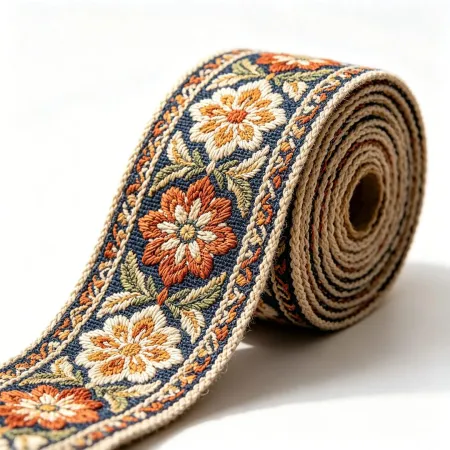
| Gift and packaging tote | Narrower strap, soft hand, jacquard or gold foil detail | Individually bagged to protect metallic detail from abrasion |
| Market bag, high load | Wider strap, higher tenacity, longer stitch box or a wrap-around construction | Weight-limited per carton so handles are not crushed by the carton above |
| Recyclable polyester tote | Printed strap on a recyclable substrate, single-material construction | Label and packing stated so the recycling claim still holds at end of life |
Three Things a Natural Fibre Handle Changes
A cotton or cotton-rich handle is the most credible bio-based story in bags, because the customer can see and feel what it is. It also behaves differently from a polyester strap in three ways that affect the whole programme.
The load lives in the stitch, not the strap
A 25 mm cotton twill handle can carry far more than a tote is ever likely to hold; the limiting factor is the panel it is sewn into. That makes the stitch box, the backing and the thread the real specification. It also means a stronger webbing is often wasted material, and a reinforcement decision at the seam delivers more than an upgrade at the loom.
Cotton wants to ship dry
Cellulose takes up moisture from the air, so a cotton handle packed in a humid month arrives heavier and softer than one packed in a dry month. In a sealed carton on a long sea route, that moisture has nowhere to go, and the result is a musty smell that no amount of airing removes. Conditioning before packing and desiccant where the route demands it are not luxuries; they are the difference between a clean delivery and a rejected one.
The handle has to match the body, not just the brief
Natural cotton comes in a narrow family of undyed shades, and a bleached handle against a natural canvas reads as a mismatch even when both are technically correct. Approving the handle on its own is the usual mistake; the handle should be approved beside the panel it will be sewn to, under the same light, and a physical standard kept for both.
Open one carton from every batch and smell it
Moisture damage announces itself before it becomes visible. Open a carton from the middle of the pallet, not the top, and check for a damp, closed smell and for handles that feel cold or clammy. It takes thirty seconds per delivery and catches the one defect that cannot be corrected after arrival.
Packing and Delivery for a Seasonal Bag Programme
Bags are a calendar business: a spring range has to be on a shelf in February, which means production lands in the wettest part of the shipping year. Four operational decisions carry most of the risk.
- Retail-ready or bulk packing, decided early — polybagged and barcoded per store, or flat-packed for a distribution centre. Changing this after production is the most expensive late decision in a bag programme.
- Carton weight limits set for the handle, not the bag — a heavy carton crushes the handles of the bags below, and a creased handle does not recover.
- Air, sea or express chosen against the launch date — sea freight is the default for volume, air for a late colour addition, express for samples and top-ups. Having all three available from one supplier is what makes a late change survivable.
- Documentation that matches the packing list — if a shipment splits across two containers, the paperwork has to show the split clearly, or the mismatch is discovered by a customs officer rather than by your forwarder.
Six Points to Fix Before the Handle Goes Into Production
These are the items that are cheap to settle at sampling and expensive to settle after the first container.
- Width, thickness and edge type in one line — a handle specification that names width but not edge construction leaves the most visible detail to the mill's default.
- The measured bio-based share — a figure with the method named, applying to the specific yarn rather than to a product family.
- Print or jacquard fastness, graded — a logo on a handle is handled more than any other print on the bag and should be tested accordingly.
- A retained standard for both handle and body — approved together, under the same light, held by both parties for the life of the range.
- Conditioning and desiccant decided per route — a dry northern European delivery and a humid tropical one need different packing, and one packing instruction should not be assumed to fit both.
- A replenishment rhythm written down — indicative volumes and dates let the mill reserve yarn against the shade, which is the single cheapest way to keep a replaceable handle consistent with the original bag.
Handling the Handle From Loom to Carton
Three capabilities decide whether a bag programme ships cleanly, and all three sit downstream of the weave itself.
- Dyeing and finishing before packing — continuous high-temperature dyeing plus conditioning means the strap leaves the plant at a known moisture level rather than whatever the week's weather allowed.
- Packing to the retail requirement — barcodes, carton counts, gross and net weights, and channel-specific labelling, handled in-house rather than passed to a third party who never sees the webbing.
- Testing before the carton closes — tensile to 2000N+ break strength on load-bearing constructions, Martindale abrasion past 50,000 cycles, and colourfastness to wash and rub on the production shade, with the report tied to the roll.
Handle constructions include a heavy twill cotton tote handle and a recyclable printed tote strap, both drawn from the bio-based webbing range. Finished bags and their handle options sit in custom spec bags, and programme logistics are set out under OEM and ODM development.
FAQ: Bio-Based Webbing for Tote Bag Handles
Is a cotton handle strong enough for a heavy tote?
For a bag people carry by hand, the webbing is rarely the limit — the seam is. A dense twill at 25 mm will outlast the panel it is sewn into, so the useful upgrade is a reinforced stitch box and a backed panel rather than a heavier strap.
Why do cotton handles arrive smelling musty?
Moisture trapped in a sealed carton. Cotton takes up water from humid air, and a long sea voyage in a closed container leaves nowhere for it to go. Conditioning before packing, desiccant where the route needs it and cartons that are not over-compressed solve it at the source.
Can the bio-based claim cover the whole bag?
Only if every component is documented. A handle made from a lower-fossil yarn does not make the body, lining, zip or thread bio-based, and a claim written about the bag as a whole has to reflect the weakest component. State the handle separately unless the rest is evidenced too.
Does a natural handle limit the colours available?
It narrows the undyed options and it makes dark shades slightly harder to hold consistently, because cotton takes dye differently from polyester. The practical answer is to keep a retained standard for every colour and to approve dark shades on the actual fibre rather than on a polyester reference.
Should handles ship with the bags or separately?
With the bags, unless the handle is a late colour decision. Shipping separately means the bags arrive incomplete, the handles travel as loose cartons prone to creasing, and the assembly step moves to a warehouse that was never set up for it. If timing forces a split, specify flat packing and a carton weight limit for the handles.
A tote handle is a small item carrying a large share of the customer's first impression. Specify the edge, prove the stitch, ship it dry and hold a physical standard for both handle and body — and bio-based webbing for tote bag handles becomes an asset on the label instead of a risk in the carton.
Why Xinxiangrui for Bio-Based Webbing for Tote Bag Handles
Bag programmes from 50+ markets run through Xinxiangrui Webbing because the parts that usually sit with three suppliers sit in one place: weaving, dyeing, retail-ready packing and export documentation. Air, sea and express are all arranged in-house, so a late colour addition can still reach a launch date, and a split shipment leaves with paperwork that matches. Send us the drawing, the width and the target market — we reply with a construction.