Source Factory
Direct wholesale production from our own plant in Dongguan, not a trading desk. Weaving, dyeing, printing, hardware assembly and packing all run in house, with no middleman margin in the price.
Full Customization
OEM and ODM work starts from your drawing: width, weave, colour, hardware and retail packaging. We match Pantone, send a physical sample before bulk, and keep every change on one work order.
Strict QA & ISO Standards
Every batch is checked for width, thickness, break strength and colour fastness before it ships, and the plant runs to ISO 9001 and ISO 14001. Test reports for your batch travel with the goods.
Proven Track Record
Fifteen years of narrow fabric since 2011, 200+ active partners and shipments to 50+ markets. Long-run programmes are what this factory is built for, which is why most customers reorder.
Luxury Canvas Tote Bag: What Separates It From the Rest
A luxury canvas tote bag is not a tote with a higher fabric weight. It is the same product with six details executed at a level that costs money and cannot be seen in a photograph, which is precisely why so many attempts at this category fail at the point of sale rather than in the marketing.
The differences are in the edge of a seam, the sound of a lining, the weight of a ring, the evenness of a stitch line and the consistency between the first bag and the five hundredth. This guide covers what those six details actually are and how each one is specified rather than hoped for.
Six Details That Define a Luxury Canvas Tote Bag
A premium retail position is justified by things a customer can feel within ten seconds of picking the bag up, and each of them is a specification line.
- A dense, fine-yarn canvas — the same 12 oz delivered with a 16s or 20s yarn feels smoother and more substantial than a 10s version, and the difference is visible at arm's length under shop lighting.
- An enclosed, pressed seam — a flat-felled or bound seam with the allowance hidden and pressed flat is the single clearest signal of make quality, and it is invisible from outside the bag.
- A lining with weight and quietness — a 150 to 180 g/m² woven cotton that does not rustle, with a bound internal seam and a pocket that sits flat when empty.
- Hardware with mass and a finish — a solid brass or heavy plated ring that feels cool and heavy, with a plating thickness stated rather than a colour name.
- Uniform stitching — the same count per inch along every seam, with the start and finish of each row back-tacked and buried instead of left visible.
- Consistency across the run — the fifth hundred bag matches the first, in shade, in dimension and in hand. This is the most expensive detail and the one that separates a premium product from a premium sample.
The table turns those six into measurable lines, because a premium brief that is written in adjectives cannot be quoted.
| Detail | Measurable line | Where cheap versions fail |
|---|---|---|
| Canvas | 12 oz at 16s or finer, ends and picks stated | Coarse yarn at nominal weight reads rough and fuzzy |
| Seam | Flat-felled or bound, allowance enclosed, pressed | Open allowance that frays and shows at the mouth |
| Lining | 150 to 180 g/m² woven cotton, seams bound | Thin taffeta that rustles and tears at the pocket |
| Hardware | Ring internal width within 2 mm of strap; plating thickness stated | Thin plating that wears to a dull grey at the contact point |
| Stitching | 8 to 10 per inch, uniform, ends back-tacked | Variable density and visible thread ends at the mouth |
| Traceability | Batch number linking cloth, strap, dye lot and test report | No link, so a question becomes an investigation |
Traceability as a Luxury Signal
At this level the product story is part of the product, and a story that can be checked is worth more than one that can only be told.
One batch number, four documents
A luxury tote should be able to produce a cloth specification, a dye lot record, a strap test result and a compliance file that all reference the same production batch. That is not an administrative luxury; it is what allows a brand to answer a customer question with a document rather than an assurance, and it is the difference between a supplier relationship and a supply chain.
The same mill for cloth and strap
Most premium totes are assembled from a body cloth bought from a converter and a strap bought from a second converter, and the two are dyed to different references on different equipment. Keeping both in one plant means one dye standard, one shrinkage decision and one test report, which is exactly the kind of detail that holds up when a buyer asks how the handle and the body were matched.
Consistency is the hardest promise
A luxury customer reorders, and the second order is where a programme is judged. A retained, sealed sample per colourway, a recorded stitch programme and a shade chip that governs rather than a description are what make the fifth hundred bag match the first. None of it is visible on a product page and all of it is the reason a bag can hold a premium position for several seasons.
Turn the bag inside out before you judge it
Almost every difference between a mid-market tote and a premium one is on the inside: whether the seam allowance is enclosed, whether the pocket is stitched flat, whether the lining seam is bound, whether the thread ends are buried. A customer will turn the bag inside out in a shop. It is worth doing the same thing at the sample stage, in that order, with a light behind the seam.
Four Lines That Carry the Premium
Four lines account for most of the difference in perceived quality, and all four are cheap relative to the retail position they support.
- Yarn count alongside weight — specifying 12 oz at 16s rather than 12 oz alone is the cheapest upgrade in the whole specification, and it changes the surface more than adding an ounce does.
- Seam type, not seam width — flat-felled, bound or French, named explicitly and applied to every seam including the lining. A bag with one open seam reads as unfinished no matter how good the rest is.
- Hardware mass and finish — the metal weight per piece and the plating thickness, so a ring feels like an object rather than a part. This line is also what keeps the finish from wearing through at the contact point.
- Retained sample per colourway — a sealed reference held by both parties, dated, which is the only practical mechanism for making a reorder match a launch.
Six Questions at the Premium End
These are the questions a premium buyer asks, and a supplier either has answers or has a story.
- Is every seam enclosed, including inside the lining? — turn it inside out and look at the pocket seam and the lining join, which are the two that get skipped.
- What yarn count is the canvas? — not only the weight. A premium brief that names only ounces will be delivered in the cheapest yarn that reaches that weight.
- Does the hardware have a stated plating thickness? — a colour name does not survive a season of contact with a ring. Thickness in microns does.
- Is the stitch count uniform along the whole seam? — measure three points on one seam. Variation of more than a stitch per inch reads as handmade in the wrong sense.
- Can the batch be traced to a cloth lot and a dye lot? — one number that links the bag to its materials, and a supplier who can produce it without asking someone else.
- How is the bag packed? — tissue, a dust bag, a box that survives transit. At this level the unboxing is part of the product, and a premium bag in a polybag loses the position before it is seen.
What the Premium Position Actually Costs
A premium tote is not a different material, it is more operations per bag and more control per lot. Three areas account for almost all of the difference.
- Sewing time — enclosing seams, binding lining joins and pressing add steps that a mid-market bag skips entirely, and each one is a person at a machine.
- Component quality — the hardware, the lining and the thread are all a grade up, and at low volumes those components carry minimum order quantities of their own.
- Control per lot — a retained sample, a shade chip, a batch record and an inspection at the roll rather than at the carton. This is the line that never appears on a quotation and always appears in a complaint.
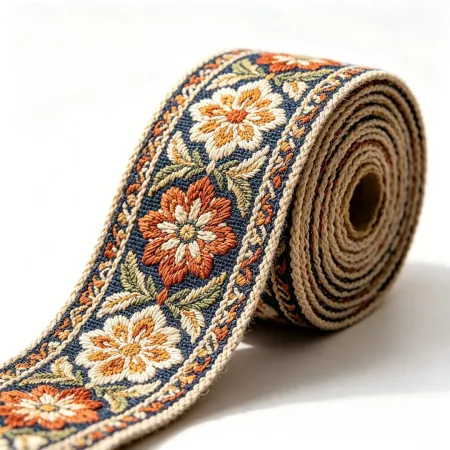
Premium totes are developed through the custom spec bag programme, with the decoration options illustrated by the organic cotton tote with embroidered logo. A jacquard strap can carry a mark onto the handle, as shown in the jacquard cotton webbing for bag straps, and the testing page lists the reports that come off a production lot.
FAQ: Luxury Canvas Tote Bag
What makes a canvas tote look expensive?
A fine-yarn canvas, an enclosed and pressed seam, a quiet heavy lining, solid hardware and uniform stitching. Fabric weight contributes least of the five and is the one most often specified.
Is a heavier canvas more luxurious?
Not necessarily. A 12 oz canvas woven from a fine yarn feels more refined than a 14 oz canvas from a coarse one, and it is lighter to carry. Yarn count is the variable that separates the two.
Does a luxury tote need a lining?
At this level, yes. An unlined bag exposes its seam allowance, which is the first thing a discerning buyer inspects. A lined bag also holds its shape better and gives a pocket somewhere to live.
Why does the second order always look slightly different?
Because the cloth, the dye lot and sometimes the lining have changed. A sealed retained sample, a shade chip and a recorded stitch programme are the three things that keep a reorder close to the original.
Can a premium tote be made in small quantities?
Yes, though hardware and lining carry their own minimums, and a custom jacquard strap has a loom setup. The usual approach is to fix the components across a range so several bags share one component order.
A luxury canvas tote bag is six details and one promise. The details are a fine yarn, an enclosed seam, a quiet lining, heavy hardware, even stitching; the promise is that the fifth hundred bag is the same as the first. Only one of those six is visible in a photograph, which is why the category rewards buyers who specify operations rather than materials.
Why Xinxiangrui for Luxury Canvas Tote Bag
Xinxiangrui Webbing builds a luxury canvas tote bag the same way it builds every other bag, with one addition that matters at this level: a batch number that ties the cloth, the dye lot, the handle strap and the test report together. The strap is woven on site to 2000N+ break strength, cloth and strap are dyed to one standard in one Dongguan plant, and a sealed sample is retained per colourway so the next order has something to match. Tell us your bag spec and a matched construction comes back to you.