Polyester Ribbon Manufacturer: What a Quotation Should Say
A polyester ribbon manufacturer and a trader can send the same one-line quotation, and the difference between them is not visible until the second order. A trader quotes a description: a width, a colour and a number. A manufacturer quotes a construction: the yarn, the weave, the finished width, the weight, the finish and the put-up, because those are the things it sets on its own machines and can therefore state. The document is the product, in the sense that it is what makes a reorder possible.
This guide covers what a construction quotation contains and why each line exists, which of them a buyer should insist on, how fifteen years of narrow fabric work turns into a document rather than a claim, six lines worth requesting before an order, and the two things a quotation cannot tell you.
Polyester Ribbon Manufacturer: The Lines Behind a Number
A ribbon can be described at several levels of precision, and each level costs nothing to write and a great deal to reconstruct later. The table below is what a manufacturer can state because it controls the process at each step.
| Line | What it fixes | What is lost without it |
|---|---|---|
| Yarn and count | The fibre, the filament or spun type, and the thickness | The same width in a different count looks similar and feels different |
| Weave and sett | Plain, twill, satin or rib, and the density of ends and picks | The shine and the hand, which are the two things a customer judges first |
| Finished width | The number measured after folding, relaxation and finishing | A loom width that is 1 mm out arrives as a product that is 1 mm out |
| Weight per metre | How much material a metre contains, and what a roll weighs | Freight and packaging declarations estimated rather than known |
| Finish | Whether the hand comes from the weave or from a treatment | A treated ribbon that softens in humidity and adds a material to the list |
| Put-up and cut | Roll length, core, and whether the ends are sealed or open | A correct ribbon delivered in a format the bench cannot use |
None of these lines is confidential and none of them is proprietary in any meaningful sense. They are simply the record of decisions a manufacturer made, and writing them down is what allows a second order to be the same product as the first. A supplier who will not put them in writing is either unwilling to commit or unable to look them up, and both are useful to know before placing an order rather than after.
A quotation you can hand to a second supplier
The practical test of a construction quotation is portability. If the document is complete enough that another weaver could quote against it and produce something close, it describes a product. If it could only be understood by the supplier who wrote it, it describes a relationship.
Three Things Fifteen Years Produces
A repeat that is a lookup
A plant that has woven narrow fabric since 2011 has run most of the constructions its customers ask for, and running one again is a matter of finding the card rather than developing a sample. The visible benefit is speed on a repeat order; the less visible one is that a repeat made from a card is the same product, whereas a repeat made from memory is a new one that resembles it. Fifteen years is not experience as a virtue, it is a shelf that can be consulted.
A list of what will not work
A manufacturer that has made the same mistakes as everyone else knows which combinations fail: a fold too narrow for a pale shade, a wire too light for a wide arch, a finish that stiffens in a container. That knowledge shows up as a counter-proposal rather than a refusal — a suggestion to widen the fold, or to change the body rather than the wire. A supplier who accepts every request without comment has either tested everything or tested nothing.
A standard for each customer
Long relationships accumulate approved pieces, and those pieces are how drift is detected. A customer who has bought the same red for six seasons has a series of standards on a rack, and a delivery is compared against the last approved one rather than against a description. This is the quiet advantage of an established manufacturer: not that the colour is better, but that the argument about whether it has changed can be settled by holding two pieces side by side.
Six Lines to Request Before Ordering
- The construction, in writing — yarn, weave, sett, width and weight on one page, whatever the order size.
- The measured width and its tolerance — a nominal figure with a band is a specification; without one it is a hope.
- Whether the hand is woven or finished — the answer changes the material list and the behaviour in humidity.
- The lot basis — whether a delivery will be one dye lot or several, since several means visible seams in a long run.
- The retained standard arrangement — who keeps the approved piece, and for how long.
- What happens if the yarn runs out — a substitution policy agreed in advance prevents a silent change mid-order.
The sixth line is the one nobody thinks to ask and most buyers eventually need. A yarn that runs out in the middle of a long order is a real event, and what happens next is either an agreed substitution with a notification or an unannounced one that shows up as a shade difference in the middle of a roll. A manufacturer with a written policy will tell you which; one without a policy will decide at the time.
- Ask for the sheet before the sample — a construction can be reviewed; a sample can only be admired.
- Keep your own copy — the buyer's copy is what makes a second supplier possible.
- Compare sheets, not samples — two samples look alike; two sheets show whether they are the same product.
- Check the weight line first — a heavy ribbon and a light one rarely behave alike, whatever the width says.
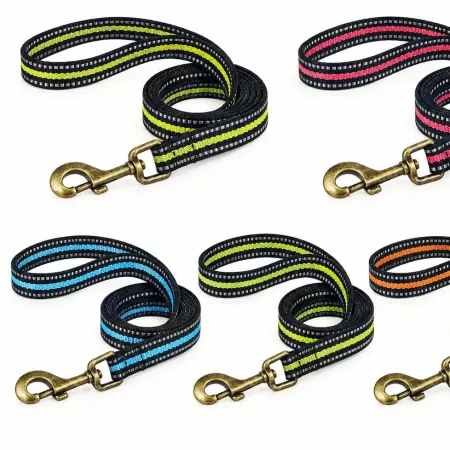
The construction sheets here cover the polyester ribbon range and the polyester webbing that shares its looms and its yarn store, and both appear in the wider catalogue under the same lot discipline. A 25 mm webbing base clears 2000N and is written down as such; a ribbon's figures are written down in the same way, on the same kind of page.
Two Things a Quotation Cannot Tell You
Whether the document matches the machine
A sheet can be copied from a previous customer's specification and sent without anyone checking that the plant can still run it. The way to close that gap is to ask for the first delivery to be accompanied by the measured width and weight of the actual lot, which turns the document into a claim that can be verified against the goods. A supplier who finds that request unreasonable has told you something about the document.
Whether the third order will match the first
Consistency is not a property of a single delivery and cannot be quoted. It shows up in the third and fourth order, when yarn lots have changed and the novelty of a new customer has worn off, and the only evidence available in advance is the retained standards from other customers and a written substitution policy. Both are documents rather than assurances, which is why they are worth asking for at the quotation stage.
FAQ: Polyester Ribbon Manufacturer
How do I know if I am talking to a manufacturer?
Ask for a construction sheet and a measured weight. A trader can describe a ribbon; a manufacturer can state what it set on its own machines.
Is a construction sheet confidential?
The general lines are not. A specific development for one customer may be, and it is reasonable for a supplier to say so rather than to refuse the whole document.
Why does the weight matter so much?
It is the single figure that separates two ribbons of the same width most reliably, and it drives both the hand and the freight.
What if the manufacturer will not share the sett?
Ask instead for the weight, the weave name and the finished width. Those three carry most of the information and are rarely refused.
Does a larger order get a better document?
It should not. A construction sheet costs a few minutes and protects both sides on any size of order.
A polyester ribbon manufacturer is distinguished by the document it can send before the goods. Ask for the construction, check the measured width, and keep your own copy; that page is what makes the second order the same product.
Why Xinxiangrui as a Ribbon Manufacturer
The page sent before the goods is how a polyester ribbon manufacturer is judged, and the pages have been filled in here since 2011 from a single 8,000+ m² plant in Dongguan. Yarn, beam, loom and dye line are all in house, so every line on the sheet is something the plant set rather than something it was told. Send us the width, the shade and the finish, and we reply with a construction.