1.5 Inch Cotton Webbing: Why the Middle Width Is the Hardest to Hold
1.5 inch cotton webbing sits between the two widths everyone knows. At 38 mm it is wide enough to carry a shoulder load and narrow enough to pass through ordinary hardware, which is exactly why it is specified on slings, duffel handles, apron ties and camera straps — and why it is the width that most often arrives with a fault in the middle rather than at the edge.
A wide strip is not a narrow strip scaled up. The shuttle travels further, the weft tension differs from selvedge to centre, and the same sett that reads dense at 25 mm reads open at 38 mm. This guide covers what changes with width, which hardware actually fits, and why weaving, dyeing and finishing in one plant matters more at this width than at any other.
What Changes When the Strip Gets Wider
Four things shift as width increases, and three of them are invisible in a photograph of the finished roll.
- Weft tension across the width — the pick is laid from one selvedge to the other, and the centre of a 38 mm strip receives slightly less tension than the edges. On a loose sett this shows as a soft band down the middle that takes dye unevenly.
- Ends, not density — keeping ends per inch constant doubles the yarn in a strip that is twice as wide, so a 38 mm strap at the same sett is heavier and stiffer than its 25 mm sibling, not merely wider.
- Edge curl — a wide plain weave wants to cup, because the selvedge has a different crimp from the body. Tucked edges control it; a cut edge on a wide strip curls visibly.
- Fold behaviour — a 38 mm strip folded over a ring or through a buckle forms a wider radius and a longer leg. The fold is where a strap wears, so thickness at the fold decides the service life.
The table sets out how the same nominal specification behaves at two widths, which is the reason a mill cannot simply widen the reed and call it done.
| Property | At 25 mm | At 38 mm |
|---|---|---|
| Hand feel at the same sett | Soft, folds easily, suits a handle | Noticeably boardier; resists a tight fold |
| Tensile for the strip | Around 2000N in a standard construction | Higher in proportion to ends added, until the seam becomes the limit |
| Centre band risk | Low; the shuttle reaches both edges quickly | Visible on loose setts; shows after dyeing |
| Hardware availability | Universal; every supplier stocks it | Good for rings and sliders, thinner for buckles |
Thirty-Eight Millimetres Is Not the Same Order as an Inch and a Half
An inch and a half is 38.1 mm. A metric buyer writes 38 mm and a trading company writes 1.5 inch, and the two arrive at the same order description with a tenth of a millimetre of daylight between them. That tenth is usually harmless; what is not harmless is the assumption that the strip is 38 mm wide when a 38.1 mm reed was used and the dye shrinkage was not compensated.
The fix is procedural rather than technical. State the width finished, state the tolerance, and state the hardware slot the strap has to pass through. A D-ring with an internal width of 40 mm takes either figure happily; a metal slider with a 38.5 mm slot takes one and binds on the other. Buyers who measure the hardware before writing the enquiry avoid the entire discussion.
Why 1.5 Inch Cotton Webbing Is a One-Site Product
Yarn, loom, dye line and finishing sit on one site at Xinxiangrui's Dongguan plant, and at this width that arrangement removes a specific problem. A wide cotton strip is sensitive to handling between processes: it creases if it is rolled tight while damp, it cups if it is dried under uneven tension, and its centre takes dye at a slightly different rate from its edges.
- Greige width is set for the finished width — the allowance is chosen against the actual dye recipe, not a rule of thumb, because a heavy shade draws in more than a pale one.
- Tension is held through the line — a wide strip that goes slack between the loom and the dye bath comes out with a wave along one edge that no amount of pressing removes.
- A width change is a work order — moving from 38 mm to 40 mm or from natural to a dyed shade is a single instruction inside the plant rather than a conversation between three suppliers who each blame the other.
- Hardware is fitted on the same site — rings, sliders and hooks are assembled in-house, so the strap can be tried in the actual part before the run is signed off.
Ask for the greige width, not just the finished width
When a mill quotes a finished width it is quoting an outcome. Ask what greige width it will weave to reach that number after dyeing, and ask how much the last comparable shade drew in. Two answers that agree with each other tell you the allowance was calculated; an answer that repeats the finished figure tells you it was assumed.
Three Failures Specific to the 38 mm Width
A wave along one selvedge
This is a tension fault, not a weave fault, and it appears as a strip that will not lie flat on a table. On a narrow width the same fault is absorbed by the cloth; at 38 mm it becomes a visible ripple that ruins a finished strap. Once the cloth is off the line the wave is permanent, so the only cure is preventing it — which means the loom and the dye line have to be run by the same people.
A shade that splits across the width
A wide strip dyed on a continuous line can pick up a slightly different depth at the centre if the liquor flow is uneven. On a 25 mm strap nobody notices; on a 38 mm strap folded into a handle, the two halves of the fold are the centre and the edge, and the mismatch becomes a visible band at the exact point the customer looks at.
A hard fold that cracks the finish
A thicker, denser strip folded over a 4 mm ring puts a lot of strain on the outer face of the fold. If the finish is stiff, the outer yarns break and the strap shows a white line within weeks. Softening the finish or reducing the sett at the fold area costs less than replacing the handle later.
Ordering Notes for the Middle Width
- Decide inch or metric before quoting — 38 mm and 38.1 mm are different orders with different reeds.
- Send the hardware — a physical ring or slider settles width and thickness at once.
- Name the fold radius — the thickness that survives a 4 mm ring is not the thickness that survives a 10 mm one.
- State the sett and the yarn count — these two numbers decide whether 38 mm feels like a strap or like a belt.
- Agree the roll length — wide strips are cut on a different table, and a roll that suits a 25 mm cutting plan may not suit a 38 mm one.
The width is the least interesting part of this product. What decides the outcome is whether the mill controls the greige width, the dye draw-in and the fold behaviour as one decision — which is the argument for a single site rather than a broker with three contacts. The cotton webbing range covers the adjacent widths, the heavy twill handle strap shows how sett changes hand feel at a similar weight, and sampling runs through OEM and ODM development.
FAQ: 1.5 Inch Cotton Webbing
Is 1.5 inch the same as 38 mm?
Close but not identical: 1.5 inch is 38.1 mm. For rings and most sliders the difference does not matter. For a buckle or a slider with a tight slot it can, so state the finished width and the hardware slot rather than the trade name alone.
What is 1.5 inch cotton webbing used for?
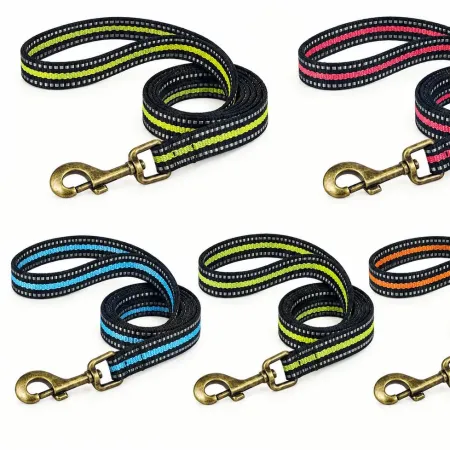
Shoulder straps on duffels and instrument bags, apron ties, camera and guitar straps, pet leads, and the load straps on soft luggage. It is the widest width that still feels like a strap rather than a belt, which is why it appears wherever a shoulder carries weight.
Why does a wide cotton strap cup at the edges?
The selvedge has a different crimp from the body of the cloth, so a plain weave wants to curl towards the face. Tucked edges control it by adding structure at the boundary; a cut edge on a 38 mm strip will cup and stay cupped.
Can the same sett be used as a 1 inch strap?
It can, but the result is a denser, stiffer product rather than the same product wider. If the 25 mm strap was chosen for its soft hand, the 38 mm version needs a lower sett or a finer yarn to keep that hand.
Does a wider strip need a different stitch?
Yes, in two respects: the box-X grows, so the stitch count per leg rises, and the needle has to penetrate more layers at the fold. A size 90 needle with a polyester-core thread at eight to ten stitches per inch holds well on this width.
The middle width is unforgiving because every tolerance has room to show. Greige width, dye draw-in, edge structure and fold radius are four decisions that are cheap to make at the enquiry stage and expensive to discover in a finished handle.
Why Xinxiangrui for 1.5 Inch Cotton Webbing
At Xinxiangrui's 8,000+ m² plant in Dongguan, weaving, dyeing, printing and hardware assembly run on one site, so the greige width is set against the actual dye recipe and a 38 mm order is not a conversation between three suppliers. Edge structure, sett and fold behaviour are agreed on the sample and recorded for the repeat. Tell us your strap spec and a matched construction comes back to you.