Pet Leashes Factory: Four Rooms That Answer the Question
A pet leashes factory can be assessed in an afternoon without reading a single certificate, because four rooms in sequence answer most of what a buyer needs to know. The loom hall tells you the width range the plant can actually make, the dye line tells you the size of a colour batch, the sewing floor tells you how a joint is closed and the hardware bench tells you whether the fittings are assembled or merely bought in and boxed.
This guide covers the four rooms and what each one reveals, why the width range is decided by looms rather than catalogues, why the dye line sets the smallest colour a buyer can order, six lines a factory visit should answer, and the one question that separates a manufacturer from a trader before you leave the car park.
Pet Leashes Factory: Four Rooms in Sequence
The order of the walk matters, because each room consumes the output of the previous one and the questions get narrower as you go.
- The loom hall — needle looms and their reed space, which together decide the widths that can be woven without re-engineering.
- The dye line — a continuous high-temperature range, and the batch size below which a colour stops being economical to run.
- The sewing floor — where the handle loop and the hook end are closed, and where the tack is either controlled or improvised.
- The hardware bench — where hooks, rings and swivels are fitted, and the difference between assembly and repacking.
| Room | What to look at | What it tells you |
|---|---|---|
| Loom hall | Reed widths and what is on the machines today | The real width range, and whether your width is normal here |
| Dye line | Batch size and how a shade is measured | The smallest economical colour run |
| Sewing floor | A tack being run and the first piece of the day | Whether the joint is specified or operator-dependent |
| Hardware bench | Whether fittings are swaged, sewn or clipped on | Whether the product is assembled here or elsewhere |
The number you can check on the way round
A 25 mm band clearing 2000N is the figure most often quoted for narrow fabric of this kind, and it is verifiable on the same bench that runs the routine tests. Asking to see that pull performed on a roll from your own order is a reasonable request, and the answer says more about the plant than a folder of certificates.
Three Rooms That Decide What You Can Order
The loom hall sets the width range
A catalogue may list forty widths, and the looms decide which of them are ordinary and which require a reed change or a new warp. A width that is standard here is one that can be scheduled quickly; a width that is unusual is one that shares a machine with nothing else and waits. Walking the hall and seeing which widths are actually running answers the question a catalogue cannot, and it is why the same nominal product can be fast from one factory and slow from another.
The dye line sets the smallest colour
A continuous dye range runs a batch, and a batch has a minimum below which the colour stops being worth setting up. That minimum, not the weaving minimum, is usually what limits a small brand's colour range: they can afford a short weaving run and cannot afford a short dye run. Knowing the batch size before choosing twelve shades prevents the plan that collapses at the sampling stage.
The sewing floor sets the joint
Every lead has a handle loop and a hook end, and both are closed by a bar tack. Whether that tack has a specified stitch count, a specified thread and a second row, or is whatever the operator does by habit, is visible in ten seconds. A floor with a sample of the specified tack pinned at each station is a floor with a controlled joint; a floor without one is relying on memory.
The hardware bench is the room that most often exposes a trader. Swaging a hook onto a lead takes a press and a die; clipping one on takes a pair of pliers. Both exist, and only one produces a joint whose strength can be repeated, so watching a fitting being attached tells you whether the rating printed on the hook means anything at all.
Six Questions for a Factory Visit
- Which widths run here routinely — and which need a changeover, because the answer determines how a reorder is scheduled.
- What the smallest dye batch is — the real constraint on a colour range, and it is often larger than buyers expect.
- How the tack is specified — thread, stitch count and rows, and where that specification is posted on the floor.
- Which parts are made and which are bought — band, dye, print and assembly, since a trader will have fewer answers than four.
- What is tested on site — and whether the report describes a production roll or a retained sample from another year.
- How a colour change is handled — a work order inside one site, or a purchase order to somebody else, which is the difference that matters most on a repeat order.
The sixth question is worth asking twice, because it is the one where a trader and a manufacturer give visibly different answers. If a colour change generates a purchase order to a third party, the lead time and the shade control both belong to that third party, and the visit has told you that the product is being coordinated rather than made.
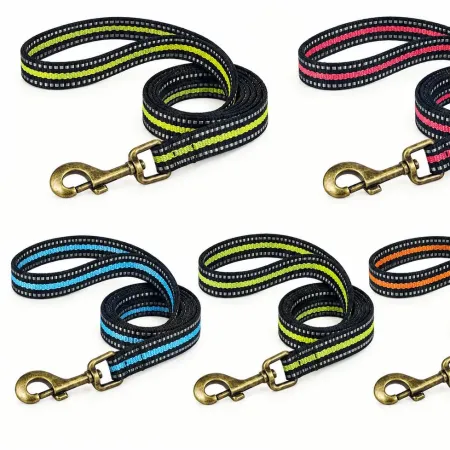
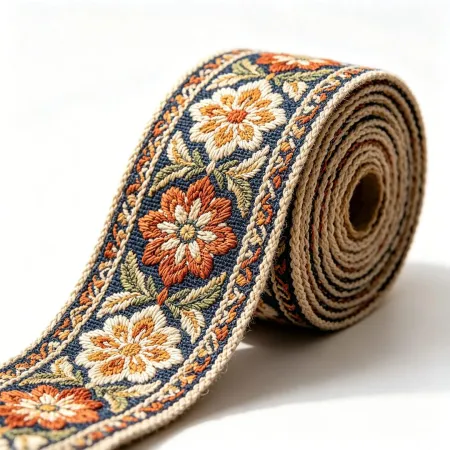
On a visit, the band is a nylon webbing construction at the widths the market uses, cut and closed into a lead, with a polyester webbing option for sun-heavy climates. The laboratory is where the tensile, abrasion and colour fastness figures come from, and it is worth seeing rather than hearing about. The lead range shows what a standard model looks like before any development, and the OEM route explains what changes when a design is brought in.
The warehouse is the fifth room, unglamorous and informative. Rolls standing on end rather than lying flat, labels facing the aisle and a retained standard for each shade are the habits of a plant that expects a customer to check its work rather than a certificate body to sign it off.
Two Things a Visit Cannot Tell You
What the showroom is hiding
A showroom is arranged, and the pieces on it are the best of what the plant can do. The useful comparison is between a sample from the showroom shelf and a piece taken from a carton in the warehouse, because the second is what a customer will receive. When those two are indistinguishable, the process is controlled; when they differ, the showroom is a demonstration of capability rather than of routine output.
How the plant behaves in a busy month
Every factory looks orderly on a quiet day. The interesting questions are about the week before a holiday, when several customers want their orders at once, and the answer is usually found in how the schedule is communicated rather than in the machines. A plant that can tell you which week your order will be woven, and can say so before you ask, is a plant that will still be answering emails in the busy season.
FAQ: Pet Leashes Factory
What should I ask to see first?
The loom hall, because it tells you which widths are ordinary. Everything else on the visit is a refinement of that answer.
How do I spot a trader?
Ask how a colour change is executed. A manufacturer answers in work orders and machines; a trader answers in suppliers and schedules that are not theirs.
Does the sewing floor matter?
It is where a lead actually fails. A posted tack specification at each station is the quickest sign that the joint is controlled.
Should I ask for a test during the visit?
Yes, on a roll from your order. A pull performed while you watch is a different kind of evidence from a report in a folder.
Is a large factory always better?
Not for a narrow product. What matters is whether your width is routine, your colour fits a batch, and the joint is specified.
A pet leashes factory is four rooms and six questions. Walk the looms, the dye line, the sewing floor and the hardware bench, ask what changes when the colour changes, and the answer will tell you what you are buying.
Why Xinxiangrui for Pet Leashes Factory Work
Established in 2011 in Dongguan, this site has spent fifteen years on narrow woven fabric, and the four rooms a buyer wants to see are all on one 8,000+ m² campus. Weaving, dyeing, printing and hardware assembly run inside the same plant, so a width change, a colour change and a fitting change are work orders rather than purchases. Send us the drawing, the width and the target market — we reply with a construction.