Hook and Loop Fastener Manufacturer: Three Translations
A hook and loop fastener manufacturer does one job that a trader cannot: it turns a sentence into a construction. "It has to hold a folded blanket" is a sentence; a face length, a hook geometry, a loop weight and an overlap are a construction. The gap between the two is where most sourcing goes wrong, and it is closed by technical people rather than by a catalogue.
This guide sets out the three translations that happen in every order, what a manufacturer needs to hear before it can quote honestly, and how to tell whether the supplier in front of you is doing that work or passing your sentence along.
Hook and Loop Fastener Manufacturer: The Three Translations
Every brief arrives as a description of a product, and leaves as a set of process settings. Between those two states sit three translations, and each one can be done well or skipped.
- Load into overlap — a described weight becomes a face length and a minimum overlap, because the closure is chosen by area engaged rather than by adjectives.
- Use into grade — washing, dirt, cold or repeated opening becomes a hook geometry and a loop bulk, not a strength figure.
- Colour into dye class — a shade becomes a dye chemistry with fastness consequences, and the consequences are the part a buyer usually has not considered.
- Format into converting — a roll, a strip, a die-cut piece or a sewn assembly, each with a different tolerance and a different tool.
| What the buyer says | What it has to become | Who decides |
|---|---|---|
| "It must hold firmly" | Overlap and width, then a peel figure | Both, together |
| "It gets washed weekly" | Loop bulk that resists matting | The mill |
| "It must match this bag" | A dye class and a fastness set | The dyer |
| "We need it in pieces" | A die, a cut tolerance and a count | The converter |
A manufacturer that only quotes is not translating
A quotation for a width and a length can be produced from a catalogue without anyone reading the brief. A translation produces questions instead: how much overlap does the design allow, what temperature does it see, what does it touch. The presence or absence of those questions is the clearest early signal of what kind of supplier is on the other end.
Three Questions a Manufacturer Should Ask
What does the closure touch
A closure that touches knitwear, skin, upholstery or a polished surface has a constraint no strength figure captures: the hook face is abrasive and the loop face is a magnet for fibre. Knowing what sits against the product decides hook geometry before it decides peel. A supplier who never asks this question is designing for a shelf rather than for a use.
How often does it open
A closure opened twice a day and one opened forty times a day are different products even when they look identical. Cycle count decides whether the standard grade is adequate, whether a high-cycle hook is worth its extra stiffness, and how the retention figure should be measured. It also decides the answer to a question buyers rarely ask: whether the closure will still be the closure in a year or whether the strap will have taken over.
What happens at the end of the range
Adjustable products fail at their extremes, and a manufacturer who asks about the smallest and largest sizes will design the face length differently from one who designs for the middle. That question costs nothing and prevents the most common complaint in the category, which is that the product fits most people and fails the ones at either end.
Six Lines That Make a Brief Quotable
- The product and what it holds — one sentence, in the buyer's own words, before any dimensions.
- Width, face length and overlap — three numbers that define the closure far better than a single strength target.
- The service condition — wash, dirt, sunlight, cold or abrasion, named as the environment rather than as a test.
- The attachment — sewn, bonded or welded, with the width that method consumes.
- The format — roll, strip or piece, and who owns the die if there is one.
- The approval route — which sample, whose signature and what happens to the next revision.
A brief with those six lines gets a useful reply from any real manufacturer, and it also exposes the ones that are not. The reply will contain numbers, a proposed construction and at least one question that the buyer had not thought of — usually about the end of the range or about what the hook face will rub against. A reply without a question is a quotation, not an engineering answer.
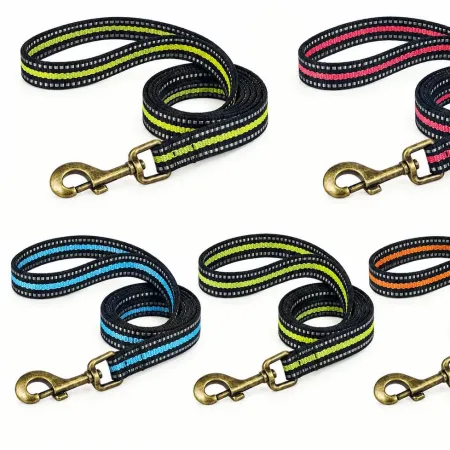
Most orders in this category are not the closure alone. A closure is sewn to a strap, and the strap is the structural part: a standard polyester webbing or nylon webbing construction clears 2000N across its width while the closure holding it is rated in peel at a stated overlap. A manufacturer that makes both can hold one conversation about the joint, and the test bench reports both against their own methods.
Two Things a Manufacturer Should Refuse
A strength target with no geometry
Asked for a closure that holds a stated mass with no width and no overlap, a supplier has three options: guess, over-engineer, or ask. Guessing produces a part that fails; over-engineering produces one that cannot be opened; asking produces a specification. A manufacturer that accepts the target silently has chosen one of the first two without saying which.
A delivery date before the sample
Dates quoted against an unapproved sample are dates about nothing. The honest sequence is sample, signature, then date, and a supplier who offers the third before the second is either optimistic or has not understood the brief. The same logic applies to the strap beside the closure, which cannot be dated until its construction is fixed.
Tolerances belong in the brief as well, and they are usually absent. A width held to a fraction of a millimetre, a face length held to a couple of millimetres, a colour held to a chip: each of those is a decision that costs something and that a buyer has to make before a quotation can be honest. A brief that states no tolerance is not more flexible; it is leaving the decision to whoever runs the slitting that day.
The same applies to packing. A closure supplied in a poly bag of a hundred costs less to make and more to use than one supplied in a dispenser box of twenty-five, and the difference lands on the assembly line rather than on the invoice line for material. Manufacturers who know their customers ask which they want, because the answer changes how the last stage is set up, and that stage is where a delivery date is won or lost.
FAQ: Hook and Loop Fastener Manufacturer
What should I send with a first enquiry?
The product, its width and face length, what it has to hold, how often it opens, and the conditions it meets. A photo of the intended assembly helps more than a paragraph of description.
Why do two manufacturers quote very different strengths?
Because they measured different things, at different overlaps, with different peel angles. The figures are not wrong; they are incomparable until the method is named.
Should a manufacturer also make the strap?
It helps, because the closure and the strap meet at a seam and that seam is where a product usually fails. One supplier for both means one conversation about the joint rather than two.
Is a factory visit necessary?
Not for a first order, and useful before a second. Seeing the dye line and the bench answers questions that correspondence cannot, and it is a fair request of any manufacturer claiming to make rather than buy.
What is a reasonable reply time?
A technical answer to a complete brief takes days rather than hours, because it involves a dye decision and a sample. A quotation that arrives in an hour is usually a quotation about a different product.
A hook and loop fastener manufacturer earns the name by translating rather than quoting: load into overlap, use into grade, colour into dye class, format into converting. Ask for that translation explicitly and the difference between a mill and a catalogue becomes obvious in the first reply.
Why Xinxiangrui for Hook and Loop Fastener Manufacturer
Translating a sentence into a construction is easier when the people who set the loom sit beside the people who answer the enquiry, and on this site they do: a hook and loop fastener manufacturer order is written as a weave, a width, a hook geometry and an overlap, each traceable to the lot that made it, with the strap beside it clearing 2000N on the same bench. Tell us what the closure must hold and what it will touch, and the reply comes back as a construction rather than a quotation.