Biodegradable Bio-Based Webbing: The Claim That Needs a Condition Attached
Biodegradable bio-based webbing is the most over-promised product in the narrow fabric category, and the problem is grammar rather than chemistry. A material is not biodegradable; it is biodegradable under stated conditions, within a stated period, to a stated standard. Remove the conditions and the word becomes a marketing liability.
This guide separates bio-based from biodegradable, explains what a compostability claim actually requires, and sets out how to write a specification that survives a regulator, a retailer and a customer who reads the label carefully.
Three Words That Are Not Synonyms
Most of the confusion in this category comes from treating three different properties as one. They are independent, and a product can have any combination of them.
- Bio-based — describes where the carbon came from. Plant-derived feedstock, measured as a share of the carbon in the material. Says nothing about what happens to the product after use.
- Biodegradable — describes what microorganisms do to the material, and only under defined conditions of temperature, moisture, oxygen and time. Almost every material is biodegradable eventually; the useful question is how long and where.
- Compostable — a stricter claim. It means the material disintegrates, biodegrades at a specified rate, and leaves no ecotoxic residue or heavy-metal load above a limit, verified against a recognised standard.
- Recycled — a fourth, separate axis. Recycled content and bio-based content can coexist in one yarn, but neither one implies the other, and neither implies biodegradability.
The table maps common label wording to what it actually requires and to the failure that follows when the requirement is skipped.
| Wording | What it requires | What goes wrong without it |
|---|---|---|
| Contains bio-based material | A measured share of plant-derived carbon on the yarn specification | A figure nobody can reproduce, which invites a challenge on the first audit |
| Biodegradable | A stated environment and timeframe, supported by a recognised test | A customer who buries the strap and finds it intact a year later |
| Industrially compostable | Disintegration, biodegradation and ecotoxicity results plus a heavy-metal limit, against a compostability standard | A claim that fails because the certificate covers a film, not a woven strap with dye in it |
| Home compostable | A separate certification at lower temperatures over a longer period | An industrial certificate used to imply a garden bin will accept it |
| Marine degradable | A specific marine-environment test with a stated result | A claim no laboratory in the supply chain has ever supported |
| Eco friendly | Nothing enforceable on its own; it needs a specific, evidenced attribute behind it | A claim that regulators in several markets now treat as unsubstantiated by default |
Why a Woven Strap Is Harder Than a Film
Most compostability certificates in circulation were issued for film, cutlery or bags. A dyed, woven, edge-sealed strap is a harder case, for three reasons.
The blends undermine the claim
Compostability is assessed on the whole article. A strap woven from a compostable yarn with a small percentage of a conventional polyester for strength is no longer a compostable article, however small that percentage looks on a line card. The test does not recognise good intentions; it measures the residue.
The dye and the finish are part of the article
A certificate issued for a natural-coloured yarn does not automatically cover the same yarn dyed to a deep shade or finished with a water repellent. Ecotoxicity and heavy-metal limits apply to the finished article, which means the certificate has to describe the finished article, in the shade, at the width, with the edge finish.
Landfill is not a composting environment
This is the sentence that turns a green claim into a complaint. A material certified for industrial composting needs sustained heat and microbial activity to break down. Buried in a landfill, deprived of oxygen and held at ambient temperature, the same material can remain recognisable for a very long time. Any claim that implies otherwise will eventually be tested by a customer with a garden.
Ask for the certificate's scope page, not its logo
A compostability certificate names the material, the thickness or weight range, the test standard, the pass criteria and the conditions of the test. The page with the logo is the least informative page in the document. Read the scope; if it names a film of a certain thickness, it does not cover a 25 mm woven strap.
How to Write a Claim That Can Be Defended
Four conventions make the difference between a claim that survives scrutiny and one that becomes a legal conversation.
- State the condition, not just the property — "designed for industrial composting to standard X" carries meaning; "biodegradable" on its own carries none. The condition is the claim.
- Keep bio-based and end-of-life separate — the feedstock percentage and the disposal route are two different sentences and should never be run into one.
- Say what the article is not — a short line stating that the strap is not intended for home composting, or that it should be recycled where facilities exist, prevents the most common misreading.
- Attach the document reference — the standard applied, the report reference and the date. A claim with a reference behind it is answered in an email; a claim without one is answered by a lawyer.
Six Questions About a Biodegradable Claim
Ask these of any supplier offering a biodegradable strap, and note how quickly the answers arrive.
- Which standard, and which edition? — compostability standards have versions, and a result against an outdated edition may not be accepted by a retailer's compliance team.
- In which environment, at what temperature, over what period? — the answer should be specific enough to be printed on a label without further editing.
- Does the scope cover a woven strap in this weight? — a film certificate does not transfer, and a thinner strap is not automatically included in a thicker one's scope.
- Does it include the dye and the edge finish? — ecotoxicity and heavy-metal limits apply to what leaves the plant, not to the yarn that enters it.
- What happens if the strap is blended? — any conventional component changes the article's classification, and a supplier should say so before the order rather than after.
- What should the customer do with it afterwards? — the disposal instruction is part of the product. A strap with no stated route ends up in the wrong bin, and the claim is wasted.
What to Test, Whatever the Claim
End-of-life claims get the attention, but a strap still has to perform for its entire service life first. Three test groups belong in every file, regardless of what the label says.
- Mechanical — tensile to 2000N+ break strength on load-bearing constructions, plus Martindale abrasion past 50,000 cycles where the strap rubs. A strap that fails early never reaches the disposal question.
- Environmental — UV ageing beyond 1,000 hours with the shade shift held under a visible threshold, and colourfastness to wash and rub on the production shade. Bio-based feedstock does not exempt a strap from sunlight.
- Chemical — skin-contact and heavy-metal limits appropriate to the market, on the finished article, with the certificate naming the article rather than the company.
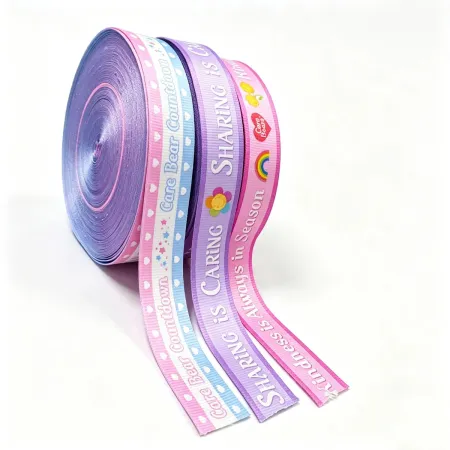
Lower-fossil options are collected in the bio-based webbing range, including a printed bio-based roll for gift packaging, and the conventional polyester webbing line remains the benchmark against which any new construction is measured. The testing page sets out which methods run in-house.
FAQ: Biodegradable Bio-Based Webbing
Does bio-based mean biodegradable?
No. Bio-based describes the origin of the carbon; biodegradable describes what microbes do to the material in specific conditions. Partially bio-based polyester is bio-based and not biodegradable in any practical timeframe, and that is entirely normal.
Will a biodegradable strap break down in a landfill?
Not in any useful timeframe. Compostability results depend on sustained heat and microbial activity that a landfill does not provide. Any claim that suggests otherwise will eventually be tested by a customer, and the answer is better given on the label than in a complaint thread.
Can a compostable certificate for film cover a woven strap?
Usually not. Certificates are scoped to a material, a thickness or weight range, and a set of conditions. A woven strap has different geometry, a different surface-to-mass ratio and usually a dye and an edge finish, all of which fall outside a film scope.
What is the safest claim for a supplier to make today?
A measured bio-based content figure for the yarn, stated with its method, plus a performance result set. That combination is verifiable, useful to a buyer and does not require an end-of-life certification that the article may not have.
Does biodegradability affect strength or shelf life?
It can. Materials designed to break down may also be more sensitive to heat and moisture in storage, and a strap held in a warm warehouse for two years is not the same product as one shipped promptly. If a programme includes long storage, ask for a shelf-life statement in writing.
The honest version of biodegradable bio-based webbing is more modest and more valuable than the marketing version: a measured plant-derived share, a defined disposal route with the conditions stated, and a performance file that proves the strap does its job first. Attach the condition to the claim and it becomes an asset. Leave the condition off and it becomes a risk with a logo on it.
Why Xinxiangrui for Bio-Based Webbing
Ask Xinxiangrui Webbing which part of a biodegradable bio-based webbing claim it can support with a document and which part belongs to the yarn supplier, because a file with a gap in it is worse than a shorter file. Tensile to 2000N+ break strength, abrasion and UV results are run in our own laboratory against the roll that ships, tied to a batch. Tell us your spec and a matched construction comes back to you.