Cotton Webbing Manufacturer: Four Capabilities That Cannot Be Resold
A cotton webbing manufacturer is a loom list, a dye line and a laboratory, in that order. Everything else in a quotation — the samples, the certificates, the photographs of a clean floor — can be arranged by anyone with a phone and a forwarding address. The distinction matters because the four capabilities that decide whether your order repeats are the four that cannot be resold.
This guide sets out those four capabilities, the questions that reveal whether they exist, and what fifteen years of running narrow looms in one place actually contributes to a specification. It is written for buyers who have received three similar quotations and need a way to tell them apart.
Four Capabilities That Cannot Be Resold
Each of these produces something a trading company has to buy in, and each leaves a trace a buyer can ask for.
- The looms — narrow fabric needs needle looms set for a specific width. A mill can tell you how many, of what reed range, and which widths are running this week. A trader cannot, because the answer changes with whoever they bought from.
- The dye line — a continuous high-temperature line is a capital asset with a footprint. Ask what the line's minimum run is and what shades were dyed last week; a mill answers from a schedule.
- The laboratory — tensile, abrasion and light ageing equipment, and someone who runs it. The tell is not the certificate but the specimen: a lab can produce the individual readings behind a mean.
- The sett — the accumulated workshop knowledge of which density suits which width and yarn. This one cannot be bought at all, and it is the reason two mills quoting the same width produce different hand feel.
The table pairs a question with the two kinds of answer it produces, which is usually enough to place a supplier in one category.
| Question | Answer from a reseller |
|---|---|
| Which reed will you use for 38 mm? | "Standard 38 mm" — no reed figure, no greige width |
| What did the last lot of this shade test at? | A catalogue figure, with no lot number or date |
| Can I see the specimen readings? | A certificate forwarded from the mill they bought from |
| Who dyes the cloth? | "Our partner factory" — unnamed, and different each season |
Why One Site Changes the Answer
Weaving, dyeing, printing and hardware assembly on one site is not a marketing line; it changes what can be promised. Three specific things become possible that otherwise involve a negotiation between parties who each blame the other.
- A width change is one instruction — moving from 38 to 40 mm, or compensating the greige for a heavier shade, is a work order inside one plant rather than a conversation between two.
- The dye recipe can be set against the width — draw-in depends on both, so the people who wove the greige are the people who decide the allowance.
- A failed lot can be traced in hours — the beam, the dye bath and the finish are in the same building, so a shade or strength problem can be located rather than debated.
If a visit is possible, the useful observations are unglamorous. Look at the beam storage: beams labelled by width and job number mean the width is planned rather than improvised. Look at the dye line's schedule and count how many shades ran in the past week. Look at the laboratory bench and see whether the specimens carry lot numbers. None of these can be arranged for a single visit, which is precisely what makes them worth looking at.
Fifteen Years in Dongguan: What a Cotton Webbing Manufacturer Accumulates
Established in 2011, Xinxiangrui Webbing has spent fifteen years on narrow fabric in one city, and the thing that accumulates over that time is not a customer list but a set of numbers nobody writes down: the sett that works for each width, the tuck count that keeps a wide edge flat, the draw-in to expect from a heavy shade.
- House setts by width — the density figure that makes a 25 mm strip feel like a strap and a 50 mm strip still drape.
- Edge structures that hold — a tucked edge on a wide strip needs a different pick count from a narrow one, and the wrong count curls.
- Yield expectations — knowing what a roll should weigh for a width and a sett is how a short shipment is noticed before the carton is closed.
- Repeatability across lots — a construction that reached 2000N in the first lot is expected to reach it in the tenth, and the expectation is a production standard rather than a hope.
Ask for a photograph of the beam, not the building
A factory photograph proves a building exists. A photograph of the beam with your width on it, a date and a job number proves your order is on a loom. It is a small request, it takes a minute to satisfy, and it is the single most useful thing to ask for in the first week of a relationship.
Three Signals of a Reseller
Every width is available immediately
A mill has a reed range and a schedule, so some widths are running and others need a setup. A supplier who can ship any width in any colour tomorrow is describing a warehouse, not a loom, and the goods will be whatever was on someone else's shelf.
The certificate does not name the yarn
A scope page that names the mill but not the yarn supplier or the dye house describes a capability rather than a product. Regulated markets ask for the chain, and a reseller cannot supply a chain they are not part of.
Samples arrive without a sett record
A sample that cannot be described in numbers cannot be repeated. Ask for the width, thickness, ends per inch and yarn count alongside the piece; a mill has them on file, a reseller has to go and ask.
Six Questions for a First Enquiry
- How many looms, and what reed range? — a number and a range, not an adjective.
- Is the dye line in the same building? — and if not, whose is it and who schedules it.
- Which tests are run in-house? — tensile, abrasion and light ageing, with the equipment named.
- Can you send the specimen readings for the last lot? — the individual figures, not the mean.
- What is the greige width for my finished width? — the answer reveals whether the allowance is calculated.
- Who signs the retained piece? — a name, not a department.
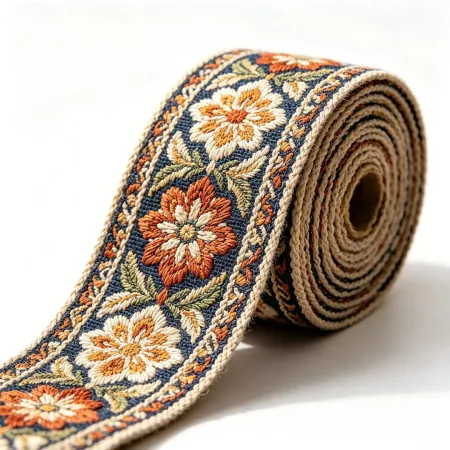
The cotton webbing range shows the widths a narrow mill typically runs, the twill handle construction shows what a house sett produces in the hand, and sampling and colour approval are described under OEM and ODM development.
FAQ: Cotton Webbing Manufacturer
How do I tell a mill from a trading company?
Ask for a reed range, a dye schedule and specimen readings. A mill answers all three from records; a trader answers the first with an adjective and forwards the other two from someone else.
Does the number of looms matter?
Less than the reed range does. Ten looms that cover your widths are more useful than forty that do not, and a mill that runs several widths can keep a programme consistent in hand feel across the range.
What does an in-house laboratory actually verify?
That the roll in the carton meets the figure in the quotation. Tensile to a break strength such as 2000N, abrasion to a cycle count, light ageing to a colour shift, and colour fastness to wash and rub — each tied to a lot rather than to a catalogue.
Can a manufacturer change the weave without a new tool?
Plain, twill and herringbone run on the same looms with a different harness setting, so a weave change is a setup rather than a purchase. A jacquard pattern needs a warp setup of its own, which is why it carries a programme-level commitment.
Is fifteen years of experience measurable?
Indirectly. It shows in the first sample, in how few rounds a construction needs, and in whether the second order arrives like the first. The age of a company is not a specification, but the sett it has accumulated is.
Three quotations for the same width can look identical and represent three different businesses. Looms, dye line, laboratory and sett are the four things worth asking about, and none of them can be forwarded from someone else.
Why Xinxiangrui as a Cotton Webbing Manufacturer
A cotton webbing manufacturer is a loom list, a dye line and a lab — everything else is brokerage. Established in Dongguan in 2011, Xinxiangrui Webbing has run needle looms, a continuous high-temperature dye line and an in-house laboratory on one site for fifteen years, which is why a greige width, a sett and a test result can be answered together. Send us the drawing, the width and the target market — we come back with a loom plan and a sett.