Hook and Loop Fastener for Clothing: What the Care Label Must Say
A hook and loop fastener for clothing fails in a way no other closure does: closed, it is harmless; open in a washing machine, it becomes a small abrasive tool that pulls threads from everything it touches. That is why the care label matters as much as the specification, and why an apparel brief that names only a width and a colour has left the most expensive failure out of the conversation.
This guide covers what a wash cycle actually does to the two faces, why the care instruction is part of the product, how colour and hand are chosen for garments, and which written claims a clothing buyer should be able to support.
Hook and Loop Fastener for Clothing: The Wash Is the Test
Laboratory figures describe a closure opened and closed by hand in a dry room. A garment lives through something else entirely, and the four effects below are what a specification should be written against.
- Lint loading — detergent residue and fibre fill the hook face, and grip drops before any hook breaks.
- Pile matting — heat and agitation flatten the loop, so engagement depth falls even when the face looks intact.
- Snagging — an open closure catches knitwear, lining and lace, and the damage happens to the garment rather than to the fastener.
- Dye bleed — a dark closure against a pale garment in a warm wash is a colour claim waiting to be tested by a customer.
| Care instruction | Why it exists | What to specify |
|---|---|---|
| Close before washing | An open hook face abrades everything | A grade that still grips after matting |
| Wash temperature | Heat sets matting and moves dye | Fastness ratings at that temperature |
| Tumble or line dry | Tumbling is agitation with heat | A loop that resists matting |
| Iron avoidance | Heat crushes or glazes the face | A face that tolerates a warm iron |
The closure damages the garment, not itself
This is what makes apparel different from every other use of the product. A failed closure is a fault on the closure; a closure that snags a jersey in the drum is a fault on the garment, and the garment is the thing the customer returns. The care instruction and the grade selection are therefore a single decision, not two.
Three Choices That Define a Garment Closure
Thin against strong
A low-profile grade is what most garments need, because it bends with the fabric and disappears under a seam. It also engages less deeply, so peel is lower and the closure needs a longer overlap for the same hold. Choosing it is usually right, and choosing it while keeping the original overlap is where garments end up with a closure that slips at the waistband.
Sewn against bonded
Sewing is the normal answer on a garment because it survives washing and does not stiffen the panel. It also puts needle holes into the fabric and compresses the pile along the stitch line, which costs width. A bonded closure avoids the holes but adds a stiff patch and an adhesive that has to survive the same wash, and on thin knits the patch is often visible through the face fabric.
Colour against the garment
A closure is usually matched to the garment, and a matched pair in one fibre is easier than a closure matched to a different fabric, because the two take dye differently and read differently under shop light. Where the closure is meant to disappear, the safer route is to match the undertone rather than the surface, and to approve the pair sewn in place rather than side by side on a bench.
Six Lines for an Apparel Brief
- The grade, named by profile — standard or low-profile, on each face, since a soft loop with a stiff hook is still stiff.
- Fastness at the wash temperature — to water, to rubbing and to light, at the condition the care label will state.
- Cycle count after washing — retention measured after a stated number of washes, not before the first one.
- Seam allowance and needle — how much width the stitching takes and which needle avoids a visible row of holes.
- Colour standard and the pairing — approved as sewn onto the garment, in daylight and under shop light.
- The care instruction itself — the wording the label will carry, agreed by both sides because it defines how the product is judged.
The sixth line is the one that prevents arguments, because a care label is a specification written for the customer rather than for the factory. If the label says close before washing, the closure is being asked to survive matting but not abrasion; if it says nothing, the customer will wash it open, and the snagging that follows will be described as poor quality rather than as misuse.
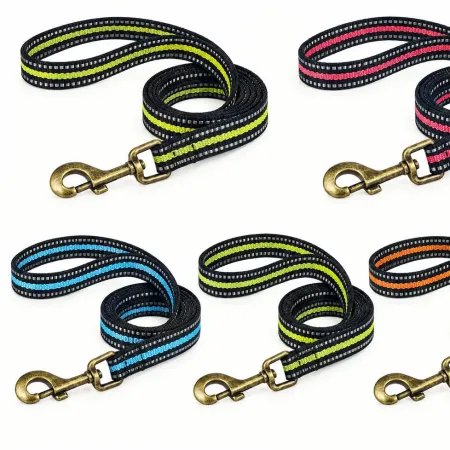
Garment closures often sit beside a drawcord or a binding, and those come from the same narrow fabric family. A polyester webbing tape holds length through washing where a knit cord grows, and nylon webbing gives a softer edge against skin, either clearing 2000N in a standard construction. Fastness and shrinkage readings for both come off the testing bench, measured at the wash condition rather than at room temperature.
Claims a Clothing Buyer Must Support
"Washable" is not a claim
Everything is washable once. The sentence that survives scrutiny names the temperature, the cycle and the number of washes, and pairs it with the reading that was taken afterwards. A buyer who writes that sentence has a specification; a buyer who writes washable has a hope, and the difference surfaces in the first season of returns.
Recycled and fibre claims
Where a closure carries a recycled-content statement, it needs a percentage, a source and a verifier, in the same way an adhesive does. Clothing buyers increasingly print these claims on a swing tag, and a claim that cannot name its source will eventually be withdrawn. The same applies to any statement about the dye or the finish, which is why the declaration belongs with the lot rather than with the catalogue.
Construction decides more than the grade in most garments. A closure sewn between a face fabric and a lining sits on a curve, and the two layers move differently when the wearer bends, so the strip is asked to slide as well as to close. That is why a closure that tests well flat can feel stiff on the body: the test fixture has no curve and no second layer. Sampling the closure inside the actual seam, on a garment that has been worn once, exposes the problem while the pattern can still change.
FAQ: Hook and Loop Fastener for Clothing
Will it survive repeated washing?
The hook and loop faces survive, but grip falls as lint fills the hooks and heat mats the pile. Retention after a stated number of washes is the figure to ask for, not a claim of durability.
Should the label really say close before washing?
Yes, wherever the closure could touch other fabric. An open hook face in a drum abrades knitwear and lining, and the damage is to the garment rather than to the fastener.
Which is better for thin fabrics, low-profile or standard?
Low-profile, because it bends with the cloth and hides under a seam. It grips less, so the overlap has to grow, and that change belongs in the pattern rather than in a note.
Can it be ironed?
Direct heat on the face can crush or glaze it, and on a synthetic hook it can deform the geometry permanently. A cloth over the top and a cool setting is the usual instruction, and one worth printing.
Does a dark closure bleed onto a pale garment?
It can, and the risk rises with temperature and with a deep shade. Fastness to water and to rubbing at the wash condition is the reading that answers it, and it should be taken on the dyed closure rather than on a swatch.
A hook and loop fastener for clothing is specified at the wash, not at the bench: a profile that bends with the cloth, a fastness rating at the label's temperature, a retention figure taken after several cycles, and a care instruction that tells the customer to close it. Those four turn a small component into something a garment can carry for its whole life, and they cost a sample round rather than a design change.
Why Xinxiangrui for Hook and Loop Fastener for Clothing
A closure on a garment is judged after washing, so the file behind a hook and loop fastener for clothing here carries fastness to water, to rubbing and to light at the temperature the care label will state, plus retention measured after a stated number of cycles rather than before the first. Declarations name the dye chemistry and the finish on the actual lot. Tell us the care instruction you intend to print, and the readings are taken at that condition.