Durable High-End Luggage Case: Which Part Wears Out First
A durable high-end luggage case is not one object that wears out; it is five wear paths running at different speeds, and three of them will never matter. Shell scuffing, wheel tread, closure fatigue, handle clearance and interior anchors each fail on their own schedule, and which one arrives first depends on how the case travels rather than on how carefully it was built. Buyers who ask for durability as a single property usually end up reinforcing the part that was never going to fail.
This guide names the five paths and what drives each, explains why the airport case and the car case wear differently, sets out what a laboratory can repeat and what it cannot, and suggests the question that replaces the word durable in a specification.
Durable High-End Luggage Case: Five Wear Paths
Each path below has its own driver, its own first symptom and its own repair story, which is why treating them as one number hides the only thing worth knowing.
- Shell surface — abrasion and scuffing, driven by how often the case is dragged across a floor edge or thrown into a hold, and by whether the texture was chosen to hide it.
- Wheel assembly — tread wear, bearing grit and housing play, driven by surface roughness and by how much of the case weight rides on two wheels instead of four.
- Closure — zip coil fatigue or frame latch compression, driven by the number of cycles and by how often the case is closed under load.
- Handle and trolley — tube clearance and button wear, driven by how the case is lifted rather than by how far it is pulled.
- Interior anchors — strap fixings and lining seams, driven by packing density and by whether the case is compressed shut against its contents.
| Wear path | What drives it | First visible sign |
|---|---|---|
| Shell | Dragging, hold handling, texture | Gloss knocked back along the edges |
| Wheels | Pavement grit, kerbs, two-wheel tilt | A rumble that was not there before |
| Closure | Cycle count, closing under load | A zip that needs two passes at a corner |
| Handle | Lifting a loaded case, stairs | A click in the tube at full extension |
| Interior | Over-packing, compression shut | A strap anchor lifting its stitching |
The airport case and the car case do not wear alike
A case that flies twice a month spends most of its working life on two wheels, over kerbs and terminal floors, and its wheels and trolley will go first. A case that lives in a car boot is lifted and set down far more often than it is rolled, so its handle, latches and shell edges take the damage. Same product, different failure order — which is why the packing list of a traveller is a better guide than any single test result.
Three Paths Worth Understanding
Shell wear is cosmetic until it is not
A scuffed shell is a surface problem, and a textured surface hides it because the scratches scatter across many small planes instead of one flat one. What converts cosmetic wear into structural wear is repeated flex at the same line, usually beside a corner or along the base where the case is set down. Look for a pale line that does not rub off rather than for scratches; a pale line is the material yielding.
Wheels fail at the bearing, not the tread
Tread looks like the wearing part and is usually the survivor. Grit enters the bearing race, the wheel starts to drag, and the drag is felt as a rumble long before the tyre is thin. This is why wheel diameter, housing seal and whether the assembly can be replaced matter more than the tread compound, and why a case with replaceable wheels can outlast one with a better tyre bonded into a sealed housing.
Closures fail at the ends
A zip is most heavily loaded at the two ends of its run, where the slider has to turn the corner and where the tape is anchored. A frame latch fails at the strike, where the load concentrates on a plate a few millimetres wide. In both cases the middle of the closure outlives the ends, so a case whose closure has begun to complain usually has a specific point to blame rather than a general weakness.
What a Laboratory Can Repeat
- Abrasion — a stated number of rub cycles on the shell finish and on the webbing, reported as the point where the surface changes rather than as a pass or fail.
- Wheel rolling — a loaded case run over a defined surface with obstacles, with the bearing checked for play at intervals.
- Drop — corner, edge and face drops from a stated height with a stated load, inspected for permanent deformation rather than for marks.
- Handle cycles — extension and retraction repeated to a count, with clearance measured at the top of the tube.
- Closure cycles — open and close under a stated load, which is the only version of the test that resembles a full case.
- Anchor pull — a steady pull on the interior strap fixing, reported as the load at which the stitching starts to move.
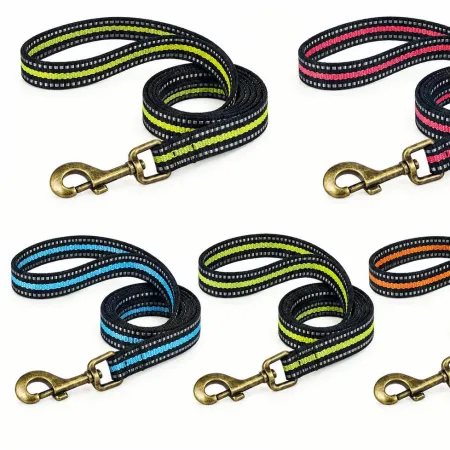
The last of those is the one figure on a case that is a true tensile number, because the interior X-straps and the exterior compression belts are woven narrow fabric. A standard webbing construction clears 2000N across the width, and that is a figure the strap earns on its own; the shell around it is judged on flex and impact, and asking a shell to meet a tensile number is a category error that appears in more specifications than it should.
Cases and the trims inside them sit alongside the custom specification bag range, interior straps come off the nylon webbing and polyester webbing lines, and the abrasion, drop and pull figures behind a durability claim are produced in the in-house laboratory.
Ask for the Failure, Not the Test
The question that replaces durable
A durability brief is more useful when it names the part the buyer expects to fail and the journey it has to survive. "Wheels must still run quietly after two years of monthly flights" is a specification. "Must be durable" is a hope, and it will be answered with a thicker shell, which is usually the heaviest and least effective way to buy life. Name the wear path, the surface and the cycle count, and the answer becomes something that can be measured before the order.
FAQ: Durable High-End Luggage Case
What usually breaks first on a luggage case?
Wheels, for a case that travels by air, and the handle or the latches for a case that lives in a car. The shell is rarely the first failure and is often the part buyers ask to have strengthened.
Does a thicker shell make a case more durable?
It makes it heavier and slightly more resistant to a point impact. It does not fix wheel rumble, handle play or anchor pull, and those are the paths most cases fail on. Thickness is a poor substitute for choosing the right material and the right fittings.
Are replaceable wheels worth specifying?
Yes, if the case is expected to be kept. A wheel assembly on screws is a service part; one bonded into a sealed housing is a scrap decision. The difference is a design choice made before tooling and cannot be added later.
Why does my zip fail at the corner?
Because the slider has to bend the coil through a radius while pulling against the load of a full case, and the tape is anchored there. A generous corner radius and a coil size matched to the load both reduce it; forcing a closed case strains exactly that point.
Can a laboratory reproduce airport damage?
It can reproduce a wheel rolling over an obstacle, a corner drop and a closure cycle under load, one at a time. It cannot reproduce the sequence, which is where most real damage happens: a heavy landing, then a drag across a kerb, then a slam. Test results rank parts; they do not predict a journey.
A durable high-end luggage case is a case whose weakest wear path was chosen deliberately. Wheels, handle, closure, shell and anchors each have a driver and a symptom, and the useful conversation is about which of them the buyer expects to meet first. Everything after that is a specification rather than a wish.
Why Xinxiangrui for Durable High-End Luggage Case
Durability claims are only worth the measurements behind them, so the numbers for a durable high-end luggage case come off this plant's own bench rather than out of a catalogue: rub cycles on the finish, a loaded case run over obstacles, corner drops, and the pull at which an interior strap anchor starts to move. The strap part of that is ours, woven here to clear 2000N. Tell us which wear path worries you and the report will follow that part.