Hook and Loop Fastener Tape: How Far a Roll Actually Goes
A hook and loop fastener tape is bought by the metre and consumed by the piece, and the gap between those two units is where projects run short. A roll described as twenty-five metres yields fewer than twenty-five metres of finished parts, because every cut spends an end, every seam takes an allowance and every trimmed corner leaves a piece too small to use. The arithmetic is simple, and it is almost never done before an order is placed.
This guide covers the formats a tape is supplied in, the yield calculation that turns metres into pieces, why hook and loop are usually bought in a ratio rather than a matched pair, and how to order a width that a slitting line can actually hold.
Hook and Loop Fastener Tape: The Formats
The same closure is sold in four formats, and each one moves a different amount of work from the buyer to the supplier. Choosing the format is therefore a decision about labour as much as about material.
- Full-width roll — the widest form, cheapest per unit area, and the most work at the bench.
- Slit roll — cut to a working width, which is where a tolerance appears and where most of the yield loss hides.
- Backed tape — coated with adhesive, adding a liner and a storage condition to the product.
- Die-cut piece — a fixed shape, with a tool, and the least waste per unit once the shape is settled.
| Format | What it moves to the supplier | Where the yield sits |
|---|---|---|
| Full-width roll | Nothing | At the buyer's cutting table |
| Slit roll | Width cutting | At the slitting tolerance |
| Backed tape | Coating and liner | In the liner and the shelf |
| Die-cut piece | Cutting and counting | In the web spacing |
A metre of tape is not a metre of closure
Cut fifty pieces of 40 mm from a metre and the arithmetic says twenty-five, before the blade width is counted. Real blades remove a fraction of a millimetre per cut, the first and last piece of a roll are usually short, and any piece that needs a seam allowance shorter still. A yield calculation that ignores those three produces a shortfall that arrives on the last day of a run.
Three Numbers Behind a Roll Order
The yield per roll
Work backwards from the finished part: its length, plus the seam allowance, plus the blade loss, multiplied by the quantity, plus a few per cent for the ends of rolls and for the pieces that will be cut badly in the first hour. That figure, converted into rolls, is what to order. Ordering the linear metreage of the finished parts is the most common error in this category, and it is always short by a margin nobody plans.
The pairing ratio
Hook and loop are two products, and they are not always consumed equally. A closure that fastens onto itself uses hook and loop in the same length; one that closes onto a panel uses the loop face on the panel and the hook on a short tab, so the ratio can be two or three to one. Ordering them as a matched pair, because they arrive as a set in a sample, produces a surplus of one and a shortage of the other by the end of a project.
The slitting tolerance
A wide roll is forgiving; a narrow one is not, because the same absolute error is a larger proportion of the width and it shows on the finished edge. A tolerance quoted as a band is normal, and a buyer who needs a precise width should say so rather than assume, since the slitting setup that holds a fraction of a millimetre runs slower than the one that does not.
Six Lines for a Tape Order
- Face, grade and width — hook, loop or a set, with the profile named, since a low-profile face changes both hand and grip.
- Length in rolls, not metres of parts — with the yield calculation attached, because that is the number the line actually consumes.
- Ratio of hook to loop — stated separately for each face rather than assumed from the sample.
- Roll format — core size, maximum diameter and whether the roll is wound face in or face out, which decides how it feeds a machine.
- Colour and lot marking — so a second delivery can be checked against the first without unrolling it.
- Edge and end treatment — whether the roll ends are sealed and whether the slit edge is clean enough to sew without folding.
The fourth line is the one that decides whether a machine can use the roll at all. A roll wound face out will not feed a machine set for face in, and the mismatch is discovered at the moment of loading rather than at the moment of ordering. It costs nothing to specify and it is invisible on a specification sheet that lists only width, length and colour.
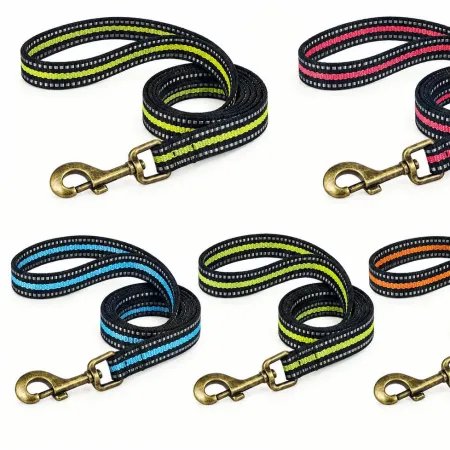
Tape is often bought alongside the strap it will be sewn to, and the strap is where the load lives: a standard polyester webbing or nylon webbing construction clears 2000N across its width, while the tape closing it is rated in peel at a stated overlap. Ordering both from one source keeps the shade and the lot aligned, and the test bench reports each against its own method.
Two Ways a Roll Order Surprises
The last roll is short
Rolls are wound to a nominal length, and the final roll of a batch may be shorter, or a roll may carry a splice where two lengths were joined. A splice is normal in the trade and fatal to an automated line, so its acceptability has to be agreed rather than discovered. Asking how many splices per roll are allowed, and whether they are marked, is a two-minute conversation that prevents a stopped machine.
The colour is right and the lot is not
Two rolls of the same shade from different dye lots can sit together without a visible difference and then behave differently in a wash or under light. The risk is not in the roll a buyer inspects; it is in the roll that goes to a different line. Marking the lot on the roll and keeping the lots together within a shipment is the practical answer, and it is the same discipline the woven side needs for a strap that has to match a panel.
Storage is worth a line in the order, particularly for a backed tape. A roll kept on its side in a warm room can take a set that shows as a wave when it is unrolled, and a roll flattened under a carton will never feed cleanly. Standing rolls upright on a shelf, in a cool and dry space, costs nothing and protects the one property that cannot be restored.
FAQ: Hook and Loop Fastener Tape
How many pieces will a roll yield?
Divide the roll length by the piece length plus the cut loss, then subtract the short ends. For a 40 mm piece on a 25 metre roll, expect fewer than the arithmetic suggests, and allow a few per cent for the learning curve.
Do hook and loop come in equal lengths?
Only when the closure fastens onto itself. Where the loop is sewn to a panel and the hook to a short tab, the ratio can be two or three to one, and ordering a matched pair leaves one face over and the other short.
What width tolerance is normal?
A band of a fraction of a millimetre on a narrow slit roll is typical. A tighter figure is available, and it costs speed, which is why it has to be asked for rather than assumed.
Are splices acceptable?
For hand cutting, usually. For an automated line, a splice is a stoppage, so the number allowed per roll and whether it is flagged should be written into the order.
Face in or face out?
The hook face wound outward feeds one kind of machine and fouls another, so the winding direction belongs in the specification. It is the detail most often left out and the one a line notices first.
A hook and loop fastener tape is a unit of material, and a project consumes units of product. Converting between the two needs the piece length, the cut loss, the seam allowance, the pairing ratio and the winding direction — five figures that together turn a linear order into a supply that lasts the run.
Why Xinxiangrui for Hook and Loop Fastener Tape
A tape order is a choice of format rather than a single product, and a hook and loop fastener tape here is quoted in the form the line can use: slit to width, wound in the direction specified, marked with its lot, and estimated in pieces rather than in metres so the yield is visible before the order. The webbing it pairs with is woven on site to clear 2000N, so shade and lot stay aligned. Give us the piece length and the run quantity, and the roll count comes back with the calculation.