Cotton Twill Webbing: Reading the Diagonal Before You Order
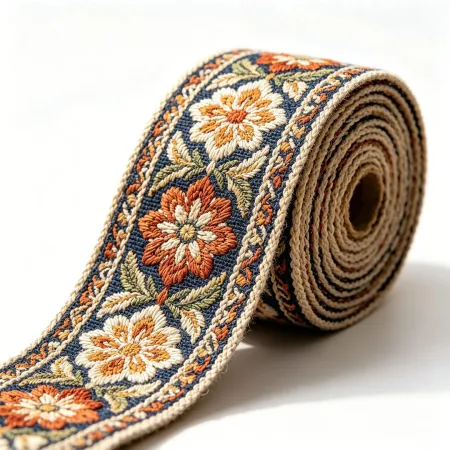
Cotton twill webbing is the denser, softer alternative to plain weave at the same width, and the diagonal on its face is the visible evidence of a structure that changes everything downstream: hand feel, edge firmness, how the strip folds, which face ends up outside, and how it must be cut. Two twills at the same weight can look alike and behave differently, because a diagonal is a number before it is a pattern.
This guide explains what the diagonal is made of, why twill has a direction that affects cutting, and why one twill base cloth can serve bag straps, garment trim and pet goods without being redeveloped for each. It ends with the three failures that come from treating twill as plain weave with a pattern on it.
What the Diagonal Is Made Of
A twill is defined by float length: how many warp ends a weft pick passes under before it comes back up. That single number produces the diagonal, sets the density, and decides how the cloth feels.
- 2/1 twill — one end up, two down. The diagonal is fine and the cloth is light. Good for a thin trim where flexibility matters more than body.
- 2/2 twill — two up, two down. Balanced, denser than plain at the same sett, and the standard for a strap that has to look substantial and still fold.
- 3/1 twill — three up, one down. A pronounced diagonal, a clear face and back, and the firmest edge of the three. It is also the least forgiving of a poor sett.
- Warp-faced twill — the warp dominates one face, which on webbing means the lengthwise yarns are what the customer sees and touches. It wears well and shows abrasion as a softening rather than a hole.
The table puts the three in order against the properties a buyer actually specifies.
| Structure | Diagonal | Where it suits |
|---|---|---|
| 2/1 | Fine, shallow | Garment trim, narrow edging, light lanyard |
| 2/2 | Clear, medium | Bag handles, shoulder straps, apron ties |
| 3/1 | Bold, steep | Heavy duty straps, belts, utility webbing |
Twill Has a Direction, and Cutting Has to Respect It
The diagonal runs up to the right or up to the left depending on the loom setting, and on a roll it runs the same way for the whole length. Cut pieces from two different rolls and the diagonals can face opposite ways on a finished product — a fault that exists only in the assembly.
- Declare the hand — right-hand or left-hand twill, in writing, so a repeat run comes back the same way round as the first.
- Keep one roll per assembly — mixing rolls inside a single bag is what produces the mismatch, and it is avoidable by keeping the roll identity on the cutting ticket.
- Check the face before sewing — a 3/1 twill has a distinct face and back. Sewing a strap with one piece face up and one face down is invisible in flat light and obvious in a photograph.
- Watch the fold — at a fold the diagonal reverses relative to the viewer, which is a design feature on a handle and a defect on a trim.
Mark the direction on the carton, not the invoice
An arrow on the carton and a note on the cutting ticket cost nothing and settle the question at the table where it is decided. An invoice line saying "right-hand twill" reaches the office after the cutting is finished, which is the wrong end of the process.
One Twill Base Across the Cotton Twill Webbing Range
Three product lines, 17 categories and 65 finished items sit under one roof, and the practical value of that breadth is that a twill base cloth developed for one application can be reused in another without a new development cycle. A 2/2 cotton twill at 25 mm is the same cloth whether it ends up on a tote handle, a garment trim or a lanyard — the difference is the finish, the width and the hardware.
- Bag handles — the same twill, cut longer, folded over a ring and stitched with a box-X.
- Garment trim — the same twill, narrower, with a softer finish so it does not stiffen a seam.
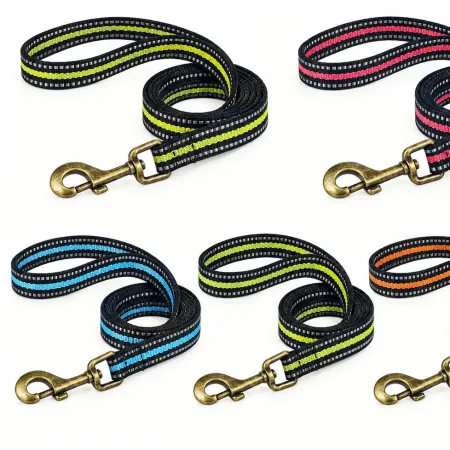
- Pet and lanyard goods — the same twill with a firmer finish and hardware added in-house.
Reuse matters commercially because a development cycle is mostly sampling time. A programme that adopts an existing twill base saves the trial, and it gains a second benefit: the 25 mm and the 38 mm in the range will match in hand because they come off the same sett and the same finish recipe rather than from two separate developments.
Qualifying the base once also shortens the paperwork. Abrasion, tensile and colour-fastness results attach to the cloth, so if the cloth does not change those results carry into the next application and only the finish, width and hardware are new. A programme developed product by product pays for the same tests three times and ends up with three twills that are almost, but not quite, the same shade under a shop light.
Three Failures That Come From Treating Twill Like Plain Weave
The diagonal is ignored in the cutting plan
A plain weave can be cut in either direction with no consequence. A twill cannot, and a cutting plan copied from a plain programme will produce pieces whose diagonals disagree. The fix costs a line on the ticket.
The edge is assumed to behave like plain weave
Twill holds its edge better, which is an advantage until a buyer specifies a tucked edge for the softness of plain weave and gets a firmer result than expected. A twill with a tucked edge can be too stiff for a light garment trim.
The weight is estimated from plain weave
A 2/2 twill at the same sett carries more yarn per metre than plain weave, so the roll is heavier than the estimate and the carton is heavier than the freight assumption. A sound twill construction clears 2000N, and it also clears the weight budget by more than most buyers plan for.
Six Lines for a Twill Specification
- Float structure — 2/1, 2/2 or 3/1, stated as numbers rather than as a name.
- Twill direction — right-hand or left-hand, and whether the face is warp-dominant.
- Sett and yarn count — the two figures behind the diagonal's appearance and the cloth's weight.
- Finish — soft, crisp or calendered, which decides whether the twill drapes or stands up.
- Edge treatment — tucked or cut, with the stiffness the application can tolerate.
- Weight per metre — checked against the plain weave figure rather than copied from it.
The heavy twill handle strap is the 2/2 construction at working width, the plain woven version shows what changes when the float goes away, and the cotton webbing range holds both.
FAQ: Cotton Twill Webbing
Is twill stronger than plain weave?
At the same sett it is denser, carries more yarn and holds its edge better, and a sound construction clears 2000N. The practical gain is resistance to edge wear and a firmer hand rather than a dramatic tensile difference.
Does the diagonal direction matter in a finished product?
Only when pieces meet. Two handles on the same bag with opposite diagonals look like a mistake, and a trim that reverses at a seam draws the eye. Declaring the hand is enough to prevent it.
Why does twill feel softer than plain weave at the same weight?
The float lets the yarn sit more freely over the surface, so the cloth bends more easily even though it is denser. The same float is why the diagonal shows a shine where it is pressed.
Can a twill be printed?
It can, and the diagonal shows through the ink, which is either texture or interference depending on the artwork. Fine detail and thin lines suffer more on a twill than on a flat weave, so artwork with small type should be tested on the actual cloth.
Which twill suits a child's bag?
A 2/2 at a moderate sett with a soft finish and a tucked edge. A 3/1 is firmer than a small bag needs, and the sharper diagonal reads as heavy on a product that should feel light.
The diagonal is the least mysterious thing on the strip and the most useful: it tells you the float, the density and the direction before anyone touches the cloth, and it tells the cutting table which way the pieces have to go.
Why Xinxiangrui for Cotton Twill Webbing
Three product lines, 17 categories and 65 finished items sit under one roof at Xinxiangrui Webbing, so a twill developed for one application is often already running for another and the development cycle is a sampling round rather than a new trial. Float structure, twill hand and finish are recorded per order, so a repeat comes back the way round it left. Give us the application and the load it must carry, and the construction follows.