Sustainable Bio-Based Webbing: Building a Specification That Still Holds in Three Years
Sustainable bio-based webbing is the broadest phrase in this category and the easiest to write without meaning anything. The practical test is not whether a supplier can use the word, but whether the specification behind it will still be true after a yarn lot change, a certificate renewal and two seasons of reordering.
This guide sets out the four dimensions a defensible specification has to cover, how documentation ages, and how to plan a programme so that a sustainability commitment survives the ordinary churn of a supply chain.
Four Dimensions, One Page
A credible specification covers four things, and a weak one usually covers only the first. Each dimension has its own evidence and its own failure mode.
- Material — what the yarn is, what share of it is plant-derived or recycled, and whether the chain is physically segregated or administratively allocated. This is the dimension most specifications address.
- Durability — how long the strap performs in its actual conditions. A longer service life reduces material throughput, and unlike most sustainability claims it is measurable. This is the dimension most specifications ignore.
- Process — chemical controls, dye route and the records that show how the goods were made. A material claim without a process record describes an intention rather than a shipment.
- End of life — what the customer should do with it, supported by whatever evidence exists. If there is no evidence, say so and keep the label quiet on the subject.
The table turns those four dimensions into lines that can be written into an order, with the document that should travel alongside.
| Dimension | What to write | Document that travels with the goods |
|---|---|---|
| Material | Yarn name, measured plant-derived or recycled share, and the allocation method | Yarn specification plus, for recycled content, a transaction certificate for the shipment |
| Durability | Minimum tensile, abrasion cycles to an end point, UV hours with a shade limit, flex cycles | Test report tied to the roll, not to a catalogue sample |
| Process | Chemical limits for the destination market, applied to the finished article | Skin-contact or chemical certificate naming the article, with its class stated |
| End of life | A disposal instruction the customer can actually follow, with its condition stated | Certification scope page if one exists; nothing if it does not |
| Traceability | A batch number linking yarn lot, dye bath and test report | Batch record referenced on the packing list |
| Packing | Retail or bulk format, carton marking, and the material of the inner packing | Packing list showing the format actually used |
Three Things That Age Badly
A sustainability commitment is not a document you write once. Three parts of it decay on their own schedule, and each one takes a claim with it when it lapses.
Certificates expire quietly
Chemical and recycled-content certificates carry validity periods and renewal cycles. A file assembled for a launch is frequently out of date by the second season, and nobody notices because the folder still opens. Put a renewal date against every certificate in the file and a named owner against that date; it is the least glamorous and most effective control in the whole arrangement.
Yarn routes get discontinued
Plant-derived and recycled yarns are subject to allocation and to product rationalisation by spinners. A route that was available at launch may be unavailable two years later, and a claim written around it then has to be rewritten or withdrawn. The mitigation is a substitution clause agreed in advance, plus a retained physical standard so a replacement can be matched rather than guessed at.
Regulation moves faster than a product cycle
Wording that was acceptable three years ago may now require substantiation, and generic environmental terms have been the specific target of recent enforcement. A specification that names an attribute and a figure is far more durable than one that relies on an adjective, because the attribute does not change when the rules do.
Put an expiry date on every document in the file
One spreadsheet, one row per document, one column for validity. Share it with the supplier and ask them to update it rather than to send a new certificate when asked. It converts a recurring scramble into a calendar item, and it is the difference between a programme that survives an audit and one that survives by luck.
Making Delivery and Documentation Travel Together
A sustainability claim is only as good as the paperwork that arrives with the goods. Four operational habits keep the two in step.
- A document set defined per shipment — the certificate, the test report and the transaction record should be a list agreed in advance, so a missing item is spotted before the container is sealed rather than six weeks later.
- Air, sea or express chosen against the season — a sustainability launch usually has a date attached, and a late colour addition is much easier when the same supplier can move a small volume by air without re-quoting the whole order.
- Packing specified down to the inner bag — retail-ready presentation often involves more plastic than the product does, and the packing material should be named in the specification rather than decided at the packing bench.
- Paperwork that matches a split shipment — if the order leaves in two lots, the documents must show the split clearly, or the mismatch between invoice and packing list becomes a customs conversation.
Six Lines for a One-Page Sustainability Spec
A page is enough if it answers these six questions. Longer documents tend to describe aspiration rather than product.
- Which attribute are we claiming, precisely? — plant-derived share, recycled content, durability or chemical compliance. One attribute per sentence, and one document per attribute.
- What is the measured figure and the method? — a number, the basis on which it was determined, and whether it applies to the yarn or the finished article.
- What service life does the strap have to deliver? — with the tests that prove it, because durability is the most defensible environmental argument available.
- Which chemical limits apply, and to which article? — destination-specific, on the finished shade, with the certificate naming what it covers.
- What happens if the route changes? — the substitution rule, who is notified, and how the shade is matched afterwards.
- What does the customer do with it at the end? — one short instruction, honest about its conditions, on the label.
Why an Integrated Plant Makes This Easier
Sustainability specifications generate questions that cross departmental boundaries, and every boundary a question has to cross is a delay.
- One answer for material and process — yarn selection, dye chemistry and finishing happen on the same site, so a question about what is in the strap does not require three companies to reply.
- Testing that describes the shipment — tensile to 2000N+ break strength, Martindale abrasion past 50,000 cycles, UV ageing beyond 1,000 hours and colourfastness to wash and rub, run in-house against the roll that ships rather than against a reference sample.
- Packing and export handled together — retail-ready formats, carton marking and the document set prepared by the same operation that made the goods, which is what keeps a shipment's paperwork consistent with its contents.
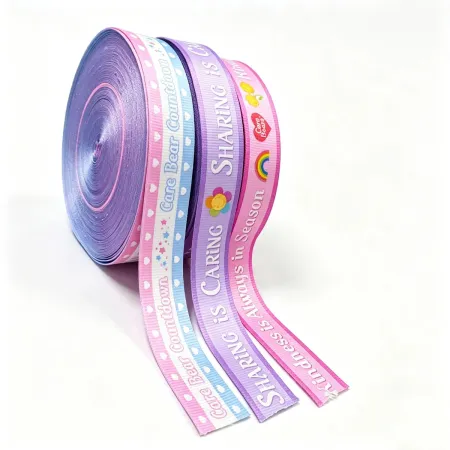
Material routes are set out in the bio-based webbing range, including a printed bio-based roll for gift packaging. Finished programmes that carry the same documentation requirements appear in custom spec bags, and the testing page lists the in-house methods.
FAQ: Sustainable Bio-Based Webbing
What makes webbing sustainable in any measurable sense?
Four things that can be evidenced separately: a measured plant-derived or recycled share, a proven service life, chemical compliance on the finished article, and an honest disposal instruction. The word itself measures nothing, which is why it should be replaced by those four items in any document that matters.
Is durability really an environmental claim?
Yes, and one of the strongest available. A strap that lasts twice as long consumes half the material over the same period, and abrasion, UV and fatigue results are concrete evidence rather than an assertion. It is also the claim least likely to be challenged, because it is about performance.
How often should the documentation be refreshed?
At least at every certificate renewal and every seasonal rollover. The practical method is a register with a validity date per document and a named owner, updated by the supplier rather than requested from them each time a customer asks.
What if the yarn route becomes unavailable?
Treat it as a planned event rather than a crisis. An agreed substitution rule, a retained colour standard and a notification requirement turn an availability problem into a sampling exercise rather than a rewrite of the product page.
Does packing count towards the claim?
It should, because retail-ready presentation often uses more material than the product. Specify the inner packing by material and not only by appearance, and make sure the packing list reflects what was actually used rather than what was originally planned.
Sustainable bio-based webbing is a promise about the future of a programme, and promises are kept by documents rather than adjectives. Write the attribute, measure the figure, prove the service life, put an expiry date on every certificate and agree what happens when the yarn changes. That specification will still hold in three years, which is a longer life than most sustainability pages achieve.
Why Xinxiangrui for Sustainable Bio-Based Webbing
Material, dye, packing and export paper all sit inside Xinxiangrui Webbing's 8,000+ m² site in Dongguan, alongside ISO 9001:2015 and ISO 14001 processes and GRS recycled PET yarns among the material routes. Documents are prepared with the shipment rather than after it, which is what keeps a claim and a carton describing the same thing. Tell us your spec and a matched construction comes back to you.