Source Factory
Direct wholesale production from our own plant in Dongguan, not a trading desk. Weaving, dyeing, printing, hardware assembly and packing all run in house, with no middleman margin in the price.
Full Customization
OEM and ODM work starts from your drawing: width, weave, colour, hardware and retail packaging. We match Pantone, send a physical sample before bulk, and keep every change on one work order.
Strict QA & ISO Standards
Every batch is checked for width, thickness, break strength and colour fastness before it ships, and the plant runs to ISO 9001 and ISO 14001. Test reports for your batch travel with the goods.
Proven Track Record
Fifteen years of narrow fabric since 2011, 200+ active partners and shipments to 50+ markets. Long-run programmes are what this factory is built for, which is why most customers reorder.
Canvas Tote Bag for Shopping: What Fails Under a Full Load
A canvas tote bag for shopping is designed on a desk and judged in a car park. The bag that looked generous at 380 mm wide starts to bow at the mouth when it holds six litres of milk, and the handle that felt comfortable empty cuts into a shoulder within a hundred metres.
Shopping is the most abusive routine use a tote meets: variable weight, repeated loading and unloading, a hard floor at the end of every trip, and a user who will not read a care label. This guide covers where that load actually concentrates, which reinforcements pay for themselves, and how to write a load test that predicts the failure instead of discovering it.
Why a Canvas Tote Bag for Shopping Fails Differently
A promotional tote carries a catalogue and a laptop. A shopping tote carries whatever fits, which is a different structural problem in four specific ways.
- The load is unknown and unbounded — there is no rated weight printed inside a shopping bag, so the design has to assume the user will fill it until it will not close. That means designing for the worst realistic fill, not the average one.
- Loading is dynamic — a bag set down on a floor and lifted again several times per trip generates peak forces well above the static weight, concentrated at the two handle attachments and the bottom seam.
- The mouth deforms first — a wide, unsupported opening bows outward under load, which shortens the effective handle span and pulls the attachment stitches sideways rather than in line with the strap.
- It is washed rarely and used hard — unlike a garment, a shopping tote may never be laundered, so soil and abrasion accumulate at the bottom corners and along the handle edge where the hand grips.
The table below sets out the five load points in the order they usually fail, with the reinforcement that addresses each.
| Load point | What the shopper sees | Reinforcement that works |
|---|---|---|
| Handle attachment | A rectangular tear appears where the handle meets the panel | X-box across a 40 by 30 mm footprint, plus a facing panel behind it |
| Bag mouth | The opening bows outward and the top edge curls over | A turned hem of at least 20 mm, or a webbing strip binding the mouth |
| Bottom corners | Holes worn through the point that touches the floor and the boot | Corner bar tacks, or a separate base panel in a heavier weight |
| Side seam | Stitch line opening from the top downward as the bag widens | Flat-felled or double-stitched seam with the allowance enclosed |
| Handle edge | The grip area polishes, frays or darkens first | Woven strap with a sealed or tucked edge instead of a folded fabric strip |
| Base to body joint | The bag folds in the middle and the seam at the base takes a crease | A gusset that carries load along a fold rather than across a flat seam |
The Three Decisions That Matter Most
Reinforcement is cheap compared with a return, but only three of the possible additions change the outcome enough to justify the sewing time.
A facing behind the handle attachment
The single most effective addition on a shopping tote is a small piece of canvas or webbing sewn behind each handle end, inside the bag. It doubles the material carrying the stitch load and spreads the tear path away from the visible face. It costs a few seconds of sewing and removes the most common photograph in a complaint email.
A hem deep enough not to curl
A 10 mm hem on a 12 oz canvas will roll under load within a week, and once the top edge has curled the bag reads as cheap regardless of the fabric underneath. Twenty millimetres or a bound mouth holds the opening flat, keeps the bag's shape when it is set down, and gives the handle attachments a stiffer panel to pull against.
A bottom that spreads rather than points
A flat-fold bottom puts the entire base load through two folded corners, which is why shopping bags wear through at exactly those two points. A gusset of 80 to 120 mm moves the load onto a horizontal fold and lets the bag stand up when loaded, which is also the difference a shopper notices when packing at a checkout.
Test with a real load, not a bag of sand
A dead weight hanging from a hook tells you the seam's static strength and nothing about how a bag behaves when it is set down, lifted, swung and set down again. Load the sample with cartons and bottles, carry it for a hundred paces, and repeat twenty times. Most attachment failures in shopping bags come from the sideways pull during a lift, which a static pull test never reproduces.
How to Write a Shopping Bag Load Test
A load test is only useful if it is repeatable, and four lines make it repeatable enough to compare two suppliers.
- Load in kilograms and how it is distributed — a 10 kg dead weight at the bottom centre is a much easier test than 10 kg of bottles standing upright against the side panels.
- Cycle count with a lift between cycles — 20 lifts and sets-downs at full load will find the attachment problem that 200 static hours will not.
- Surface the bag is set on — a rough concrete floor abrades the base corners far faster than a shop floor, and the difference should be in the test if it will be in the use.
- Pass criterion written as a visible change — "no tear longer than 5 mm and no stitch failure at the box" is a criterion. "Strong enough" is not.
Six Questions Before You Place a Shopping Bag Order
Each of these can be answered from a single sample in under ten minutes, and each one has a cost attached if it is answered late.
- Is there a facing behind the handle end? — look inside the bag. If the panel is a single layer of canvas, the attachment is relying on perforated fabric alone.
- How deep is the mouth hem? — measure it. Anything under 20 mm will curl on a loaded bag, and a curled mouth cannot be corrected after production.
- Does the base stand up when loaded? — set the sample down full. A bag that folds over spills contents and gets returned, whatever its seam strength.
- Are the side seams enclosed? — a raw allowance inside a shopping bag will fray into the load and collect debris within a season.
- Is the handle strap or folded fabric? — ask for the strap width and the weave. A woven strap has a strength figure behind it; a folded strip does not.
- What is the packed volume per carton? — shopping bags are often ordered in large numbers, and a bag that will not compress raises freight on every shipment rather than once.
Consistency Across Repeat Orders
Shopping bags are usually reordered on a seasonal rhythm, and the second order is where a programme either holds together or drifts.
- One approved bag kept as the reference — sealed, dated and held by both parties, so a reorder is checked against an object instead of a specification sheet that both sides interpret differently.
- Handle strap woven to a recorded sett — the strap is the component most likely to be substituted between runs, and the substitution is invisible until a bag is full.
- Shade recorded with a physical chip — natural canvas varies by cotton crop, and a colour description in an email will not survive a season change.
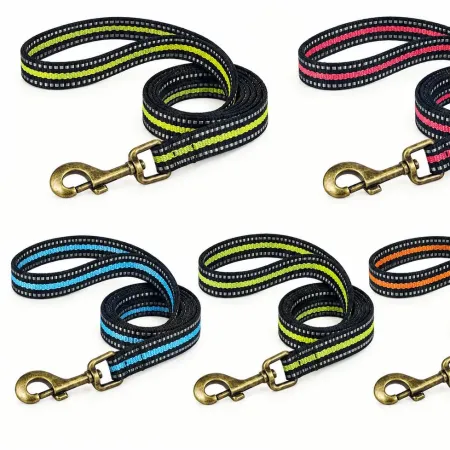
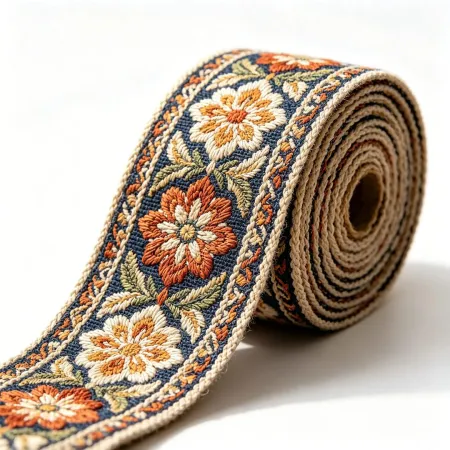
Shopping totes are part of the custom spec bag range, and the handle strap is woven on the same site: the twill cotton tote handle webbing is the standard answer for a heavy shop load, while the polyester webbing range covers colour-matched and printed straps. A finished example with a reinforced structure is shown in the brown cotton canvas shoulder tote.
FAQ: Canvas Tote Bag for Shopping
How much weight should a shopping tote carry?
Design for 10 to 15 kg for a standard supermarket trip, and test at least 50 percent above that. The number that matters is not the average fill but the heaviest realistic one, because a single overloaded trip is what breaks a bag.
Is a gusset worth the extra sewing time?
For a bag used for groceries, yes. A gusset removes the two pointed corners that wear through first and lets the bag stand upright when loaded. For a flat promotional bag carried once, the extra step is not justified.
Why do the handles tear out sideways?
Because the mouth of the bag bows outward when loaded, which pulls the attachment at an angle rather than straight down. A deeper hem, a bound mouth or a stiffer facing keeps the panel flat and returns the pull to the direction the strap was designed for.
What handle length suits shoulder carrying?
A drop of 250 to 280 mm clears a coat shoulder; under 220 mm it becomes a hand-carry bag in practice whatever the drawing says. Long handles are also what allow the bag to be carried on a forearm while unlocking a door, which is how it is actually used.
Can a shopping bag be made from recycled canvas?
Yes, and the main difference is colour: recycled cotton arrives in a narrower shade range and with slightly lower tear strength, so the weight is usually raised to compensate. Ask for the recycled content certificate before the sample, not after the order.
A canvas tote bag for shopping succeeds or fails at five points, and four of them can be reinforced in a few extra seconds of sewing. The buyer who specifies a facing, a deep hem, a gusset and a woven strap is buying a bag that survives a year of Saturdays. The buyer who specifies only dimensions and a logo is buying a bag that photographs well on a desk and splits in a car park.
Why Xinxiangrui for Canvas Tote Bag for Shopping
Xinxiangrui Webbing ships narrow woven products and finished bags to 50+ markets and supplies 200+ active partners, and shopping totes are one of the categories where that volume shows: the handle strap is woven on site to 2000N+ break strength, the bag is cut and sewn in the same 8,000+ m² Dongguan plant, and cartons are packed to retail or wholesale requirements with air, sea and express options quoted side by side. A reorder is compared against a sealed sample rather than a description. Send us the load the bag must take and a matched sample comes back.