Cosmetic Bag With Webbing Handle: Contact and Colour
A cosmetic bag with webbing handle puts a strip of woven fabric in permanent hand contact, and that single fact moves the specification from "trim" into "skin-contact textile". The handle is gripped, it absorbs sweat, it rubs against a palm and a wrist, and it is the part of the pouch that a compliance officer will ask about first.
This guide covers what a webbing handle changes structurally, the three ways one fails, and the documents that a hand-contact trim needs before it can be sold into the EU, the United States or the United Kingdom.
What a Webbing Handle Changes
Strip handles on a small pouch are often an afterthought in the drawing and the first thing to be judged in the hand. Five properties decide whether the handle reads as part of the product or as a strap attached to it.
- Width against hand size — 20 mm suits a two-finger carry, 25 mm is the general-purpose width for a pouch of this scale, and 38 mm belongs on a bag that is carried loaded for a distance.
- Weave direction — warp yarns must run along the handle, because the warp carries the load and the weft only holds the edge. A handle cut across the roll looks identical and fails at a fraction of the load.
- Thickness and temper — a 1.5 mm webbing folds around a seam cleanly; a 2.5 mm webbing resists the turn and leaves a lump at each end that has to be designed around.
- Edge finish — hot-cut, woven selvage or folded. A hot-cut edge is sealed and slightly hard; a woven selvage is soft and cannot fray; a folded edge is the softest and consumes 6 mm of width.
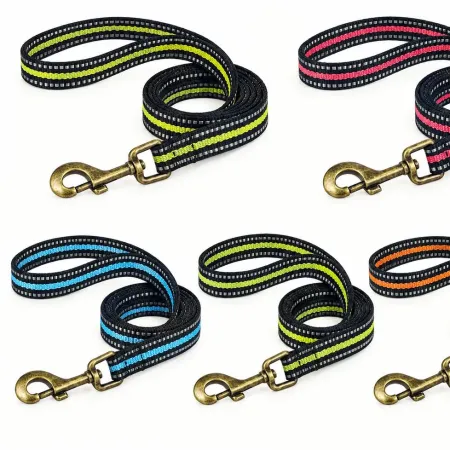
- Colour against the pouch body — a handle dyed in the same bath as the pouch cloth matches under shop light; one dyed separately matches only under the lamp where it was approved.
The table pairs the common handle specifications with the attachment that suits them.
| Handle spec | Best attachment | What to check on the sample |
|---|---|---|
| 20 mm, 1.5 mm thick | Single box with a bar tack | Whether the box corners sit square to the panel edge |
| 25 mm, 1.8 mm thick | X-box, four passes | Stitch density and whether the X reaches the panel, not just the webbing |
| 25 mm, folded edge | X-box plus a rivet | Rivet burr on the inside face, which scratches what it touches |
| 38 mm, 2.5 mm thick | Box plus a reinforcement patch behind the panel | Whether the panel puckers where the handle turns |
| Adjustable slider | Box at both ends with a metal or acetal slider | Nickel release from the slider, and whether it grips when wet |
Three Ways a Webbing Handle Fails
Two of these are structural and one is a documentation problem, and the documentation one is the more expensive of the three because it appears after the goods have shipped.
The handle was cut across the webbing
Webbing is woven as a long strip, and the yarns running its length are the ones that resist a pull. Cut a handle at 90 degrees to that direction and the yarns carrying the load are the weft, which straightens under tension and lets the strip neck down before it breaks. The two handles look identical on a bench. The check is to pull a sample by hand and watch the edges: a correctly oriented handle narrows slightly and recovers, a cross-cut one narrows and stays narrowed.
A single row of stitching across the webbing
One line of straight stitch across a 25 mm handle holds until the webbing relaxes, and then the stitches tear through the weave along the needle line. A box with an X through it spreads the load over four edges and two diagonals, and a bar tack at the end of the box stops the tear from propagating. The difference in sewing time is a few seconds; the difference in behaviour is between a handle that loosens and one that separates.
Perspiration fastness was never tested
A handle is held in a hand, and a hand is damp. A dyed webbing that passes a rub test can still bleed onto a palm over an hour of carrying, and the complaint arrives as a stain on a customer's hand rather than as a laboratory result. Perspiration fastness is a separate test from wash and rub fastness, and it is the one most often missing from a trim file because the trim was bought as a component rather than as a textile.
Ask which class the certificate covers
A textile certificate is issued against a product class, and the class describes how close the material sits to skin. A pouch handle is gripped for minutes at a time, which places it in a different class from a bag panel that only touches a coat. Ask for the class on the certificate and compare it with how the product is actually used, because a certificate for the wrong class is a correct document answering the wrong question.
Documents a Hand-Contact Trim Needs
Five items make up a file that survives a customs query or a retailer's technical review. Each one names the material it covers, and that naming is the part that gets checked.
- A textile safety certificate with a class — the class states the contact category, and the certificate must name the yarn and the dye house actually used for this order.
- A restricted substances declaration — azo colourants and disperse dyes for the EU, and the equivalent state-level position for the United States.
- Nickel release where metal touches skin — a slider, a rivet or a D-ring introduced by the handle brings its own requirement, and it is tested per component rather than per pouch.
- Colourfastness to perspiration and rubbing — two separate results, because a webbing can pass one and fail the other, and the handle is exposed to both.
- A batch link between document and goods — a certificate that cannot be tied to a roll and a dye lot describes a material in general, which is not what a technical reviewer is asking about.
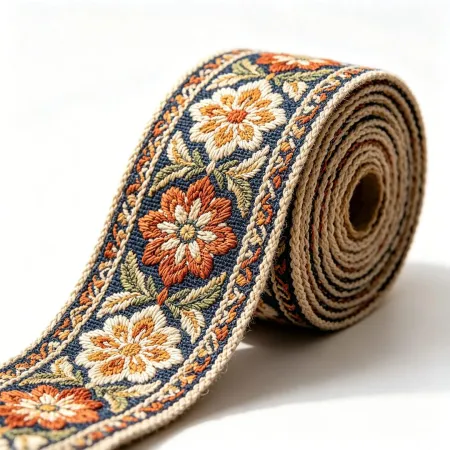
Handles for pouches come off the cotton webbing line or the polyester webbing range, both woven to 2000N+ break strength and dyed on a continuous high-temperature line. The finished pouch sits in the custom spec bag programme, a worked example is the flat cotton webbing handle strap, and the testing page lists the fastness methods used on dyed trim.
FAQ: Cosmetic Bag With Webbing Handle
What width handle suits a small pouch?
25 mm is the general answer. At 20 mm the handle cuts into a loaded hand, and at 38 mm it looks out of proportion on a pouch under 260 mm wide. Below 20 mm the handle stops being a carrying aid and becomes decoration.
Is a rivet stronger than stitching?
A rivet concentrates load at one point and can tear through webbing under a sharp pull, while stitching spreads it over a box. Use a rivet as an addition to an X-box rather than instead of one, and check the burr on the inside face.
Does a handle need its own certificate?
It needs to be covered by one, and the certificate has to name the webbing rather than only the pouch cloth. A file that covers the body fabric but not the trim leaves the part in closest contact with the user undocumented.
Why does a black handle fade to grey?
Black dye on a polyester webbing is the most exposed to light and to abrasion, and a handle takes both. A dyed black that has not been through a proper fixation step reads grey at the fold within a season, and the fix is a dye-house process rather than a heavier shade.
Can the handle match a Pantone reference?
Yes, and it should be matched as a dyed yarn rather than as a printed surface, because a woven strip has texture that shifts the apparent colour. Submit the reference on the substrate it will sit against, and approve the match on a woven swatch rather than on a colour chip.
A cosmetic bag with webbing handle is a small part of a small product and the part most likely to be touched. Orient the warp along the load, attach it with a box and an X rather than a single row, and get the fastness and contact-class documents before the order rather than after it. The handle costs a few centimetres of webbing; the file behind it is what makes those centimetres sellable.
Why Xinxiangrui for Cosmetic Bag With Webbing Handle
Compliance on a cosmetic bag with webbing handle starts at the fibre rather than at the folder, and at Xinxiangrui Webbing the certificate numbers sit beside the yarn and the dye house that produced the roll. OEKO-TEX, REACH, RoHS, CPSIA and ISO 9001:2015 documentation is kept for the materials actually used, so the webbing in your handle is covered by the same chain as the pouch body. Trim is woven on site to 2000N+ break strength and tested in the plant's own lab. Send us the drawing, the width and the target market — we reply with a construction.