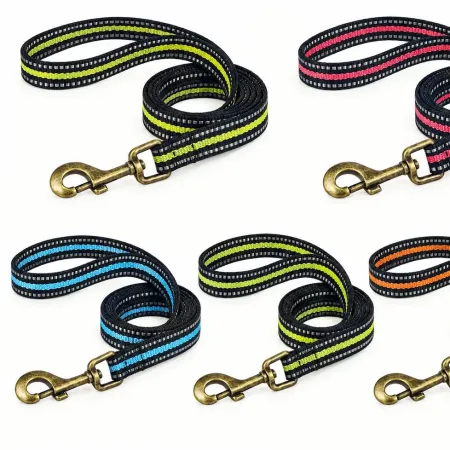
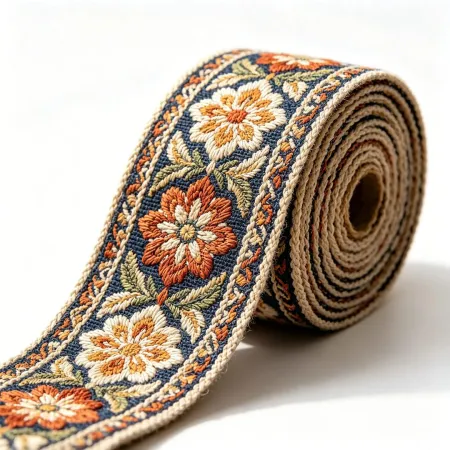
Lightweight Polyester Webbing: Grams Decide Everything
A lightweight polyester webbing is usually specified by width and bought by the metre, and both of those figures hide the one that governs the outcome: grams per metre. Mass per length decides how the band feels in a hand, how many metres fit a carton, what the consignment weighs, and whether an air shipment is charged on weight or on volume. Two bands at the same width can differ by a third in mass, and the difference travels all the way to the invoice.
This guide covers why mass is the real specification, the three places it decides more than width does, six lines a light brief should carry, and the two ways a light band fails that a heavier one does not.
Lightweight Polyester Webbing: Grams per Metre Is the Real Specification
Three light constructions sit within a few tenths of a millimetre of each other and behave like three different products. The table is the one a brief should be built from.
| Construction | Where it belongs | Where it disappoints |
|---|---|---|
| Fine warp, open pick | Trim, binding, light apparel, packaging ties | Any edge that rubs, because an open weave frays early |
| Fine warp, dense pick | Thin straps that must still hold a print and a shape | The hand, which becomes stiffer than the mass suggests |
| Coarse warp, dense pick | A compact band with more strength in less width | The buckle, because a compact band can be too thick to thread |
The middle row is the one most light programmes end up buying, and it is the one that surprises people. A dense pick on a fine warp gives a band that is light by the metre and still stiff in the hand, because stiffness comes from how tightly the yarns are packed rather than from how much material there is. Light in mass does not mean limp.
Volume weight is charged, not actual weight
Air freight is priced on whichever is greater, the gross mass or the volume converted at a carrier ratio. A carton of light bands is often large and light, so it is charged on its dimensions. Reducing the carton size, or winding tighter to fit more metres in the same box, changes the freight more than shaving grams off the band does.
Three Places Mass Decides More Than Width
The carton is full before it is heavy
With a light band the limit on a carton is usually its internal volume rather than its weight rating. That sounds like good news and it changes the packing logic: the aim is to fill the box, not to reach a mass. It also means the box dimensions, not the band, should be the first decision in a light programme.
The roll holds a great many metres
A light band winds into a small, dense roll with a long length on it. That is efficient and it concentrates the pressure at the shoulder, where a thin band takes a set more easily than a thick one. A larger core and a lower winding tension matter more here than on a heavy band, because there is less material to resist the deformation.
The hand reads as quality
A very light band can feel insubstantial in a way that customers describe as cheap, even when it performs exactly as specified. This is a perception rather than a property, and it is solved by construction rather than by mass: a denser pick gives a firmer hand at almost the same weight, and a matte finish reads richer than a glossy one on thin goods.
The trade that has to be made explicit is strength. Removing mass from a woven band removes warp or weft, and the peak load falls roughly with the material removed. That is acceptable for trim and packaging and unacceptable for anything that holds a person or a load. A brief that asks for light without naming the load has asked for a band that may not do the job, and the supplier has no way to know which side of the line it falls on.
Six Lines for a Light Brief
- Grams per metre — the figure that predicts freight, hand and carton count better than width does.
- The minimum load — light is a direction, not an absolute, and it has to stop somewhere.
- Carton dimensions — on light goods the box is the freight decision, so its size belongs in the brief.
- Metres per roll and core size — a long light roll is the one that marks itself, so both figures are needed.
- The finish — a matte surface reads richer than a glossy one on a thin band, at no cost in mass.
- Mode and destination — because volume weight makes the same band expensive by air and cheap by sea.
The third line is the one that rarely appears and always pays. A light programme that specifies the carton as carefully as the band can cut a freight bill without touching the product, and it costs nothing at the loom. The same discipline applies to the inner packing: a folded bundle occupies less volume than a roll, and on a light band the difference between the two can be a whole carton.
- Weigh a metre on a letter scale — the only honest way to compare two light bands.
- Feel it before deciding it is cheap — light and insubstantial are different things.
- Check the shoulder of the roll — thin goods mark where the wind pressed them.
- Fill a carton and weigh it — the arithmetic on paper rarely matches the box.
Light constructions run on the same polyester webbing looms as the standard range here and go out through the same packing benches as the custom spec bags programme, so a band can be wound to the metres a customer needs and boxed to a stated carton size. The 2000N anchor belongs to the 25 mm standard base; a light band is measured in grams, and the figure to hold is the load it must still carry.
One more figure belongs in the same conversation. The length on a roll and the mass per metre multiply into the weight a person lifts, and a light band wound long produces a roll that is heavier than a short roll of a heavy band. Handling limits are set by the roll, not by the band, which is why the two figures are always read together.
Two Ways a Light Band Fails
The edge goes before the body
A light band has less material at the selvage, so an abrasion that a heavier band would absorb takes the edge off first. It shows as a fuzz along one side, then as a narrowing, and only then as a drop in strength. On trim and packaging this never matters; on anything that rubs against a fitting it decides the life of the product.
It takes a permanent crease
Polyester holds a set, and a thin band holds one faster than a thick band because there is less material to recover the shape. A light band folded in a carton or pinched at an adjuster will keep the line indefinitely. Larger cores, looser packing and a folded rather than a crushed bundle all help, and none of them is a finishing step that can be added later.
FAQ: Lightweight Polyester Webbing
Is lightweight the same as thin?
Related but not identical. A dense pick on a fine warp gives a thin band that is heavier than a looser one of the same thickness.
Does a light band cost less to ship?
By sea usually yes, because the mass is lower. By air it depends on the carton, since volume weight is charged when it exceeds the gross mass.
How much strength does lightness cost?
Roughly in proportion to the material removed. A band with a third less mass will not carry the load of the heavier one, which is why the minimum load belongs in the brief.
Why does a light band feel cheap?
Low mass plus a glossy finish reads as thin film. A denser pick and a matte surface fix the impression without adding weight.
Can it still be printed?
Yes, and a dense pick holds a print better than an open one because the surface is more continuous. An open weave lets ink sink between the yarns.
A lightweight polyester webbing is specified in millimetres and decided in grams. Put the mass, the minimum load, the carton and the mode into the brief, and light becomes a controlled choice rather than a surprise at the freight desk.
Why Xinxiangrui for Lightweight Polyester Webbing
Grams per metre is what a light band is really bought on, though the order rarely says so, and freight, carton count and hand all follow from it. Here a lightweight polyester webbing is woven thin, wound to the metres the customer needs, packed to the retail or wholesale requirement and moved by air, sea or express with the customs papers raised on site. Send us the drawing, the width and the target market — we reply with a construction.