Custom Lanyard Maker: Turning a Brief Into a Construction
A custom lanyard maker does something a printer cannot: it decides what the strap is made of before anybody decides what is printed on it. The width, the sett, the closure, the way the ends are finished and the order in which the parts are assembled all come from that decision, and each one is easier to change on paper than after a loom has been set. Most disappointing lanyards were specified rather than developed.
This guide sets out what a maker actually contributes, the four constructions that cover the great majority of briefs, the questions a good maker asks before quoting, and how to brief one so the first sample is close enough to approve instead of becoming the first of four.
Four Constructions That Cover Most Briefs
Nearly every lanyard enquiry resolves into one of four builds, and knowing which one applies shortens the conversation enormously.
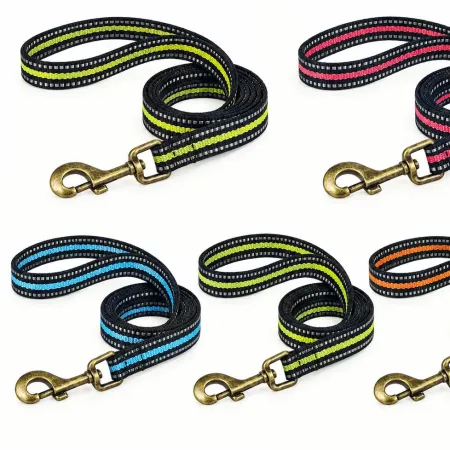
- Sewn loop with a swivel clip — one length, joined at a single point, with a clip at the join. Cheapest to make, strongest at the joint, and the default for staff badges and promotional work.
- Breakaway with a hook — a moulded closure splitting the strap into two pieces, so the release force becomes part of the specification. Required wherever a snag risk exists.
- Short wristlet with a ring — a cut length, a fold and a split ring or a clasp. A different product from a shortened neck strap, with its own length arithmetic.
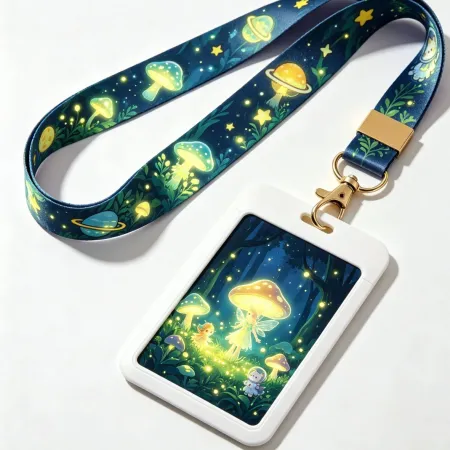
- Strap and holder as a set — the lanyard and a card holder developed together so the slot, the hang and the colour are one decision rather than two purchases.
The table maps a brief to a construction, which is the first useful thing a maker can do for a buyer who has only been told what the lanyard should look like.
| Brief | Construction | Why |
|---|---|---|
| Staff badge, worn daily | Sewn loop, swivel clip, 20 mm | One joint, no closure to wear, easy to clean and inspect |
| School, hospital, site access | Breakaway, plastic hook, 15 to 20 mm | The release force is a documented requirement, not a preference |
| Giveaway or merchandise | Wristlet or short sling, metal clasp | Small enough to be kept, and the clasp makes it usable on a bag |
| Conference with badge holders | Strap and holder as a matched set | The slot, the hang and the colour have to be one decision |
Custom Lanyard Maker: The Questions Worth Asking Back
A maker that quotes immediately from a picture is quoting a guess. The useful reply contains four questions, and each one changes the construction rather than the colour.
- What hangs from it? — a badge, a card holder, a key bunch or a tool. The answer sets the strap width and the hardware grade, and it is the question buyers most often skip.
- How often is it worn? — once at a show, daily at a door, or continuously in a warehouse. Wear rate decides the sett and the edge treatment.
- Is there a snag risk? — which determines whether a breakaway is a feature or a necessity, and if it is, what release band applies.
- Is this a one-off or a repeat? — a programme that will be reordered needs a recorded sett and a retained sample; a single run does not.
The sample is the argument, not the brochure
Every maker will show a catalogue. What separates them is what arrives when you ask for one piece: whether it was woven on production settings, whether the clip is the grade that will be used, whether the print is on the substrate you chose. A sample built on a bench tells you what a workshop can do; a sample built on the line tells you what the order will be.
What Continuity Buys a Programme
Lanyards are usually bought more than once. The first order is a trial; the second is the one that matters, and it depends entirely on what the maker wrote down the first time.
A recorded sett and shrink allowance
A finished width is the result of a greige width, a weave and a dye shrinkage figure. A maker that records all three can repeat a strap years later; one that records only the finished width is starting again with an educated guess. This is the single most valuable line in an order file.
A retained approved piece
A physical strip from the approved lot settles arguments that no photograph can. When a reorder arrives two years later and the brand team has changed, the retained piece is the only objective reference for the shade, the hand and the print position.
A base cloth already in the catalogue
Most new lanyard work reuses a base cloth that already runs for another product, which shortens development and carries a test history with it. A programme that starts from a qualified base clears 2000N before anything new is developed, and the development effort goes into the print and the hardware rather than into the weave.
How to Brief a Maker Properly
A brief that carries six items gets a quotation that can be trusted. A brief that carries a picture gets a quotation for the picture.
- The use and the load — badge, keys, card holder, tool, and roughly how heavy each is.
- The finished length and width — with a tolerance, and the point at which the length is measured.
- The closure requirement — breakaway, sewn loop or hook, and any standard the release has to satisfy.
- The artwork and the substrate — vector files, a Pantone reference, and whether the fibre is fixed or open.
- The quantities and the variants — by colour and by design, with the packing unit stated.
- The date and the destination — when it must be in hand, and which documents the market requires.
Most of the value a maker adds is in the first two lines, because they are the ones that decide whether the product is pleasant to wear. A 25 mm strap carrying a 20 g badge is a necklace; the same width carrying a card holder and a set of keys is a sensible strap. Getting that match right is what stops a programme being reworked after the first wear trial, and it costs nothing at the briefing stage. The custom lanyard range covers the constructions described above, the testing laboratory supplies the figures, and development starts through OEM and ODM development.
FAQ: Custom Lanyard Maker
What is the difference between a maker and a trader?
A maker decides the construction and can change it — a sett, a stitch pattern, a closure grade — without going back to somebody else. A trader passes the question along. The difference shows up the first time a sample needs adjusting rather than replacing.
Will a maker suggest a cheaper construction?
A good one will, when the brief allows it. A sewn loop costs less than a breakaway and performs better where no snag risk exists; a 15 mm strap costs less than a 25 mm one and looks appropriate on a small badge. The suggestion is only useful if the use has been described accurately.
How many samples does a new lanyard need?
Two rounds is normal: one to prove the construction and the colour, one to confirm any change made after it. A programme that needs four rounds is usually being developed by email rather than by specification, and the fix is a better brief rather than more samples.
Can a maker work from an existing lanyard?
Yes, and it is often the fastest route. Send the worn piece and say what should change — longer, wider, a different closure, a heavier clip. Reverse-engineering a working product is quicker than describing one from scratch, and the wear on the old piece shows where the design should be improved.
What should be kept from the first order?
The approved physical sample, the sett and shrink figures, the dye recipe reference, the print file and the hardware part numbers. With those five, a reorder is a repeat; without them, it is a new project with a familiar name.
A custom lanyard maker earns its place at the point where a brief becomes a construction: the width, the sett, the closure and the assembly order, recorded so the second order repeats the first. Everything else about the product is easier to change than that, which is why the construction conversation is the one worth having first.
Why Xinxiangrui for Custom Lanyard Maker
Fifteen years in narrow fabric from one Dongguan address means the sett for each width is a workshop figure learned on the loom, so a custom lanyard maker here can quote a finished width with its shrink allowance rather than promising one and hoping for the other. Three product lines and 17 categories mean the base cloth is often already qualified. Tell us your custom lanyard maker brief and a matched construction comes back to you.