Pet Supplies Leashes: Building a Replenishment Rhythm
Pet supplies leashes are bought differently from most accessories: not as a one-off order for a season, but as a line that has to stay in stock. A shop sells perhaps two or three a week, reorders when the hook looks thin, and judges the supplier on whether the replacement arrives before the gap is noticed. That makes the rhythm of supply more important than any single shipment, and the rhythm is decided by three things a buyer can specify.
This guide covers the three elements a stockist needs from a lead supplier, why a mixed carton keeps a range alive where a deep one starves it, how seasonality sits on top of the replenishment cycle, six lines a supply brief should carry, and the two ways a late shipment is absorbed without a stockout.
Pet Supplies Leashes: Three Things a Stockist Needs
A replenishment product is judged on availability rather than novelty, and availability is engineered rather than hoped for.
- A reorder point — the stock level at which a new order is placed, which only works if the replacement arrives inside that window.
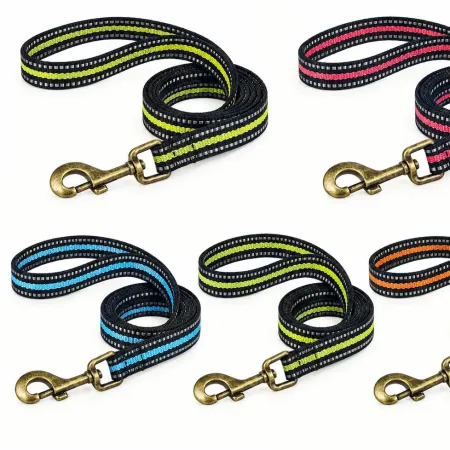
- A mixed carton — a box that contains several colours and two sizes rather than a deep run of one, which is what a small shop actually sells.
- A colour that stays — the same shade across deliveries, because a reorder that arrives in a different tone restarts the display rather than refreshing it.
- A packing unit — the bag and carton count, which decides how easily a small order can be split across two shops or two shelves.
| Element | What the buyer needs | What breaks it |
|---|---|---|
| Reorder point | A lead time they can plan against | A schedule that moves without notice |
| Mixed carton | Several shades and two widths in one box | A single-shade carton that sells out unevenly |
| Shade consistency | A retained standard per colour | A new dye lot approved against memory |
| Packing unit | A bag that can be split without repacking | A sealed multi-pack that forces whole boxes |
The product itself stays out of the argument
A 25 mm band clearing 2000N has more strength than any lead needs, and the construction does not change between one delivery and the next. That is what makes a replenishment model work: the only variables are colour, packing and date, and those are the three things a supply brief can actually control.
Three Things That Decide the Rhythm
A lead is a replenishment item, not a gift
Most leads are bought to replace one that has worn out, which means demand is steady rather than seasonal and the buyer is not waiting for a birthday. A supplier who treats a lead like a gift item ships in deep colour runs and elaborate packing, both of which suit a present and neither of which suits a shop replacing one hook on a display. Selling to a stockist means selling a product that can be reordered cheaply and often.
Mixed cartons keep a range alive
A carton of forty leads in one shade will leave a shop with thirty-six of that shade and none of the two colours that sell best. A mixed carton of forty across four shades and two widths keeps every position filled for the same freight and the same handling. The objection is that mixed packing costs a little more at the plant, and it is a small amount against the cost of a display with three gaps in it.
Seasonality sits on top of the cycle
Even a steady product has a shape: walking picks up in spring, gifting peaks before a holiday, and a wet autumn shortens the life of a lead. Those movements sit on top of the replenishment cycle rather than replacing it, so the sensible arrangement is a base quantity that repeats and a seasonal adjustment agreed in advance. That way the buyer is not renegotiating a whole order every quarter to cover a two-week spike.
The wet-autumn point deserves qualifying, because it is where a replenishment plan usually miscalculates. A lead that lives outdoors through a long rainy season wears at the handle and the stitching faster than one used in a dry climate, so a market with a wet half-year will consume more per shop than its population suggests. Watching the rate rather than the annual total is what exposes that.
Six Lines for a Supply Brief
- The base quantity and its cycle — how many leads are consumed in a period and how often a replacement is needed, rather than one annual figure.
- The colour mix in a carton — the shades and the ratio, written as a packing recipe so it repeats without a new instruction.
- The size mix — two widths are enough for most shops, and a third multiplies the pack without adding a sale.
- The retained standard — one physical piece per shade kept by both parties, so a new lot is measured rather than remembered.
- The seasonal adjustment — the window in which an uplift can be requested and the notice needed, agreed before the peak rather than during it.
- The shipping mode and paperwork — air, sea or express, with the customs documents named, because a replenishment order cannot wait on a missing form.
The sixth line is where a rhythm either holds or breaks. A small replacement order usually travels by air or express, and both depend on the paperwork being ready when the goods are, not after. Naming the document set in the brief, and confirming it before the first order rather than on the day of dispatch, removes the delay that turns a routine reorder into a stockout.
The leads themselves come from a nylon webbing base at 20 mm or 25 mm, with a polyester webbing option where sun exposure is high. The standard range is the right starting point for a replenishment line, since a proven model reorders without a new sample. Retail-ready packing and the air, sea and express routes are handled with the customs documents, and the test records for a model stay valid across colourways.
There is a handling argument on the same side. A mixed carton is picked once, invoiced once and received once, while the same quantity split across four single-shade cartons costs four times the admin at both ends of the shipment. The apparent saving from a deep carton is usually smaller than the cost of splitting it after it arrives.
Two Ways a Late Delivery Is Absorbed
A colour to trade down to
If a range carries four shades, a shortage in one can be covered by the others without the display emptying. That requires the four to work as a group rather than as four independent bets, which is a design decision rather than a logistics one. A range built from shades that sit together can absorb a late delivery; a range built from twelve unrelated colours cannot, because nothing substitutes for anything.
A second width as a buffer
Two widths in the same colour give a shop something to place when one size runs out, and the same band serves both, so the buffer costs nothing in material. A single-width range has no slack, and a week's delay becomes a bare peg. The width pair is the cheapest insurance in a replenishment plan, and it is decided when the range is built rather than when the shipment is late.
FAQ: Pet Supplies Leashes
Should a reorder be one shade or mixed?
Mixed, in most shops. A single shade sells unevenly and leaves the display with gaps while stock remains in the box.
How often do leads need replacing?
It depends on the dog and the weather, but a lead is a replacement purchase rather than a seasonal one, so demand is steadier than for a garment.
Why does a reorder look slightly different?
A new dye lot, approved against memory instead of a retained standard. Keeping a piece of the first lot is what prevents it.
Is air freight worth it for a small order?
For a replacement that prevents a stockout, often yes. The calculation is against lost sales and a bare peg, not against the freight rate alone.
How many sizes should a range carry?
Two widths cover most shops. A third adds packing complexity without adding a customer, and can be added later if the range justifies it.
Pet supplies leashes are a replenishment line, and a replenishment line is built from a cycle, a carton recipe and a retained standard. Set those three, and the range stays on the shelf instead of in a stockout.
Why Xinxiangrui for Pet Supplies Leashes
A replenishment line needs a supplier who can repeat rather than invent, and repeating is what a standard model is for. Air, sea and express routes are quoted with the full customs paperwork, retail-ready packing is built to the channel's requirement, and a mixed carton can be packed to a recipe that repeats without a new instruction each time. Send us the drawing, the width and the target market — we reply with a construction.