Elastic Webbing Straps: Ends, Tension and What They Hold
Elastic webbing straps are a band plus two decisions: how each end is finished, and how much tension the strap should carry. Buyers spend most of a brief on the band — width, colour, stretch — and almost none on the ends, which is where every failure actually happens. A strap that parts in service has almost always parted at a stitch line, a rivet or a hook, not in the middle of the cloth.
This guide covers the four ways to finish a strap end and what each one costs in strength, how tension should be chosen rather than guessed, what a strap of this kind should and should not be asked to hold, the six lines that make a strap specification checkable, and why a bulk order usually travels further than the band alone.
Elastic Webbing Straps: The Four Ends
The end determines how the strap attaches, how strong it is and how it looks when it is hanging loose. Four options cover nearly every application.
- A sewn loop — the band is folded back on itself and stitched, forming a loop that takes a ring, a bar or another strap.
- A folded and riveted end — a metal rivet through the fold, used where the strap has to look mechanical or where stitching would be too slow.
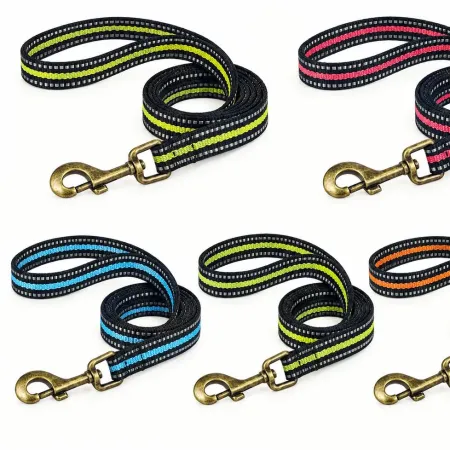
- A hook or a snap clip — hardware crimped or sewn onto the end, so the strap can be attached and removed without unthreading anything.
- A slider — an adjustable buckle that lets the wearer set the length, which turns a fixed strap into a one-size item.
Each end has a characteristic weakness, and the table names it directly.
| End | Strongest part | Weakest point |
|---|---|---|
| Sewn loop | Cheap, soft, no metal to corrode | The needle holes, which form a tear line |
| Riveted fold | Fast to assemble, visually mechanical | The rivet pulls through a soft weave |
| Hook or clip | Removable without unthreading | The gate, and the crimp if the hardware is crimped |
| Slider | One size covers many wearers | The slider slips under load and the fit drifts |
Test the assembly, never the band alone
A roll of elastic can test beautifully and still produce a strap that fails at six kilos, because the test gripped the cloth while the product grips a folded seam. Ask for the pull test to be run on the finished strap, with the hardware in place, and for the failing component to be named in the result. A report that says "failed at 62 N" is less useful than one that says "stitch pulled out of the fold at 62 N", because the second version tells you what to change.
What a Strap Holds, and What It Should Not
Tension is a fit decision
The tension a strap should carry is set by what it has to hold against and how long it is worn, not by how strong the band is. A strap holding a bundle of cables needs enough tension to stop the bundle moving and no more; a strap holding a knee pad needs enough to keep the pad in place through a movement. Both are far below what the band can survive, and specifying a higher figure than the job needs produces a product that is uncomfortable and no more secure.
A strap is not a lifting sling
The distinction matters commercially as well as technically. An elastic strap is a retaining device; a sling is a rated lifting accessory with its own marking, testing and traceability obligations. Where a product genuinely needs to lift or arrest a load, the rated element is a non-elastic webbing — a 25 mm woven band clears 2000N without special yarn — and it should be a separate component with its own label. Using an elastic strap for a job that belongs to a sling is the kind of decision that looks fine until the first incident report.
The number that belongs in the brief instead
Rather than a break strength, an elastic strap specification is better served by four numbers that describe its working life: the tension at the closed length, the extension range the wearer will use, the number of open and close cycles per shift, and the growth allowed after those cycles. Those four predict whether the strap still grips in month eighteen. A break figure predicts only the day it finally gives way, which is not the day anyone complains about.
What it does well
Retention with give: bundling, organising, holding a cover in place, keeping a pad against a limb, keeping a rolled item rolled. In all of those the elastic is doing something a fixed strap cannot, which is to stay tight as the bundle changes size. That is the genuine value of the product and it is worth stating in the brief, because it tells the supplier what the strap has to keep doing after a year.
Six Lines for a Strap Specification
- Band width and construction — woven for a firm hold, knitted where softness matters against skin or a delicate surface.
- Finished length and tolerance — measured end to end with the hardware fitted, not as a cut length.
- End type — loop, rivet, hook or slider, and the hardware grade if metal is involved.
- Working tension — stated in newtons, so the strap's grip can be reproduced rather than felt.
- Colour and fastness — plus the surface the strap will rub against, since abrasion is what kills the edge.
- Packing — loose, banded, or on a header card, because a strap is often sold as a visible item.
Bulk, Markets and the Document Set
A component still needs paperwork
A strap sold as a component to a manufacturer needs less paperwork than a consumer product, but not none. The declarations that name the fibre, the elastic yarn and any finish are the same documents, and an importer who has asked for them once will ask again on the repeat. Assembling that set before the cartons are closed is cheaper than assembling it after a container has been held.
One specification, several packings
The same strap often ships to several customers who want it presented three different ways: loose in a polybag for a factory, banded in tens for a distributor, on a printed header for a retail range. That is a packing decision rather than a production one, and it is worth settling at quotation stage because it changes carton counts, marks and sometimes the finish on the band itself.
Band and hardware options sit alongside the polyester webbing and nylon webbing ranges, pull and recovery figures are produced in the in-house laboratory, and an assembled strap developed to a drawing goes through OEM and ODM development.
FAQ: Elastic Webbing Straps
How strong is an elastic strap?
Strong enough for retention and not for lifting. The band itself is robust, but the ends are the limit, and an elastic strap is not a rated accessory. If the application needs a stated break strength, it needs a non-elastic webbing member with its own rating rather than an elastic strap asked to perform a different job.
Which end is best for a soft product?
A sewn loop, because it introduces no metal against the product and no rivet that can work loose. The trade is that the stitch line becomes the weak point, so the fold depth and the stitch pattern have to be right for the band rather than borrowed from a wider strap.
Why does my slider keep slipping?
Either the slider is sized for a different band thickness, or the band is too smooth for the slider's grip. A slider matched to a woven band can slip on a knitted one of the same width, because the surface is different even though the dimension is the same.
Can straps be supplied cut to length?
Yes, and for a bulk order it is usually worth it, because it removes a cutting and sealing step from the customer's floor. The published length should be the finished length with the hardware fitted, not the cut length, since the difference between the two is where most length complaints originate.
Woven or knitted for a utility strap?
Woven for anything that has to hold a shape or take a firm pull, knitted where the strap sits against skin or against a soft surface and comfort matters more than grip. Utility straps are usually woven for exactly that reason.
Elastic webbing straps are decided at the ends and in the tension, not in the middle of the band. Choose the end for the failure you can live with, set the tension against the job rather than against the yarn, test the finished assembly and name the component that broke. A strap specified that way behaves the same on the thousandth piece as it did on the first sample.
Why Xinxiangrui for Elastic Webbing Straps
Elastic webbing straps travel as components rather than as finished goods, so the document set is decided by the destination and assembled before the cartons are closed: declarations, packing lists and the marks the importer asks for. Products from this site reach 50+ markets and 200+ active partners, which is why one strap specification can be packed three different ways for three customers. Share your strap details with us and we will come back with a matched sample.