Custom Keychain Lanyard: Short Cuts, Assortments and Cartons
A custom keychain lanyard is not a shortened neck lanyard. The neck version is a single long piece with one join; the keychain version is a short cut with two ends, a split ring or a lobster clasp, and a cut length that has to be exact because there is no adjustment anywhere in the product. Then it becomes a packing problem, because these are bought in assortments of colour and design and counted by the thousand.
This guide covers the cut length arithmetic, the hardware that turns a strap into a key holder, how a mixed colour programme is planned and packed, and the freight decisions that decide whether a giveaway lands before the show it was ordered for.
Cut Length Is the Whole Specification
On a neck lanyard a few millimetres disappear into the closure and nobody notices. On a keychain lanyard the same few millimetres decide whether a hand fits through the loop and whether keys sit in a pocket or hang at knee height.
- Wristlet loop — a finished circumference that clears a wrist comfortably, usually 180 to 220 mm depending on whether gloves are worn. Measure the circumference, not the flat length.
- Finger loop — a short tab that hooks over one finger, which is what most promotional keychains become once the marketing department has had its say.
- Short neck or sling — long enough to reach a pocket but short enough not to swing, which is the format used for trade-show giveaways and staff access keys.
- Fold allowance — every end that turns back on itself consumes length. Two folds on a 200 mm loop can eat 20 mm of strap before the ring is even fitted.
The table converts the common formats into the numbers a cutting table actually needs, because "small keyring strap" has no meaning in production.
| Format | Cut length | Finished form | Ends |
|---|---|---|---|
| Finger loop | 110 to 130 mm | Single fold, ring through both layers | Both ends sewn into the fold |
| Wristlet | 230 to 270 mm | Closed loop with a clasp and a ring | Joined at one point, hardware at the other |
| Short sling | 400 to 500 mm | Open length with a swivel at one end | One fold, one hardware end |
Custom Keychain Lanyard: Hardware That Decides the Feel
The strap on a keychain is a short piece of woven cloth; almost all of the perceived quality sits in the metal. Four parts do the work, and the differences between them show up in the hand within seconds.
- Split ring — the classic keyring. It never opens by accident, and it is awkward to load, which is why key programmes often ship with keys already fitted.
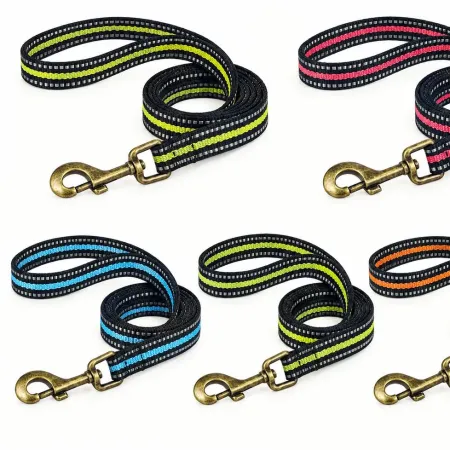
- Lobster clasp — a spring gate that clips onto a belt loop or a bag D-ring. It turns a keychain into something that can be moved between bags, which is most of its appeal.
- Swivel snap — a rotating joint above the clasp so the strap does not twist. Worth the extra component on anything worn on a belt.
- Trigger clip — the largest of the four, used where keys are heavy or where the lanyard has to hold a small tool as well.
Weigh a set of keys before choosing the ring
A car key with a fob is heavier than a bunch of house keys, and the ring and the stitch pattern have to suit the load. A strap that clears 2000N will not fail, but a thin split ring can open, and a single row of stitching can pull through a soft webbing under a swinging load. Ask what the keychain will actually carry, then choose the ring gauge and the stitch pattern around that answer.
Planning a Mixed Colour Programme
Keychain lanyards are rarely bought in one colour. A giveaway will run five shades against a brand palette, and the planning of that mix decides both the unit cost and the packing labour.
Variants, not separate products
Five colours on one strap width and one print design is one product with five variants: one warp, one sett, one print programme, five dye lots. Treating them as five products multiplies the setup and the paperwork. Treating them as variants keeps the construction identical and confines the difference to the dye bath, which is the cheapest place for a difference to live.
Counting by assortment
Cartons are usually packed to an assortment rather than to a single shade: so many of each colour per inner bag, so many inner bags per carton. That is a packing instruction, and it has to be written down with the quantities, because a carton packed 100 of one colour and 20 of another cannot be distributed at a registration desk without being opened and re-sorted by hand.
Packing for the hand, not the pallet
A keychain handed to a visitor should arrive on a card, in a small bag or loose in a tray depending on how it will be distributed. Polybagged singles suit a mail-out, header cards suit retail, and loose in a carton suits an event where somebody fills a bowl. Each choice changes the labour at packing and the impression at the point of handover.
Five Freight Decisions for a Giveaway
Short straps are light per piece and dense per carton, which makes them easy to ship and easy to ship late. Five decisions keep a deadline intact.
- Air or sea, chosen by date — sea freight suits a planned programme and air suits a date that has already been announced. The cost difference is real and the calendar difference is usually decisive.
- Express for the top-up — the last few hundred pieces are worth shipping by courier, because a partial delivery that covers the first day is better than a complete delivery that misses the event.
- Carton weight and count — a dense carton of keychains is heavy for its size, so the count per carton drives both freight and handling at the venue.
- Customs paperwork in advance — the description, the material and the declared use should match the invoice, or a small shipment can sit while a broker asks questions.
- A split shipment plan — send what is needed for day one, then the rest, rather than holding everything for a single dispatch.
The product itself is small enough that the decisions are mostly about counting and timing. A short wristlet version of the keychain lanyard with a metal lobster clasp shows the construction, the wider custom lanyard range covers the neck and wrist formats, and packing or retail requirements are handled through OEM and ODM development.
FAQ: Custom Keychain Lanyard
What length is a wristlet keychain?
A finished circumference of 180 to 220 mm covers most wrists, which means a cut length of roughly 230 to 270 mm once the fold allowance and the clasp are counted. Ask for the finished circumference on the drawing rather than the cut length, because that is the number the wearer experiences.
Can the ends be heat sealed?
On polyester, yes, and a sealed cut saves a sewing step on very short pieces. On cotton it does not work, because the fibre chars instead of melting. Where the end will be seen rather than folded inside a seam, a sealed cut also has to look deliberate rather than burnt, which is a matter of blade temperature.
Is a keychain lanyard printed before or after cutting?
Before. Continuously printed strap is cut to length afterwards, which keeps the repeat consistent across pieces and avoids printing on a short piece that then has to be held flat by hand. The cutting table works to the repeat marks rather than to a measured length, so the design itself becomes part of the tolerance.
Can keys be fitted before shipping?
They can be, if the keys are supplied and the assembly is agreed as part of the order. It is usually a hand operation and it changes the packing unit, because a loaded keychain cannot be flat-packed. For programmes that hand out keys at a desk, the loaded version saves a queue.
How many colours can one programme carry?
As many as the assortment and the packing plan can support. The dye programme is rarely the limit; the limit is usually the counting, because every added colour adds a variant that has to be bagged and balanced across the carton. Six colours in one carton is normal; twenty is a planning exercise.
A custom keychain lanyard is decided by a cut length, a ring and a carton count. Get the finished circumference right, choose hardware against the weight of the keys, and plan the colour mix as variants of one product, and a small item stops being a small problem.
Why Xinxiangrui for Custom Keychain Lanyard
Packing decides how a keychain programme lands, so a custom keychain lanyard leaves the plant packed to the assortment the buyer distributes rather than to whatever fills a carton fastest. Cut lengths are checked against the finished circumference, rings and clasps are fitted in-house, and air, sea and express options are quoted against the date the goods are needed. Give us the application and the load it must carry, and the construction follows.