Detachable Baby-Friendly Soft Webbing: Designing for the Hundredth Click
Detachable baby-friendly soft webbing turns one strap into two pieces and doubles the number of things that can fail. Every clip, hook and snap is a joint that opens and closes dozens of times a week, and every open joint exposes a cut end of webbing to a mechanism designed to grip something smooth. The product that works in a review meeting is often the one that frays by month six.
This guide covers how a detachable construction differs from a sewn-in one, which connector belongs at which position, why the buckle channel destroys edges that look well finished, the small-parts rules that apply when a child can reach the joint, and how to cycle-test the assembly rather than the roll.
What Makes Detachable Baby-Friendly Soft Webbing Different
Four conditions appear the moment a strap is designed to come off, and each one changes a decision you would otherwise take for granted.
- The joint is the new weakest point — a sewn-in strap fails at the stitch; a detachable one usually fails at the connector or at the webbing end feeding into it. Both failure points sit where nobody inspects.
- Cycle count replaces static strength — the strap is opened and closed far more often than it is pulled to its limit, so the property that decides product life is fatigue at the connector rather than break strength.
- Cut ends are handled, not hidden — a sealed end tucked under stitching is protected. The same end, clipped into a hook, is being rubbed by a metal gate every time the parent moves the pram.
- Small parts enter the risk assessment — a detachable joint puts a clip, a ring or a snap within reach of a child, which brings the applicable small-parts rules into scope in a way a sewn strap avoids.
The table pairs each connector type with where it belongs and how it usually fails. Choosing a connector without this map is how a strap ends up with a hook that loads in the wrong direction.
| Connector | Where it belongs | How it usually fails |
|---|---|---|
| Side-release buckle | Waist belts, chest straps, removable seat units | One side of the female housing cracks after repeated off-axis opening |
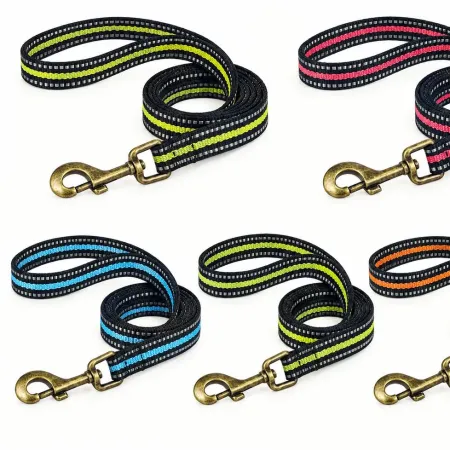
| Metal hook or snap hook | Anti-lost wrist and harness tethers | The gate wears a groove in the webbing loop and cuts the yarn |
| D-ring and loop | Accessory attachment, removable pads | Load applied across the ring rather than along it; stitch pulls through |
| Snap button | Bibs, small flaps, non-load-bearing joins | The fabric around the post tears before the snap does |
| Cam or ladder lock | Length adjustment, not detachment | Binds when the doubled-back thickness exceeds the designed band |
| Hook and loop | Adjustable closures where no hard part is wanted | Loses grip after lint builds up; the hook face abrades the strap |
Edge Fray Inside the Channel
The end that passes through a connector is the most abused twenty millimetres in the product. Two mechanisms do the damage, and they are often confused with each other.
Mechanical rubbing, not chemical failure
A metal gate sliding across a sealed edge acts like a slow blade. The seal resists it for a while, then a single yarn end lifts and the whole edge begins to unravel from one point. The fix is structural rather than cosmetic: a folded end, a bartack behind the seal or a slightly longer tail so the gate never rests on the same spot. No finishing chemistry survives a metal edge in permanent contact.
Seal temperature is a per-fibre setting
Too hot and the edge goes brittle and cracks within weeks of flexing; too cool and the yarn is only superficially fused, so the first rub pulls it free. The correct setting depends on the fibre and the weave density, and a plant running several fibres needs it written down per article rather than set once on the machine.
Small Parts and the Reachable Joint
A detachable strap puts hardware where a child's hands are. Four rules reduce the exposure without redesigning the product.
- No detachable component small enough to swallow — if a connector can be removed by the user, it has to be big enough not to present a choking hazard, or be permanently captive so it cannot be separated at all.
- No open loop a child could enter — a detachable wrist strap left hanging forms a loop. Keep tails short, or design the joint so that a released strap cannot create an encircling opening.
- Load direction and release direction must differ — the joint should not open under the load it carries. Test it by pulling in the working direction and confirming it holds, then by operating the release deliberately.
- Nickel release where metal touches skin — hooks and snaps against a wrist are a REACH item, and it is one of the three reasons an EU consignment gets stopped at the border.
The cycle test that predicts real life
Open and close the connector two hundred times by hand while the strap is loaded, then inspect the webbing loop with a magnifier. A groove or a lifted yarn end at two hundred cycles will become a break long before the product's expected life, and it is far cheaper to find at the sample stage than in a returns report.
How Xinxiangrui Builds Detachable Straps
Detachable constructions need the webbing and the hardware to be developed together, which is only practical when both are handled in one place.
- Seal settings recorded per article — the heat-seal temperature for each fibre and weave is written down, so a cotton blend and a polyester strap are not run at the same default.
- Trial-fit before bulk — the actual clip or hook is fitted to the production roll and the pull force recorded, which is where a joint that drags or releases too easily is caught.
- Abrasion and colourfastness on the finished article — Martindale abrasion past 50,000 cycles and colourfastness to washing and rubbing are measured on the strap as supplied, with tensile pull to 2000N+ break strength reported on carrier grades.
A working example is the printed detachable anti-lost strap, which combines sublimation print with a clip joint. The rest of the baby products range covers fixed builds for comparison, the hook and loop range covers soft closures, and OEM and ODM development sets out how a new joint is engineered.
FAQ: Detachable Baby-Friendly Soft Webbing
Should the webbing end be sealed, folded or bartacked where it meets a clip?
All three have a place, and the choice follows the connector. A sealed end is enough where the strap only passes through a plastic slot; a folded and stitched end suits a metal gate that slides; a bartack behind the end protects against the seal cracking. A metal gate in permanent contact with a sealed-only end is the combination that frays first.
How many cycles should a detachable joint survive?
More than your realistic usage model implies, because connectors are also opened out of curiosity and by children. Two hundred loaded cycles at sample stage is a reasonable screen: if the webbing loop or the housing shows damage there, it will not survive a year of daily use irrespective of what the specification says.
Can a detachable strap use the same webbing as a fixed one?
Usually, with one adjustment: the ends need a stronger finishing solution because they are now handled rather than concealed. In practice that means a folded end or a bartack, and occasionally a slightly denser weave so the seal has more material to fuse.
Does a metal hook need a different compliance file from a plastic clip?
Yes. Metal introduces nickel release under REACH, and it is worth asking for the alloy and the plating specification rather than accepting "stainless". Plastic clips bring their own questions about phthalates where the part may be mouthed, which is why testing the assembled strap matters more than testing the webbing alone.
What is the most common design mistake?
Loading a connector in a direction it was not designed for, such as pulling a D-ring sideways instead of along its axis. The part is not weak; it is being used off-axis, and the failure appears as a stitching pull-out that gets blamed on the webbing.
Detachable is a convenience feature until the hundredth click, when the joint has to still be doing its job. Designing the end, the connector and the seal as one system rather than three parts is what keeps detachable baby-friendly soft webbing a feature instead of a return reason.
Why Xinxiangrui for Baby-Friendly Soft Webbing
Xinxiangrui Webbing tests detachable webbing in its own lab before anything ships: tensile pull to 2000N+ break strength on carrier grades, Martindale abrasion past 50,000 cycles, UV ageing beyond 1,000 hours with under 5% colour fade, and colourfastness to washing and rubbing. The report describes the roll made for you rather than a catalogue sample. Tell us your strap spec and a matched construction comes back to you.