
Features
Why Choose Xinxiangrui Webbing?
Source Factory
Direct wholesale production from our own plant in Dongguan, not a trading desk. Weaving, dyeing, printing, hardware assembly and packing all run in house, with no middleman margin in the price.
Full Customization
OEM and ODM work starts from your drawing: width, weave, colour, hardware and retail packaging. We match Pantone, send a physical sample before bulk, and keep every change on one work order.
Strict QA & ISO Standards
Every batch is checked for width, thickness, break strength and colour fastness before it ships, and the plant runs to ISO 9001 and ISO 14001. Test reports for your batch travel with the goods.
Proven Track Record
Fifteen years of narrow fabric since 2011, 200+ active partners and shipments to 50+ markets. Long-run programmes are what this factory is built for, which is why most customers reorder.

We Have The Best Solutions for Your Business
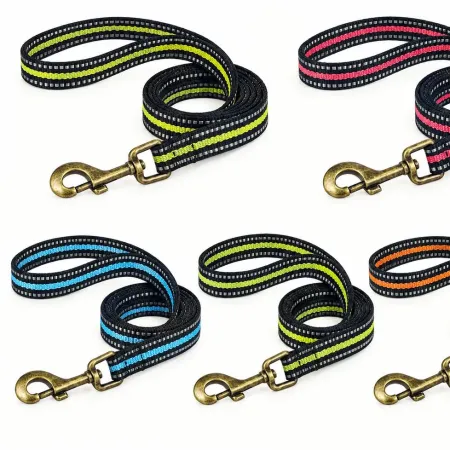
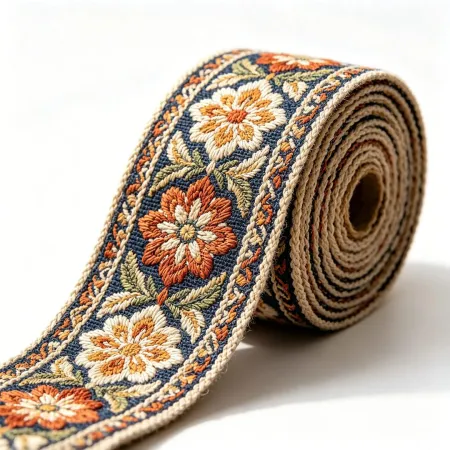
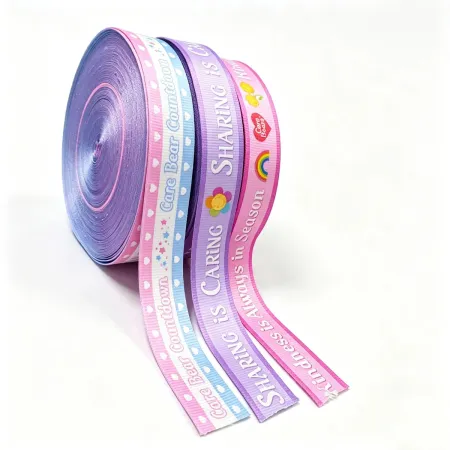
Xinxiangrui has made narrow fabric in Dongguan, China since 2011. Our 8,000 m² plant weaves, dyes, prints, cuts and sews under one roof, supplying 200+ active partners in 50+ markets. We produce polyester, nylon, cotton, elastic, reflective and bio-based webbing, ribbon, lanyards, pet leashes, bags and luggage components, from yarn and reflective tape to finished straps and handles.
Because every step stays in one plant, a widening range does not cost tolerance. Our laboratory tests to 2000N+ break strength, 50,000+ Martindale cycles and 1,000+ hours of UV exposure, and every batch carries its own figures rather than a catalogue sample. We work to OEKO-TEX, CPSIA, REACH, RoHS, ISO 9001, ISO 14001 and GRS. Send us your spec sheet and target quantity, and we will recommend the construction that fits.
Hook and Loop Fastener: Three Hook Geometries
The hook side does most of the work and comes in three forms that are chosen by application rather than by habit.
| Hook type | Shape | Strength profile | Where it belongs |
|---|---|---|---|
| Woven monofilament | Simple C-shaped hook | Moderate both ways, soft, cheap to make | Garments, bags, general trim |
| Mushroom or palm tree | Double-ended head on a stem | High shear, high cycle life, resists lint | Footwear, seating, repeated opening |
| Low-profile | Short, dense, thin | Low peel, clean feel, almost no bulk | Thin panels, adjustable trims, medical goods |
A figure to keep in proportion: the closure is usually stronger than the seam that holds it. A 25 mm nylon band used behind a closure in this catalogue clears 2000N, and the force needed to shear a strip of fastener is often higher still, which means the stitching, not the tape, is the part that fails first. Specify the seam and the tape together or the stronger one is wasted.
Peel and Shear Are Different Questions
Shear, the direction a closure is built for
Shear is the force that tries to slide the two tapes across each other. Hooks and loops resist it extremely well, because every engaged pair is loaded along the plane of the tape rather than being levered apart. A closure loaded in shear is doing what it was designed to do, and the numbers here are large enough that a modest strip can hold a surprising load. This is the direction a strap, a belt or a panel seam normally works in.
Peel, the direction that opens it
Peel lifts one tape away from the other at an edge, so each engaged pair is levered and released in turn. The force needed is far lower, and it is lower still when the peel starts at a corner rather than along a full edge. That is not a weakness; it is the entire point of the closure, and it is why a product is easy to open by hand and difficult to slide apart by accident. A peel figure without a stated angle and width describes nothing.
Cycle life, which decides both over time
Every open and close cycle removes a little debris, bends a few hooks and flattens some loops. The decline is slow and then sudden: a closure will hold for hundreds of cycles and then begin releasing under loads it used to resist. Cycle life is measured by closing and opening to a stated force and recording the point at which holding strength falls below a threshold. Ask for that threshold, because "tested to ten thousand cycles" says nothing about what remained afterwards.
Overlap, Alignment and the Number a Lab Reports
A fastener does not hold with its full area unless the area is engaged. A strip that is one hook-width short of alignment loses far more than the fraction of area involved, because the load concentrates on the engaged edge and peels from there. This is why a laboratory figure and a field result can differ by a wide margin without either being wrong: the lab engages the full sample, and the product does not.
Overlap also decides how the closure feels. A generous overlap forgives a user who closes it carelessly and keeps the load away from the edge; a tight overlap gives a cleaner look and a shorter working life. For anything closed by a person in a hurry, the overlap should be sized for the worst closure rather than the best one.
Six Lines a Fastener Brief Should Carry
- The hook type — woven, mushroom or low profile, since the three are not interchangeable across an application.
- The strip width and the engaged length — the second number is what the closure actually uses, and it is usually smaller than the tape.
- The direction of the working load — shear, peel or a mix, stated in words, because the two numbers cannot be compared.
- The cycle count and the retained strength — both, as a pair, with the threshold named.
- The colour and the dye route — a dark hook on a light loop shows every stray fibre, and the two sides age at different rates.
- The attachment method — sewn, bonded or welded, with the stitch pattern and the seam allowance, since the seam is usually the weaker half.
Four Checks Before a Bulk Order
- Close it the way a user will, then load it. Half-aligned closures are the normal condition, and a sample tested perfectly aligned has been tested in a state the product never reaches.
- Peel from a corner, not an edge. A corner concentrates the peel and gives the lowest number. It is also how a hand actually opens a closure.
- Open and close it two hundred times in one sitting. It takes a few minutes by hand, and the change in feel between the first ten and the last ten is the clearest evidence of cycle behaviour available without a machine.
- Wash it with lint around. A hook side collects fibre, and a closure contaminated by lint from the product it is sewn to loses holding strength faster than any cycle test predicts.
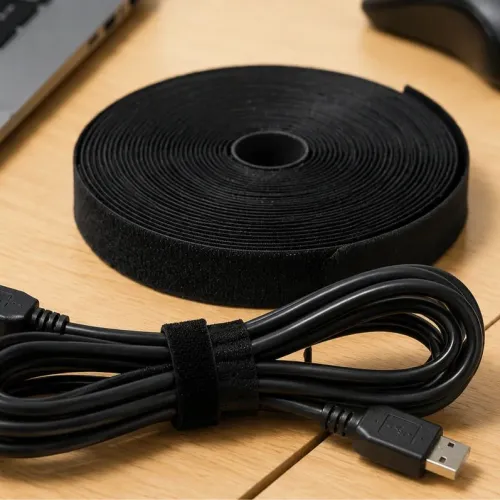
The hook and loop fastener range is sold as tape, but it is almost always used on a band, and the nylon webbing it is sewn to is what carries the load in practice. That is why the two are best specified together: a closure sized for a strap and a strap sized for a closure arrive at the same answer, and the custom spec bags line is where the pairing is most often tested.
One last variable is hidden in the way the tape is attached. A stitch line that runs across the engaged area rather than around its border reduces the working area, and a stitch that passes through the hook side will blunt the hooks it crosses. Both are invisible in a finished product and measurable in a pull test, and both are decided by whoever sets up the machine rather than by whoever wrote the brief. A drawing that shows the stitch path is worth more than a paragraph describing it.
Two Mistakes That Fool a Specification
A peel figure used to specify a shear job
The two strengths differ by an order of magnitude, and a catalogue that prints one and not the other invites the wrong decision. A designer who needs a panel to resist sliding reads a peel number, concludes the tape is weak and specifies a larger strip than necessary, adding bulk and cost for a property that was never the constraint. State the direction first, then ask for the figure that belongs to it.
A closure contaminated by its own product
A hook side that rubs against a fleece lining, a knitted cuff or a raw edge will fill with fibre within weeks, and a full hook cannot grip. The result is a closure that passed every test in the laboratory and releases in a customer's hand. The defence is geometric: keep the hook side away from anything that sheds, or choose a mushroom hook that resists lint, or cover the unused portion of the tape.
A hook and loop fastener is specified by direction, by engaged area and by retained strength after a cycle count. Get those three right and the closure behaves as it feels it should; leave any of them out and the product's performance will be decided by whichever of the two tapes the buyer happened to test.
Why Xinxiangrui for Hook and Loop Fastener
A closure is only as good as the band it is sewn to, and here the hook and loop fastener and the webbing it sits on leave the same Dongguan plant, so the tape, the stitch pattern and the seam allowance are decided together. We have run narrow fabric since 2011 and test each lot for the direction the customer actually loads, peel or shear, rather than the one that is easiest to report. Send the load direction and the cycle count, and a matched closure comes back to you.
Featured Products
Collection about Xinxiangrui Webbing

User Reviews
What users say about Xinxiangrui Webbing
Frequently Asked Question
Do you have any question?
A two-part closure where one tape carries small stiff hooks and the other a dense mat of loops, so pressing them together engages thousands of mechanical grips and peeling releases them. It is a simple mechanism with a specification that is usually written for the wrong force.
Shear slides the two tapes across each other and is the direction the closure is built for; the numbers are large. Peel lifts one tape away at an edge, levering each engaged pair in turn, and the force is far lower. That is not a weakness, it is why the product opens by hand.
Because peel strength changes with both. The same tape measured at a different angle or on a narrower sample gives a different number. A peel figure without those two details cannot be compared with another supplier's and should not be used to size a closure.
Debris, bent hooks and flattened loops, accumulating slowly and then suddenly. A closure will hold for hundreds of cycles and then begin releasing under loads it used to resist. Ask for the cycle count and the retained strength together, because the count alone says nothing about what remained.