Source Factory
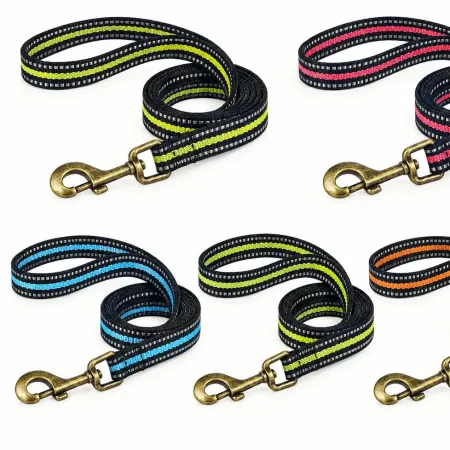
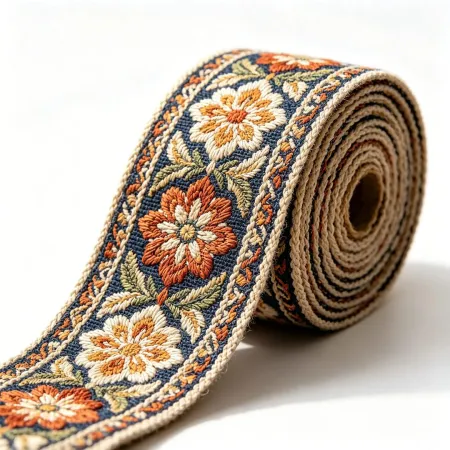
Direct wholesale production from our own plant in Dongguan, not a trading desk. Weaving, dyeing, printing, hardware assembly and packing all run in house, with no middleman margin in the price.
Full Customization
OEM and ODM work starts from your drawing: width, weave, colour, hardware and retail packaging. We match Pantone, send a physical sample before bulk, and keep every change on one work order.
Strict QA & ISO Standards
Every batch is checked for width, thickness, break strength and colour fastness before it ships, and the plant runs to ISO 9001 and ISO 14001. Test reports for your batch travel with the goods.
Proven Track Record
Fifteen years of narrow fabric since 2011, 200+ active partners and shipments to 50+ markets. Long-run programmes are what this factory is built for, which is why most customers reorder.
Eco-Friendly Canvas Tote Bag: Claims That Survive Review
An eco-friendly canvas tote bag is one of the few products where the claim itself is regulated. In several markets the phrase is now treated as a generic environmental statement that requires substantiation, and a bag that says it without a file behind it is a compliance exposure rather than a marketing asset.
The good news is that a tote can support a strong, specific claim more easily than most textile products, because it is reusable, repairable and made from a fibre with a traceable supply chain. This guide sets out which claims hold, which certificates actually support them, and how to word a label that survives an audit.
Which Claims an Eco-Friendly Canvas Tote Bag Can Support
Claims fall into four families, and each family needs a different kind of evidence. Mixing them is how a brand ends up with a label it cannot defend.
- Material origin claims — organic, recycled or bio-based content. These need a chain-of-custody certificate that names the product, not just a supplier's membership of a scheme.
- Chemical safety claims — free from azo dyes, formaldehyde or heavy metals. These are test results on the finished article, and they expire.
- Durability and reuse claims — the strongest territory for a tote, because reuse is the whole environmental argument for the product. It needs a service life statement rather than a slogan.
- End-of-life claims — recyclable, biodegradable or compostable. These are the most fragile, because they describe a scenario rather than a material.
The table maps each claim family to the evidence that supports it and to the mistake that most often undermines it.
| Claim family | Evidence that supports it | Common mistake |
|---|---|---|
| Organic content | Scope certificate plus a transaction certificate per shipment | Quoting the scope certificate as if it proved the goods are organic |
| Recycled content | GRS or RCS scope plus transaction certificate, with a stated percentage | Claiming a percentage the certificate does not attribute to the article |
| Chemical safety | Test report on the finished bag, dated, with the method named | Using a report on the raw fabric to claim safety of a printed bag |
| Reusability | A stated service life, backed by load and abrasion testing | Saying reusable without saying how many trips it is designed for |
| Recyclability | A named collection route and a mono-material construction | Ignoring the zip, the print and the handle, which decide recyclability |
| Carbon | A measured footprint with a declared boundary and methodology | Quoting an industry average as if it described your bag |
Three Claims That Usually Fail
Three phrases appear on almost every eco brief and three of them are the ones regulators are most likely to question.
"Eco-friendly" on its own
As a generic statement it says nothing that can be tested, which is precisely the problem. It survives when it is attached to something specific: a recycled content percentage, a certified fibre, or a measured service life. The word is not forbidden, it is simply empty unless the sentence around it carries the evidence.
"Plastic-free" alongside a polyester zip
A canvas tote with a coil zip, a polyester thread and a printed logo is not plastic-free, and a competitor or an auditor will find that in a minute. The audit is not about the main material; it is about every component. Enumerating the components is what makes a claim defensible, and it often produces a better label because the exceptions are more interesting than the headline.
"Biodegradable" without conditions
Cellulose does eventually break down, but in a landfill it does so over decades and without any environmental benefit. A biodegradability claim needs the environment, the timeframe and the test method, and a bag with a polyester zip cannot claim to biodegrade as an article. Saying so plainly is more credible than a leaf symbol.
The strongest claim on a tote is reuse, not material
A cotton tote has a higher footprint per unit than a single-use plastic bag, and it only wins on environmental grounds after enough trips. That makes the reuse claim the honest one and the durability specification the evidence behind it. A bag tested to carry 15 kg for several years supports a stronger environmental statement than any fibre badge, because it describes behaviour rather than origin.
Four Things a Certificate Must Say
Most certificate problems are not forgeries, they are scope errors. Four fields decide whether a document actually covers your bag.
- The article, not the company — a scope certificate says a facility is certified to process a category of goods. It does not say your bag is organic. The transaction certificate is the document that names your shipment.
- The percentage and the material — a recycled claim needs a stated share and the material it applies to. "Made with recycled cotton" and "40 percent recycled cotton" are different claims with different evidence.
- A validity date — certificates expire annually, and a file assembled for a launch two years ago is out of date. Every certificate in the folder should be checked for its current period.
- The processing stages covered — weaving, dyeing, printing and sewing are separate stages. A certificate that covers weaving does not automatically cover a bag that was dyed and printed elsewhere.
Six Questions for a Supplier's Green File
A supplier with a real file answers all six in a single reply. A supplier with a folder of logos answers two.
- Is there a transaction certificate for this shipment? — not a scope certificate, and not a certificate for a different product line.
- What percentage of the bag, by weight, carries the claim? — including the handle, the thread and the lining. Most claims shrink when the whole article is counted.
- Which stages are covered? — spinning, weaving, dyeing, printing and sewing are separate, and a gap in the middle breaks the chain.
- Are the test reports within their validity period? — ask for the dates rather than assuming, because an expired report reads identically to a current one until someone checks.
- Which components break a mono-material claim? — the zip, the print and the interlining. Knowing the exceptions makes the label honest and the design better.
- What is the measured service life? — a load rating and a cycle count on the handle, which together support a reuse statement that can be printed on the bag.
Building the File Before the Label
The order of operations matters. Brands that write the label first spend the development cycle looking for evidence to support it; brands that assemble the file first write a label that describes what they have.
- Choose the fibre route, then check the chain — organic cotton, recycled cotton and bio-based polyester each have a different chain and a different document set, and one of them will fit your market better than the others.
- Test the finished article, not the inputs — chemical safety is a property of the bag that ships, including its print and its zip tape, and that is the report a buyer will ask for.
- Keep the batch link — the one thing that makes a file usable rather than decorative is a number that connects a certificate, a roll and a shipment. Without it, every question becomes a new investigation.
Eco-positioned totes are developed through the custom spec bag programme. A finished example using certified organic cotton is the organic cotton tote with embroidered logo, and a lower-fossil strap option comes from the bio-based webbing range. The OEM and ODM page explains how a compliance dossier is handed over at the start of a project rather than at shipment.
FAQ: Eco-Friendly Canvas Tote Bag
Can a canvas tote legally be called eco-friendly?
It can be used, but it needs a specific qualifier to be defensible: certified organic content, a stated recycled percentage, or a measured service life. On its own it is treated as an unsubstantiated general claim in several markets.
Is organic cotton actually better for a tote?
For soil and farmer exposure, yes; for the bag's performance, it behaves much like conventional cotton. The claim is about how the fibre was grown, which is why it needs a chain-of-custody document rather than a test result.
What is the difference between a scope and a transaction certificate?
A scope certificate says a facility can process certified goods. A transaction certificate says a specific shipment contains them, with a quantity and a date. Only the second one supports a product claim.
Is a cotton tote better than a plastic bag?
Over its life, yes, but only after enough uses to offset the energy and water in growing and processing the cotton. That is why the reuse statement matters more than the material statement on this product.
Can a printed tote still carry a recycled claim?
Yes, if the percentage is calculated on the whole article and the print and zip are declared as exceptions. A claim that quietly excludes the print is the kind of detail an auditor finds immediately.
An eco-friendly canvas tote bag is a claim with a supply chain behind it, and the chain is what gets tested. Four certificate fields, six questions and one honest sentence about reuse will carry more weight than any badge, because they describe the bag in a way somebody else can verify.
Why Xinxiangrui for Eco-Friendly Canvas Tote Bag
An eco-friendly canvas tote bag claim is only worth the file behind it, and Xinxiangrui Webbing builds that file at the point where each part is chosen: yarn specification, dye chemistry, OEKO-TEX, REACH, RoHS and GRS documentation, then a batch number tying roll, dye lot and report. The handle webbing is woven in-house to 2000N+ break strength, which is what supports a reuse statement rather than a logo. Where a certificate does not cover what you are importing, that gap is named. Tell us your spec and a matched construction comes back to you.