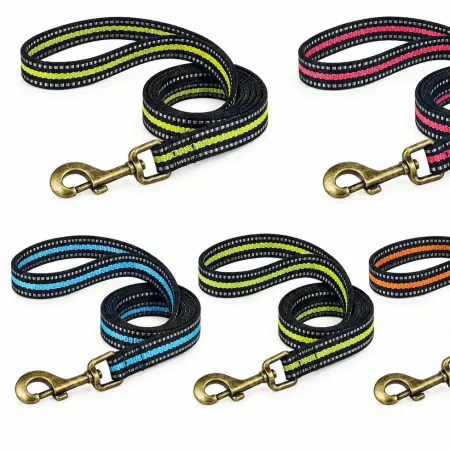
Source Factory
Direct wholesale production from our own plant in Dongguan, not a trading desk. Weaving, dyeing, printing, hardware assembly and packing all run in house, with no middleman margin in the price.
Full Customization
OEM and ODM work starts from your drawing: width, weave, colour, hardware and retail packaging. We match Pantone, send a physical sample before bulk, and keep every change on one work order.
Strict QA & ISO Standards
Every batch is checked for width, thickness, break strength and colour fastness before it ships, and the plant runs to ISO 9001 and ISO 14001. Test reports for your batch travel with the goods.
Proven Track Record
Fifteen years of narrow fabric since 2011, 200+ active partners and shipments to 50+ markets. Long-run programmes are what this factory is built for, which is why most customers reorder.
Mini Canvas Tote Bag: Why Small Is Harder to Sew Well
A mini canvas tote bag looks like the easy version of a tote and is the harder one. Every proportion that works at 400 mm becomes a problem at 200 mm: the seam allowance is twice as large relative to the bag, the corners are too tight to turn cleanly, and the hardware that looked appropriate full-size overwhelms the panel.
Small bags also sell differently. They are bought as gifts, as accessories and as add-ons, which means they are made in more colourways and smaller runs than a full-size tote. This guide covers the four construction problems that appear below 250 mm and the specification changes that solve them.
Four Problems That Appear in a Mini Canvas Tote Bag
Scaling a pattern down does not scale the manufacturing. Four things change character below roughly 250 mm of body width.
- Seam allowance becomes proportionally huge — a 10 mm allowance on a 400 mm bag is 2.5 percent of the width; on a 180 mm bag it is 5.5 percent. The bag ends up smaller than drawn and the corners turn into lumps.
- Corners cannot be turned cleanly — a right-angle corner on a heavy canvas needs enough fabric beyond the stitch line to form a point. Below about 30 mm of clearance the corner rounds off or puckers.
- Hardware is out of scale — a 25 mm ring on a 180 mm bag occupies a seventh of the width. Small bags need 15 to 20 mm hardware, which is a different component family rather than a smaller version of the same one.
- The strap is proportionally thick — a 2 mm strap on a small bag looks like a handle from a larger product, and it stiffens the mouth so the bag will not sit flat when set down.
The table sets out the working ranges for a small bag against the full-size equivalents they replace.
| Element | Mini bag, 150 to 250 mm | Full-size equivalent |
|---|---|---|
| Seam allowance | 5 to 7 mm | 10 to 12 mm |
| Fabric weight | 8 to 10 oz | 10 to 12 oz |
| Strap width | 20 to 25 mm | 30 to 38 mm |
| Strap thickness | 1.2 to 1.5 mm | 1.8 to 2.2 mm |
| Hardware | 15 to 20 mm ring or swivel | 25 to 38 mm |
| Stitch density | 10 to 12 per inch | 8 to 10 per inch |
Three Changes That Make a Small Bag Work
The fixes for a mini bag are not smaller versions of the full-size answers. They are different methods.
Sew it as a turned bag, not a felled one
A flat-felled seam that works beautifully on a 400 mm tote becomes a thick ridge on a 180 mm one, and there is not enough room to press it flat. A mini bag is usually sewn with the seams inside and the whole bag turned through the mouth or through a gap in the lining, which produces a clean edge and a softer corner at small scale.
Clip the corners, do not trim them
A small canvas corner holds its shape only if the allowance is clipped diagonally close to the stitch line before turning. Trimming the allowance shorter instead leaves too little fabric to cover the seam and produces a hole at the point within a few uses. Clipping is a two-second operation per corner and it is the difference between a bag that looks made and one that looks folded.
Reduce the strap, not just the length
A 30 mm strap on a 180 mm bag takes a sixth of the width and dominates the design. A 20 mm strap at 1.2 mm thickness carries more than a mini bag will ever hold and keeps the proportions right. The reduced thickness also lets the mouth lie flat when the bag is set down, which a 2 mm strap prevents.
Measure the bag after turning, not before stitching
On a small bag the difference between the pattern and the finished item is a larger share of the whole, so a 3 mm error that is invisible on a tote is visible on a mini. Approve the sample on its finished dimensions with the bag turned and pressed, and expect the first sample to come in a few millimetres under the drawing until the allowance is corrected.
Four Lines for a Small Bag Specification
A mini brief needs to state things a full-size brief can leave to habit.
- Finished dimensions and seam allowance separately — the finished size is what sells, the allowance is what the factory needs. Giving only one forces the other to be guessed, and on a small bag a guess is visible.
- Strap width and thickness — both, because a 20 mm strap at 2 mm thickness still looks wrong. Thickness is the number that decides whether the mouth lies flat.
- Hardware size in millimetres — ring internal width, swivel opening, and the finish. Small hardware is a separate component family, and a supplier who only has 25 mm rings will use them.
- Decoration size limit — a printed or embroidered mark has to fit the panel with margin. On a 180 mm bag a 100 mm logo leaves no room, and the proportion that looked good on the artwork will not read the same in the hand.
Six Questions on a Mini Sample
These are answered by holding the sample, turning it over and setting it down, in that order.
- Are the corners square or rounded off? — a rounded corner on a small bag is a clipping problem, not a design choice, and it will not improve in production.
- Does the bag stand up when set down? — a mini bag with a stiff strap and no base structure falls over, and a bag that falls over spills a phone onto the floor.
- Is the strap in proportion? — look at the bag from a metre away. If the handle is the most noticeable element, it is too wide.
- Does the mouth gape? — a small bag with a soft mouth opens when carried and shows its contents. A light interfacing at the top edge fixes it without stiffening the body.
- Are the finished dimensions on the drawing? — measure width, height and base after turning. A 3 mm shortfall is five percent of a small bag.
- Is the lining inserted properly at this size? — a lining that is fine at 400 mm can bunch at 180 mm because the seam allowance has nowhere to go. Check the inside corners.
Why Mini Bags Multiply Colourways
A small bag is usually bought as an accessory, a gift or a promotion, and that changes the order pattern in three ways that affect the specification.
- More colours, smaller quantities each — the strap and the body have to match across a wider palette, which is easier when both are dyed in the same plant and harder when they come from two converters.
- Sampling is a larger share of the project — a colourway that is sampled twice has doubled its development time whatever the bag size. Recording the pattern, the allowance and the stitch programme at the first sample is what keeps the second colour cheap.
- Decoration is often the point of the product — a mini tote is frequently a branded gift, so the print or embroidery is the reason it exists. That makes the decoration size limit a first-order decision rather than a finishing detail.
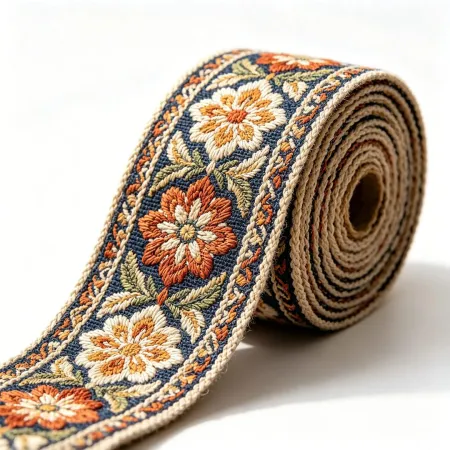
Small bags sit inside the custom spec bag range, and a decorated example at a larger size that shows the same proportion logic is the embroidered floral canvas shoulder bag. Narrow straps down to 20 mm come from the cotton webbing line, and small webbing accessories such as a webbing wristlet key holder are made on the same site.
FAQ: Mini Canvas Tote Bag
What size counts as a mini tote?
Roughly 150 to 250 mm in body width. Below 150 mm it becomes a pouch or a gift bag, and the construction method changes again because the corners cannot be turned at all.
Should a mini bag use lighter canvas?
Yes, usually 8 to 10 oz. A 12 oz canvas on a 180 mm bag is stiff, hard to turn and heavy for what it holds. The lighter cloth also lets the mouth lie flat, which matters more at this size.
Why are the corners of small bags rounded?
Because there is not enough allowance beyond the stitch line to form a point, or because it was trimmed instead of clipped. Clipping diagonally close to the stitch line before turning is the standard fix.
Can a mini tote have a lining?
It can, and at this size the lining is often how the bag is turned inside out. The allowance has to be reduced to 5 to 7 mm or the corners bunch, and the lining should be slightly smaller than the outer bag.
Is a mini tote good for promotional use?
It is one of the better options, because it is used rather than stored. The constraint is decoration space: on a small panel a logo has to be redesigned rather than scaled down.
A mini canvas tote bag fails on proportion rather than on strength. Reduced allowance, clipped corners, thinner strap and smaller hardware are four changes that cost almost nothing and turn a scaled-down tote into a small bag that looks designed. The fifth is measuring the finished item after turning, because at this size the pattern and the product are not the same thing.
Why Xinxiangrui for Mini Canvas Tote Bag
Xinxiangrui Webbing develops a mini canvas tote bag as a pattern rather than a scaled photograph, with the allowance, the corner treatment and the strap thickness settled on the first sample so the second colourway does not repeat the exercise. Narrow straps down to 20 mm are woven on site to 2000N+ break strength, the bag is sewn in the same Dongguan plant, and small hardware is fitted there rather than sourced after the sample. Share your bag details with us and we will come back with a matched sample.